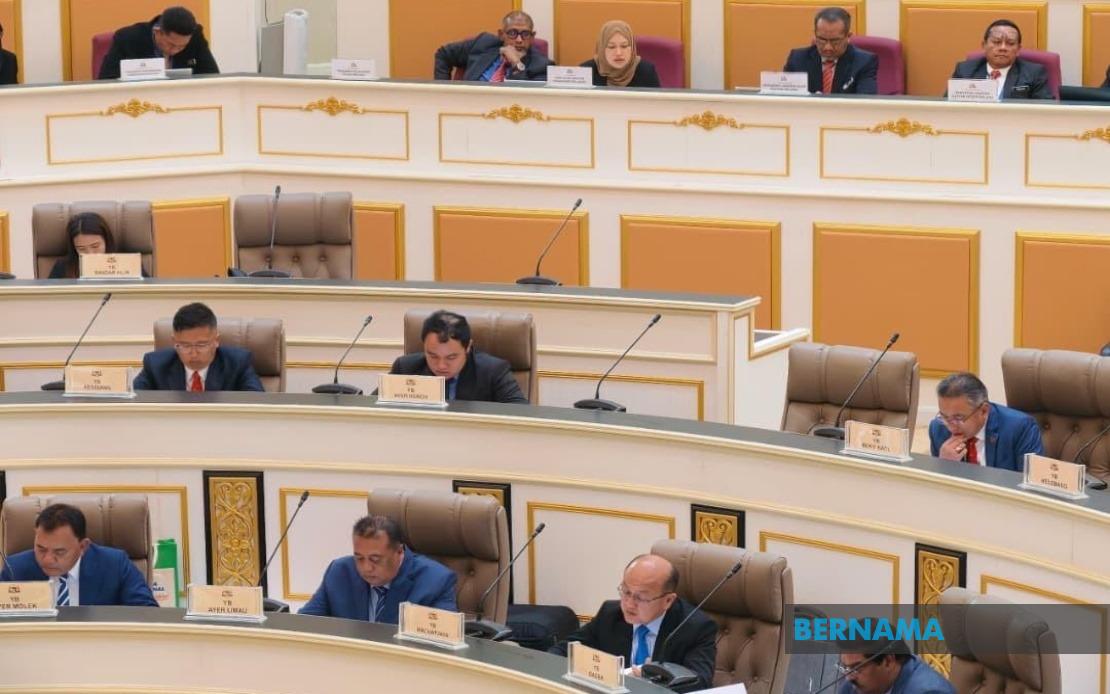
The political landscape in Melaka shifted decisively on the final day of the state legislative sitting this month when four DAP assemblymen formally moved their seats to the opposition bloc, marking a dramatic escalation in tensions between the coalition partners. Allex Seah Shoo Chin, Low Chee Leong, Leng Chau Yen, and Kerk Chee Yee now sit alongside Perikatan Nasional and Independent members after their party announced it was severing ties with the Barisan Nasional-led administration. The four representatives, holding seats in Kesidang, Kota Laksamana, Banda Hilir, and Ayer Keroh respectively, had signalled their intention to leave the government alliance the previous day, setting the stage for this unprecedented rearrangement of the chamber's physical layout.
The split within what had been a fractious coalition reveals deep ideological divisions that have been simmering beneath the surface of Melaka's governing arrangements. What distinguishes this break from typical political realignments is the specific trigger: the state assembly's passage of constitutional amendments permitting the appointment of nominated assemblymen without electoral validation. For DAP, a party built on principles of democratic representation and electoral accountability, this legislative change represented a fundamental betrayal of the values upon which its partnership with Barisan Nasional had ostensibly been founded. The timing of the walkout, coming after the constitutional vote had already passed, underscores how the party leadership calculated that remaining in government would prove politically untenable among its base and supporters.
Interestingly, the response proved uneven within the Pakatan Harapan contingent in Melaka. Adly Zahari, the sole Amanah representative who simultaneously holds the chairmanship of the Melaka Pakatan Harapan council, made the strategic decision to remain seated with the government bloc rather than join his DAP colleagues in opposition. This distinction highlights the varying tolerance levels within the broader Pakatan coalition for compromises deemed necessary to maintain governmental stability. Amanah's decision to stay the course, even as DAP departed, reflects either a different calculation regarding the acceptability of the nominated assemblymen mechanism or perhaps recognition that Amanah's position within the ruling coalition offered limited room for dissent without forfeiting whatever influence it retained within state administration.
Prime Minister Datuk Seri Anwar Ibrahim had personally intervened the day before the assembly session, urging Melaka DAP to shelve its withdrawal decision in favour of maintaining focus on developmental priorities and public welfare initiatives. His appeal represented an attempt to preserve the fragile coalition machinery at the federal level, particularly given that Pakatan Harapan remains dependent on sustaining viable state governments to demonstrate competent administration. However, the Prime Minister's overture proved insufficient to sway DAP's position, suggesting that the party's objections to the constitutional amendments had hardened beyond the point where appeals to collective responsibility could prove effective. This episode illustrates the persistent tension between federal coalition management and constituent parties' distinct policy positions on governance matters.
Melaka DAP chairman Khoo Poay Tiong articulated the party's rationale with clarity, characterizing the constitutional amendments as fundamentally incompatible with democratic principles and the foundational legitimacy derived from electoral processes. The party's opposition framed the nominated assemblymen provision as an assault on representative democracy itself, positioning DAP's withdrawal not as a opportunistic power play but as a principled stand reflecting its core political philosophy. This rhetorical positioning carries weight among DAP's traditional constituency, which has long viewed the party as a guardian of constitutional propriety and democratic norms. For Melaka voters who supported DAP candidates, the party could argue that remaining complicit in the constitutional changes would have represented a compromise of its essential identity.
The Assembly Speaker Datuk Ibrahim Durum sought to maintain procedural normalcy amid the political turmoil, emphasizing expectations that all members would conduct themselves with appropriate discipline, decorum and respect for house rules during sessions. Such interventions, while necessary for institutional functioning, underscored the underlying fragility of the Melaka assembly's operations when coalition arrangements deteriorate. The physical relocation of seats represented not merely a symbolic gesture but a practical acknowledgment that the previous seating arrangements no longer reflected actual political alliances within the chamber. With DAP now occupying opposition benches alongside Perikatan and Independent members, the mathematical calculus of government control in Melaka entered new territory that would require careful navigation.
From a regional perspective, the Melaka situation carries implications extending beyond Johor Darul Takzim's borders. Southeast Asian democracies have grappled increasingly with mechanisms permitting appointed rather than elected representatives, often justified on grounds of technical expertise or minority representation. However, DAP's objection reflects a broader philosophical resistance to eroding the principle that political legitimacy should derive primarily from electoral mandates. This concern resonates across the region, particularly in Malaysia where constitutional innovations affecting electoral systems have historically generated fierce debate and triggered significant political realignments. The Melaka dispute thus becomes emblematic of tensions between efficient governance structures and accountability mechanisms rooted in democratic selection.
The constitutional amendments enabling nominated assemblymen represent a departure from conventions emphasizing electoral validation as the primary basis for legislative participation. Whether motivated by desires to improve administrative capacity, ensure minority representation, or accommodate political necessities, such changes necessarily provoke resistance from parties prioritizing representative democracy as their defining principle. DAP's withdrawal cannot be dismissed as mere partisan maneuvering when the party has consistently advocated for strengthening electoral democracy and resisting appointed governance mechanisms. The move reflects a judgment that remaining within a government implementing such measures would undermine the party's credibility with supporters who expect principled consistency on constitutional and democratic matters.
Looking forward, the Melaka assembly's altered composition raises questions about government viability and the sustainability of the Barisan Nasional administration without DAP's legislative support. The specific arithmetic of the chamber—the distribution of seats among remaining government members, opposition parties, and independents—would determine whether executive stability has been fundamentally compromised or merely complicated. More broadly, the episode demonstrates how coalition governments remain vulnerable to internal fractures when substantive policy disagreements intersect with questions of political principle. For observers monitoring Malaysian federalism and coalition management, the Melaka situation provides instructive lessons about the limitations of managing diverse political partners through appeals to collective responsibility when fundamental values appear at stake.

