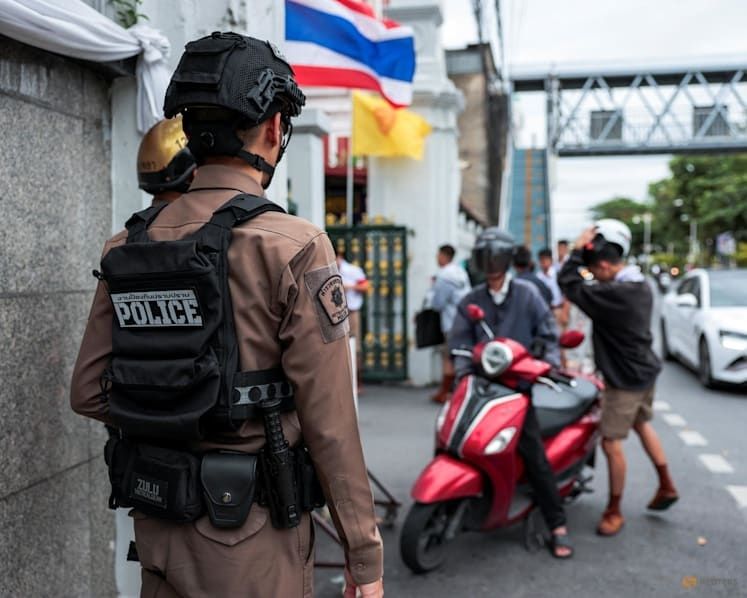
A former member of Thailand's parliament has been taken into custody by police investigators following allegations that he shot and wounded a local government official and the official's driver in Nonthaburi province, which lies directly north of Bangkok. The arrest of Chalong Riewrang came on Monday as authorities began gathering evidence and interviewing witnesses about the incident. Nonthaburi police chief Dejrapee Kongdee confirmed the detention and indicated that investigators are attempting to establish the former politician's motivation for the alleged attack. Both victims were transported to medical facilities following the shooting, with the chairman of the Nonthaburi local government administration reported to have sustained serious injuries in the incident.
The timing of this alleged shooting has intensified scrutiny over violence and weaponry in Thailand, particularly following a devastating school attack that occurred just days earlier in the same province. The convergence of these two shooting incidents within a narrow geographic and temporal window has reignited public and political discourse surrounding firearm regulations and public safety. Thai media outlets have reported that a private dispute may underlie the alleged attack on the local official and driver, though law enforcement authorities have declined to elaborate or confirm this assessment at this stage of the investigation.
Chalong previously served as a member of parliament representing his constituency and held membership in the political party led by Prime Minister Anutin Charnvirakul. His transition from elected office to criminal suspect marks a significant political embarrassment for his former party and raises questions about the behaviour and accountability of former public figures in Thailand. The involvement of a former legislator in what police are treating as a serious violent crime underscores broader concerns about the conduct and integrity of the Thai political establishment.
The school shooting that preceded this alleged incident occurred on Friday in Nonthaburi, when a fourteen-year-old boy fatally shot the elderly grandparents who had raised him before proceeding to his school campus, where he killed six additional individuals. The young shooter subsequently turned the weapon on himself, concluding the rampage. This tragedy claimed at least eight lives and left multiple others traumatized, making it one of the deadliest school shootings in Thai history.
Thailand's relationship with civilian gun ownership presents a paradox within Southeast Asia. The kingdom maintains one of the region's highest rates of firearm ownership among the civilian population, with approximately ten million firearms estimated to exist in private hands. This figure translates to roughly one gun for every seven inhabitants, a density that experts and policymakers alike have identified as contributing to the frequency and severity of armed violence across the country. The prevalence of weapons in Thai society, combined with inadequate regulatory oversight in many cases, has created conditions in which both premeditated acts and impulsive violent acts using firearms have become recurring phenomena.
In the immediate aftermath of Friday's school shooting, government officials and legislative bodies issued commitments to implement more stringent gun control measures. These pledges included proposals for enhanced background checks, stricter licensing requirements, and improved monitoring of firearm ownership. However, such promises have become a familiar pattern in Thai policymaking following high-profile shooting incidents. Previous commitments to tighten regulations have consistently failed to materialize into effective legislation, leaving critics skeptical about whether the current cycle of pledges will produce meaningful change.
The recurring nature of shooting incidents in Thailand suggests that existing firearms regulations either lack adequate enforcement mechanisms or fail to address root causes of violence in Thai society. Law enforcement resources may be insufficient to properly monitor the millions of weapons already in circulation, while judicial systems may struggle to process cases efficiently. Additionally, cultural attitudes toward gun ownership and the perception of firearms as instruments of dispute resolution have proven resistant to change through policy intervention alone.
For Malaysian observers and regional analysts, Thailand's gun violence epidemic presents cautionary lessons about the consequences of permissive firearms legislation and weak enforcement. Malaysia has maintained considerably more restrictive gun control policies than Thailand, requiring citizens to obtain permits and limiting ownership to specific purposes such as sport shooting or legitimate occupational needs. The contrast between Thailand's high gun ownership rates and Malaysia's more tightly controlled approach offers a natural policy comparison for examining effectiveness of different regulatory frameworks.
The arrest of Chalong and the resumption of investigation into Friday's school shooting will likely dominate Thai media coverage and political discourse in coming weeks. Civil society organizations will probably intensify calls for genuine legislative reform rather than symbolic gestures. International observers will be watching to assess whether Thai policymakers can translate the momentum generated by tragedy into concrete, enforceable measures that meaningfully reduce access to firearms among high-risk individuals while respecting legitimate uses of weapons.

