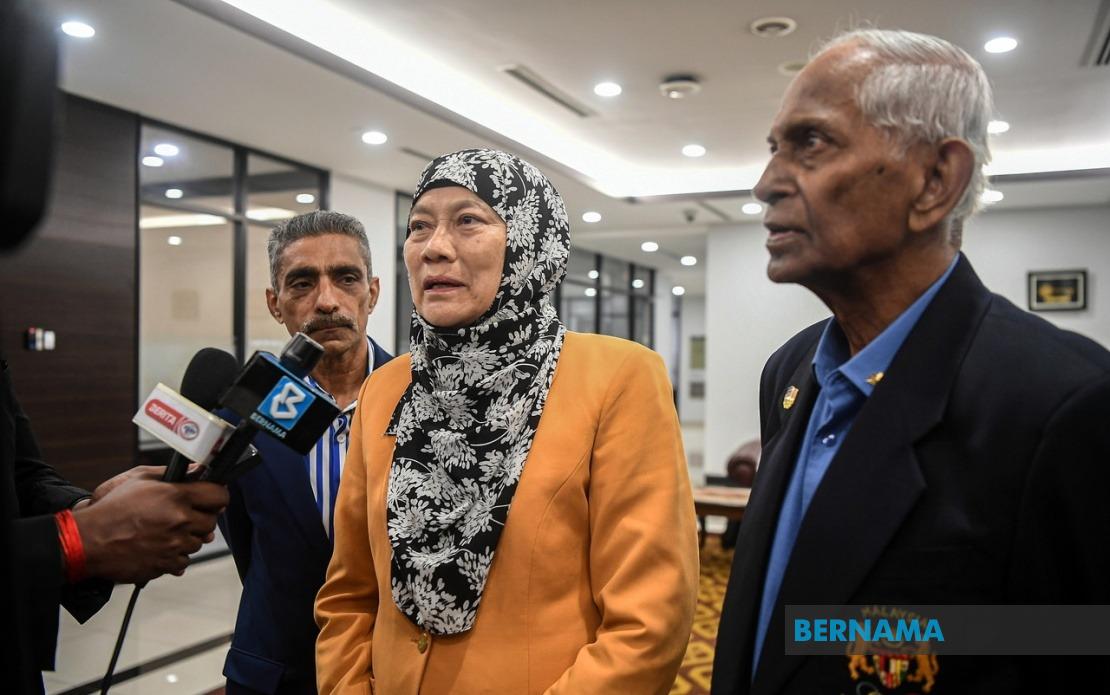
Former Sports Commissioner Datuk Zaiton Othman has sounded an alarm over governance shortcomings at Malaysia Athletics, urging the national governing body to realign its operations with international standards set by World Athletics. The warning comes as Malaysia prepares to host the 2027 SEA Games, with athletics expected to remain one of the medal-rich centrepieces of the biennial regional championship.
Zaiton, speaking after a meeting with Youth and Sports Minister Dr Mohammed Taufiq Johari at Parliament, stressed that any deviation from World Athletics's constitutional framework could trigger severe sanctions. Such penalties might include suspension or revocation of Malaysia Athletics's registration, consequences that would reverberate far beyond administrative inconvenience. A loss of standing with the international governing body would effectively bar Malaysian athletes from competing in World Athletics-sanctioned events and prevent the country from organising sanctioned competitions domestically.
The particular concern here is strategic and symbolic. Athletics, encompassing track and field disciplines, consistently delivers among the highest medal counts at regional games, supplying 47 gold medals across all events at recent SEA Games. The marquee attractions—the 100-meter sprint and 4x100-meter relay—carry outsized prestige. For Malaysia to position itself as host yet be unable to stage these centrepiece events would represent a significant diplomatic and sporting embarrassment. Zaiton framed the intervention in precisely these terms, highlighting the paradox of hosting a games while being locked out of organising its most illustrious track events.
The push for reform brings together an influential coalition of sporting voices. Joining Zaiton in her meeting with the minister were Olympian Datuk Karu Selvaratnam and Datuk Noorul Ariffin Abdul Majeed, former chairman of the National Athletes Welfare Foundation (YAKEB). Their collective presence underscores genuine concern among Malaysia's athletic establishment that governance lapses could damage athlete development and competitive opportunity. These figures represent institutional memory and credibility within the sporting ecosystem, lending weight to warnings that might otherwise be dismissed as bureaucratic hand-wringing.
The governance crisis traces back to long-standing tensions within Malaysia Athletics's leadership. Earlier last month, Malaysia Athletics president Karim Ibrahim stepped back from his operational duties, ostensibly to allow constitutional amendments before the body's scheduled Annual General Meeting. This move itself reflects deeper fractures. Karim's leadership had been clouded since 2018, when World Athletics imposed a suspension on him—a sanction upheld even after he pursued an appeal through the Court of Arbitration for Sport (CAS). Though he retained eligibility to contest positions on the Asian Athletics Federation Executive Council through the 2019-2023 cycle, his compromised standing at the global level has created complications for Malaysia Athletics's compliance posture.
The underlying issue revolves around constitutional alignment. Malaysia Athletics's operational framework appears to diverge in meaningful ways from the template mandated by World Athletics, and these discrepancies have accumulated to the point where international recognition itself hangs in balance. Rather than represent bureaucratic nitpicking, these constitutional mismatches reflect the international sports governance ecosystem's legitimate interest in ensuring consistent administration, financial transparency, athlete protections, and dispute resolution mechanisms across all member federations. Non-compliance is not victimisation; it is a real risk.
The involvement of the Reformation in Sports and Excellence (RISE) initiative in this advocacy signals that the concerns are not confined to government circles. RISE representatives participated in the parliamentary meeting, indicating that civil society actors and sports reform advocates view Malaysia Athletics's governance deficits as material obstacles to broader sporting advancement. This multi-stakeholder pressure suggests the issue has transcended internal federation squabbling and entered the realm of national sporting policy.
From a legal and administrative standpoint, the Youth and Sports Ministry occupies a carefully bounded role. The Sports Development Act 1997 does grant the ministry and the Sports Commissioner authority to impose corrective measures on sports associations, yet this authority is constrained by the principle that the ministry should not directly micromanage federation business. This tension—between accountability and autonomy—shapes what interventions are permissible. The ministry can reprimand, inspect compliance, and enforce regulatory standards, but cannot dictate daily operations or selection decisions. In this case, however, the call is for Malaysia Athletics to self-correct by amending its own constitution, a remedial action squarely within the federation's purview.
The 2027 SEA Games timeline adds urgency. Host preparations typically accelerate three to four years before competition, and athletics, requiring specialised venue preparation, competition scheduling, and international coordination, cannot be left unresolved. If Malaysia Athletics remains non-compliant with World Athletics requirements by the time competitions approach, the options narrow dramatically. The federation might be forced to relinquish athletics from the host programme, or athletes might compete under provisional arrangements lacking full international recognition. Either scenario damages the host nation's prestige and athletes' experience.
For Malaysian sporting stakeholders, the message is straightforward: governance is not peripheral administrative housekeeping but a precondition for competitive participation. Athletes train, coaches scheme, and facilities develop only within the boundaries set by international recognition and compliance. When a federation drifts from those boundaries, the costs manifest in lost opportunities for athletes, restricted competition schedules, and diminished national competitive standing. Zaiton's intervention is thus not a bureaucratic intervention in federation affairs but a defence of athlete interests and national sporting capability.
The path forward requires Malaysia Athletics to move swiftly through constitutional amendments, particularly during its upcoming Annual General Meeting. The federation must not treat this as a procedural formality but as a critical realignment with World Athletics standards. Simultaneously, the Sports Commissioner's office and the ministry must remain vigilant in monitoring compliance, ready to apply available statutory tools if the federation backslides. The stakes—for the 2027 Games, for athlete opportunity, and for Malaysia's standing within international athletics—are too high for half-measures or delays.