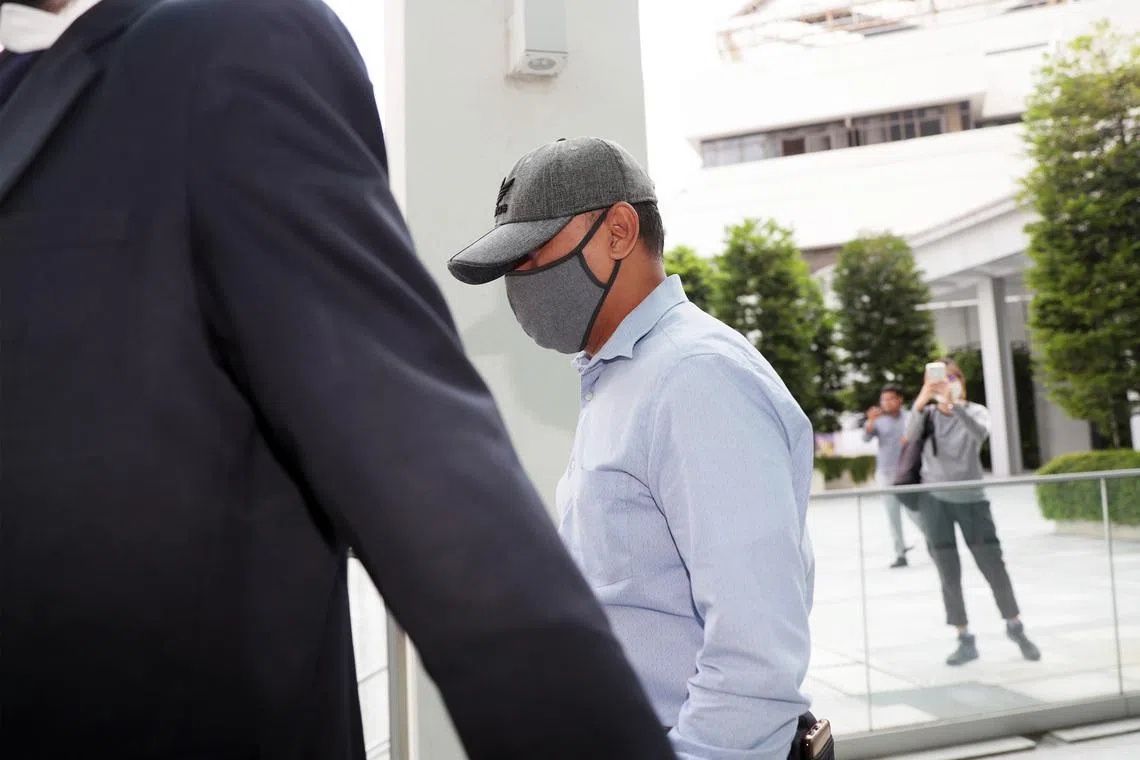
A former executive chairman overseeing operations at two prominent Singapore mosques has been handed a 14-month custodial sentence for corruption offences committed in breach of public trust. Abdul Rahim Mawasi, who served as executive chairman of both Darul Aman Mosque in Jalan Eunos and Sallim Mattar Mosque in MacPherson, exploited his privileged position to provide unfair commercial advantages to a longtime associate, enabling the friend's construction company to secure lucrative contracts worth S$223,000 from the religious institutions.
The 59-year-old defendant held a senior position within the Islamic Religious Council of Singapore (MUIS) before being seconded to the two mosques, where he chaired their respective management boards. His conviction in April followed a trial that exposed a carefully orchestrated scheme designed to circumvent competitive tendering processes and redirect institutional contracts to a specific vendor. The sentence, handed down on June 26, underscores Singapore's stringent stance on public sector graft, particularly when religious institutions—which command significant community trust—become inadvertent instruments of fraud.
Central to the conviction was Mawasi's relationship with Mohd Mustaqim Kam, also known as Kam Hock Beng, whom he had known for over a decade. In July 2018, the two men hatched an informal commercial arrangement: Mawasi would help secure construction work from the two mosques for Kam's company, Zeal-Con Engineering, while Kam would funnel profits into a travel company ostensibly launched by both parties. Notably, Mawasi invested no capital upfront, receiving only promised equity ownership through indirect means. Kam, aged 66 at sentencing, received a six-month jail term in February 2025 for his complicity in the scheme.
The court heard that when Darul Aman Mosque sought vendors for yard construction work in 2018, Zeal-Con submitted competing quotations. The initial bid, dated August 20, came in at S$128,600. However, following what prosecutors characterised as "extensive discussions" between Mawasi and Kam regarding pricing strategy, a revised quote of S$118,000 was submitted on September 12. This figure undercut the next-lowest competing bid of S$125,500 from another firm by a comfortable margin, allowing Zeal-Con to secure the S$118,000 contract on September 26. Critically, the mosque's management board remained unaware that Mawasi had supplied Kam with crucial pricing guidance.
A parallel scheme unfolded at Sallim Mattar Mosque later that year. Zeal-Con initially quoted S$115,700 for renovation works encompassing the roof and reception areas. When the contract was not immediately awarded, Mawasi again intervened, advising Kam to lower the bid. The company subsequently submitted a revised quotation of S$105,000 in July 2019. Sallim Mattar Mosque subsequently issued contract awards linked to this reduced amount in August 2019. Evidence presented at trial demonstrated that Mawasi's strategic price-setting recommendations directly resulted in Zeal-Con securing both institutional contracts, fundamentally compromising the integrity of the tender process.
To obscure his financial interest in the venture, Mawasi devised an elaborate concealment mechanism. In November 2019, Kam converted an existing shell company into Amal Travel and Tour (ATT), allocating 25,000 shares valued at S$1 each to Mawasi's son. The scheme effectively placed beneficial ownership in Mawasi's immediate family, allowing him to maintain plausible deniability regarding direct shareholding. When questioned during trial, Mawasi denied any involvement with ATT, a position technically supported by the fact he held no registered shares. However, prosecutors demonstrated he had deliberately structured the arrangement to evade disclosure requirements to MUIS and to obscure his illicit enrichment.
During sentencing proceedings, Deputy Public Prosecutor Bryan Wong emphasised the gravity of Mawasi's conduct, characterising it as a serious public sector corruption offence undertaken for personal financial gain. Though the prosecutor acknowledged that Zeal-Con had satisfactorily completed the contracted works and no material financial losses were sustained by either mosque, the court recognised that institutional integrity had been fundamentally compromised. The companies involved in the competitive process had been placed at unfair disadvantage, and the mosques' fiduciary responsibility to deploy resources efficiently had been violated through insider manipulation.
Mawasi's defence counsel, Satwant Singh Sarban Singh, urged judicial leniency, seeking no more than six months imprisonment and highlighting his client's previously unblemished record. The plea fell substantially short of the court's determination, reflecting judicial disapproval of the premeditated nature of the offence and the abuse of institutional trust. The sentence signals that Singapore's corruption enforcement regime extends vigorously to religious organisations, where reputational and spiritual capital carry immense weight within communities.
The case carries particular relevance for Malaysia and other Southeast Asian jurisdictions grappling with procurement integrity within faith-based institutions. Religious bodies increasingly manage substantial property portfolios and construction budgets, creating vulnerability to insider schemes if governance safeguards remain inadequate. Mawasi's conviction demonstrates that modern corruption often involves layered financial instruments—subsidiary companies, family shareholdings, informal profit-sharing agreements—designed to obscure beneficial ownership and evade regulatory scrutiny. Singapore's prosecutorial success in unravelling these structures and holding senior institutional figures accountable reflects investigative sophistication that enforcement agencies across the region may study.
Mawasi's bail was set at S$30,000, with sentence commencement scheduled for July 10. His conviction represents a notable enforcement victory, yet it also highlights systemic vulnerabilities: robust tendering protocols, genuine competitive processes, and transparent governance documentation serve as essential bulwarks against predatory insider conduct. For regional observers, the case underscores that institutional prestige and philanthropic reputation provide no immunity from corruption prosecution when leadership abuse institutional machinery for personal enrichment. Religious governance bodies, like all public-serving institutions, remain subject to stringent accountability standards.

