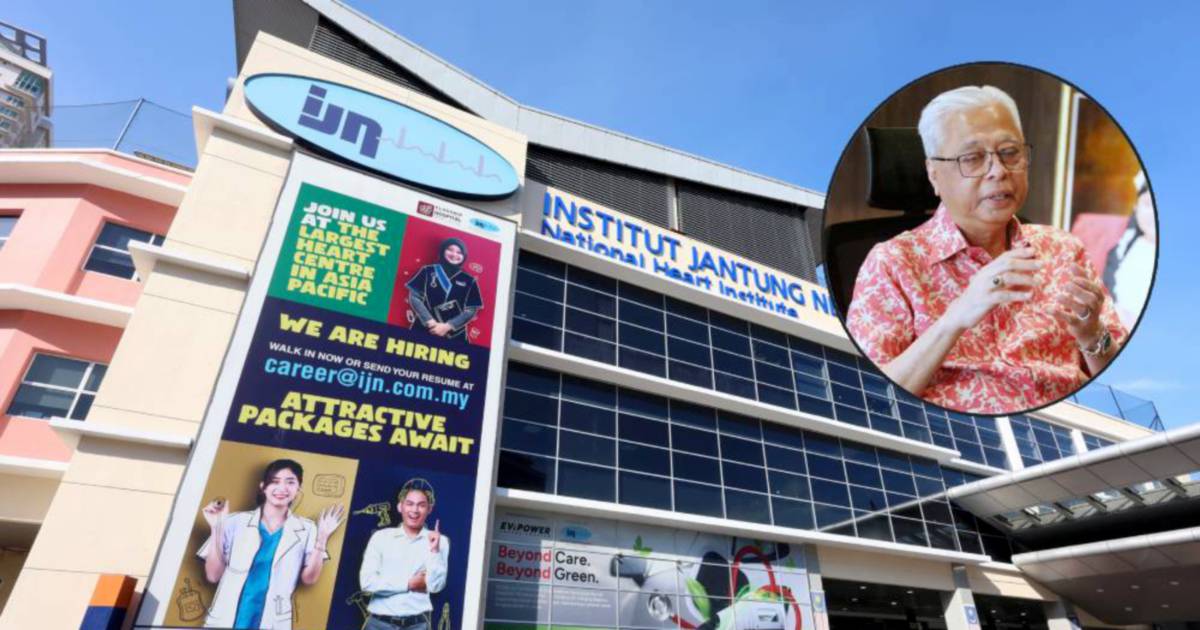
Former Prime Minister Datuk Seri Ismail Sabri Yaakob has undergone successful leadless pacemaker implantation at the National Heart Institute (IJN) following his recent admission for treatment of an abnormal heart rhythm condition. The procedure, completed without complications, represents an intervention that has become increasingly common among patients experiencing disruptions to the electrical system that controls heartbeat regularity.
The decision to implant a leadless pacemaker rather than a traditional device reflects advances in cardiac medical technology. Unlike conventional pacemakers, which rely on wires to connect the implanted unit to the heart, leadless systems are self-contained miniaturised devices placed directly within the heart chamber itself. This approach significantly reduces the risk of complications associated with lead fractures or infections that can plague traditional systems, offering patients greater long-term safety and durability.
Abnormal heart rhythm, or arrhythmia, occurs when the heart's electrical impulses misfire or become irregular, causing the organ to beat too quickly, too slowly, or in an erratic pattern. Such conditions can range from relatively benign to life-threatening, depending on their nature and severity. IJN specialists determined that Ismail Sabri's condition warranted intervention through pacemaker implantation, a decision likely based on detailed diagnostic testing including electrocardiograms and rhythm monitoring studies.
The deployment of a leadless pacemaker is technically demanding, requiring cardiologists to navigate the complex anatomy of the heart using advanced imaging guidance. The entire device, typically smaller than a large vitamin capsule, must be precisely positioned and secured within the heart chamber to ensure optimal electrical contact and long-term stability. Success in such procedures depends heavily on the expertise of the surgical team and the quality of the facility, both of which IJN is recognised for maintaining at international standards.
Postoperative care following pacemaker implantation involves careful monitoring and gradual resumption of normal activities. Medical teams typically advise patients to avoid strenuous physical exertion, contact sports, and heavy lifting during an initial recovery phase spanning several weeks. During this critical period, the device stabilises in its position and the heart adapts to the regular electrical impulses it now receives, making adherence to rest recommendations essential for optimal healing.
Ismail Sabri's advisors have reinforced the importance of following medical guidance during his recovery phase. This recommendation, standard practice following such procedures, ensures that healing proceeds without complications and that the newly implanted device functions optimally. Patients who comply with post-operative restrictions typically experience smoother recoveries and longer device lifespans, though individual cases vary based on age, overall health, and other medical factors.
The procedure carries significance beyond the immediate health implications for the former leader. As a prominent public figure and former head of government, Ismail Sabri's successful treatment at a Malaysian cardiac centre underscores the capability of local medical institutions to handle complex interventions that rival international standards. IJN has established itself as a regional leader in cardiac care, attracting patients from across Southeast Asia seeking advanced treatment options.
Heart rhythm disorders have become increasingly prevalent globally as populations age and lifestyle-related risk factors accumulate. The condition that led to Ismail Sabri's hospitalisation represents a category of medical challenges that cardiologists encounter with growing frequency. The availability of advanced treatment options such as leadless pacemakers within Malaysia demonstrates the country's investment in sophisticated healthcare infrastructure and specialist training.
The timing and nature of Ismail Sabri's condition remain typical for arrhythmia presentations, which often manifest without warning symptoms or develop gradually over extended periods. Early detection through diagnostic screening and intervention by qualified specialists typically yields positive outcomes, as evidenced by this case. The successful completion of his procedure reflects both personal resilience and the competence of the medical team involved.
Recovery from pacemaker implantation generally follows predictable patterns, with most patients returning to normal activities within weeks, though complete healing takes several months. During the initial recovery window, restrictions on physical activity help prevent device displacement and allow the heart tissue around the implant to stabilise securely. Follow-up appointments with cardiologists will monitor device function and overall cardiac health, establishing a routine that continues throughout the patient's life.
The broader health sector significance of this case extends to public awareness about arrhythmia treatment options. As more Malaysians and Southeast Asian patients learn about leadless pacemaker technology, demand for such procedures may increase, potentially influencing healthcare planning and specialised training within regional institutions. The successful outcome demonstrates that patients experiencing heart rhythm irregularities need not travel internationally for world-class treatment.
For Ismail Sabri personally, the successful procedure marks the beginning of a recovery journey requiring patience and discipline. The medical team at IJN will likely establish a monitoring schedule to ensure the device functions optimally and the heart responds appropriately to its new electrical management system. Long-term outcomes for leadless pacemaker patients are generally favourable, with studies showing excellent reliability and patient satisfaction.
The case exemplifies how modern cardiology has transformed the management of potentially serious heart conditions into routine, highly effective interventions. What might have represented a significant health threat decades ago now becomes a manageable condition through technology and medical expertise, offering patients like Ismail Sabri the opportunity to resume productive lives following successful treatment.

