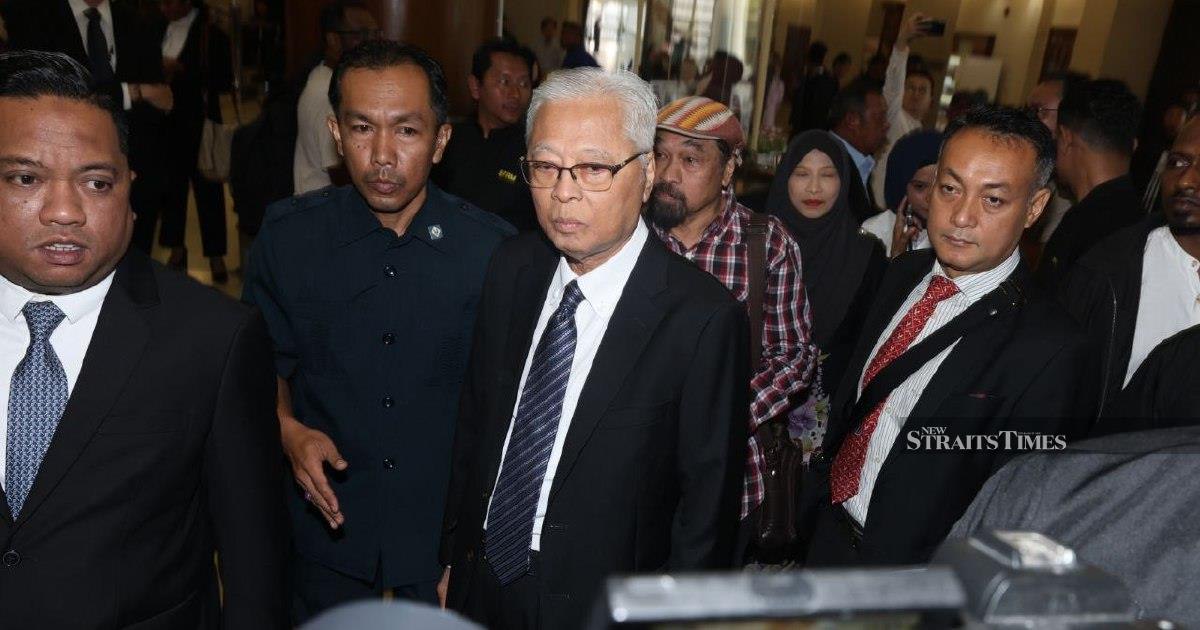
Former Prime Minister Datuk Seri Ismail Sabri Yaakob has been released from the court complex in Kuala Lumpur following the posting of RM300,000 bail by his son, concluding his court appearance for the day. The development represents a significant moment in the legal proceedings involving the former leader who served as Prime Minister from August 2021 to November 2022.
The bail arrangement demonstrates the family's response to the legal challenges confronting Ismail Sabri, with his son taking immediate action to secure his release from custody. The RM300,000 bail figure indicates the court's assessment of the conditions deemed necessary in the case, reflecting judicial considerations regarding risk and compliance.
Ismail Sabri's tenure as Prime Minister came during a particularly turbulent period in Malaysian politics, characterised by shifting coalitions and internal party manoeuvring within the ruling establishment. His administration navigated significant challenges including the management of COVID-19 pandemic responses and various economic pressures affecting the nation. The former Prime Minister had previously held ministerial positions across multiple administrations, accumulating considerable experience in federal governance.
The posting of bail has particular significance within Malaysia's legal framework, where such arrangements serve as a mechanism to ensure defendants' attendance at subsequent court proceedings whilst maintaining their freedom pending trial or further legal determination. The family's prompt action suggests a coordinated response to the judicial process, ensuring continuity in addressing the legal matters at hand.
For Malaysian political observers, the court proceedings involving a former head of government underscore the independence of the judiciary and its willingness to apply legal processes uniformly across all segments of society, regardless of prior political status. This principle remains central to Malaysia's constitutional framework, even as it occasionally generates significant public and political attention.
The immediate departure from the court complex following bail posting follows standard legal procedure in Malaysia, allowing the accused to return to their residence pending the next phase of proceedings. Such arrangements provide accused persons the opportunity to prepare their legal defence whilst residing outside custodial facilities.
Ismail Sabri's political trajectory has been marked by considerable longevity within the Malaysian political establishment, having represented his constituency for multiple electoral cycles and served in various capacities within successive administrations. His eventual ascension to the Prime Minister's office in 2021 represented a significant moment, though his tenure ultimately proved relatively brief as political dynamics continued to shift within parliamentary structures.
The involvement of family members in securing bail illustrates the personal dimensions of legal proceedings affecting senior political figures, where immediate circles rally to address judicial requirements. Such responses are typical in Malaysian legal practice, where family support mechanisms frequently come into play during prosecutorial phases.
This development occurs against the backdrop of Malaysia's ongoing efforts to strengthen institutional governance and maintain public confidence in the justice system. The consistent application of bail procedures and court protocols, irrespective of a defendant's prior prominence, constitutes an important affirmation of legal principles underlying constitutional democracy.
The court appearance and subsequent bail arrangement also reflect the temporal nature of Malaysian legal processes, where multiple hearings and procedural steps typically characterise cases involving complex allegations or prominent individuals. Observers anticipate that forthcoming court sessions will provide additional clarity regarding the specific nature of allegations and the expected trajectory of proceedings.

