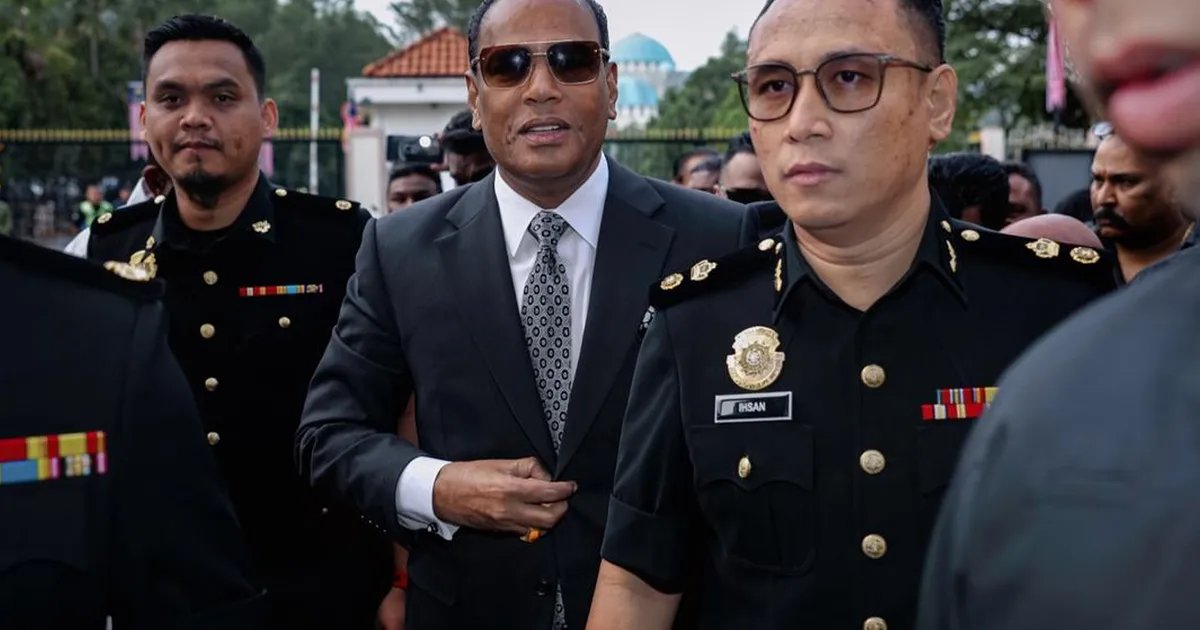
The former human resources minister Saravanan presented a composed appearance as he entered the Kuala Lumpur courts complex on Tuesday morning, arriving shortly before 8.30am. His neat presentation stood out among the usual hustle and bustle of the country's primary judicial venue, where high-profile cases and political figures often attract significant public attention.
The timing of Saravanan's arrival in the early morning hours suggests a deliberate attempt to navigate court proceedings with minimal disruption, a strategy frequently employed by individuals facing public scrutiny. The Kuala Lumpur courts complex, situated in the heart of the nation's capital, remains one of Malaysia's most visible legal arenas, where decisions and developments often carry immediate implications for the broader political landscape.
Saravanan's appearance comes at a juncture when former government officials have faced heightened public and legal scrutiny. His tenure as human resources minister placed him at the centre of labour policy decisions affecting millions of Malaysian workers, making his subsequent legal involvement a matter of national interest and workplace governance concern.
The courts complex itself has become increasingly familiar with cases involving former federal ministers and political figures over recent years, reflecting Malaysia's commitment to pursuing legal accountability across all governance levels. This shift towards judicial examination of high-ranking officials represents a significant evolution in the nation's political and legal institutions.
The specific nature of Saravanan's court appearance and the charges or proceedings he faces remain consequential for understanding the broader context of political accountability in Malaysia. Each such case contributes to public discourse surrounding governance standards, ministerial conduct, and institutional integrity.
For Malaysian observers monitoring political developments, Saravanan's court appearance underscores the reality that former high office provides no exemption from legal processes. The human resources portfolio he previously held carries responsibility for overseeing labour standards, workplace safety, and employment regulations that fundamentally affect the nation's workforce.
The composed demeanour Saravanan displayed upon arrival may reflect his personal approach to legal proceedings, or it may signal strategic messaging to onlookers and media representatives. How political figures conduct themselves during judicial processes often becomes part of the broader narrative surrounding their cases and shapes public perception of their accountability.
Court appearances by former ministers inevitably generate media interest and public commentary, reflecting the Malaysian population's engagement with political accountability issues. The visibility of such proceedings reinforces the principle that judicial processes operate independently of political status or previous governmental authority.
Saravanan's arrival at the courts complex occurs within Malaysia's broader institutional context, where the judiciary maintains responsibility for examining allegations or disputes involving public figures. These proceedings contribute to the nation's evolving standards of transparency and accountability in political life.
The early morning timing of court appearances has become routine in Malaysian legal practice, particularly for cases attracting public interest. This scheduling reflects judicial administration practices aimed at managing courtroom operations and public access to proceedings.
For the broader Southeast Asian region, cases involving former Malaysian government ministers carry relevance beyond national borders, as they illuminate regional approaches to political accountability and judicial independence. Malaysia's handling of such cases contributes to regional understanding of how developing democracies manage legal examination of political figures.
The conduct of legal proceedings involving former government officials remains central to Malaysia's institutional maturation and public confidence in judicial systems. Each court appearance by such figures reinforces either public trust in legal processes or raises questions about their fairness and independence, depending on perceived outcomes and procedural conduct.

