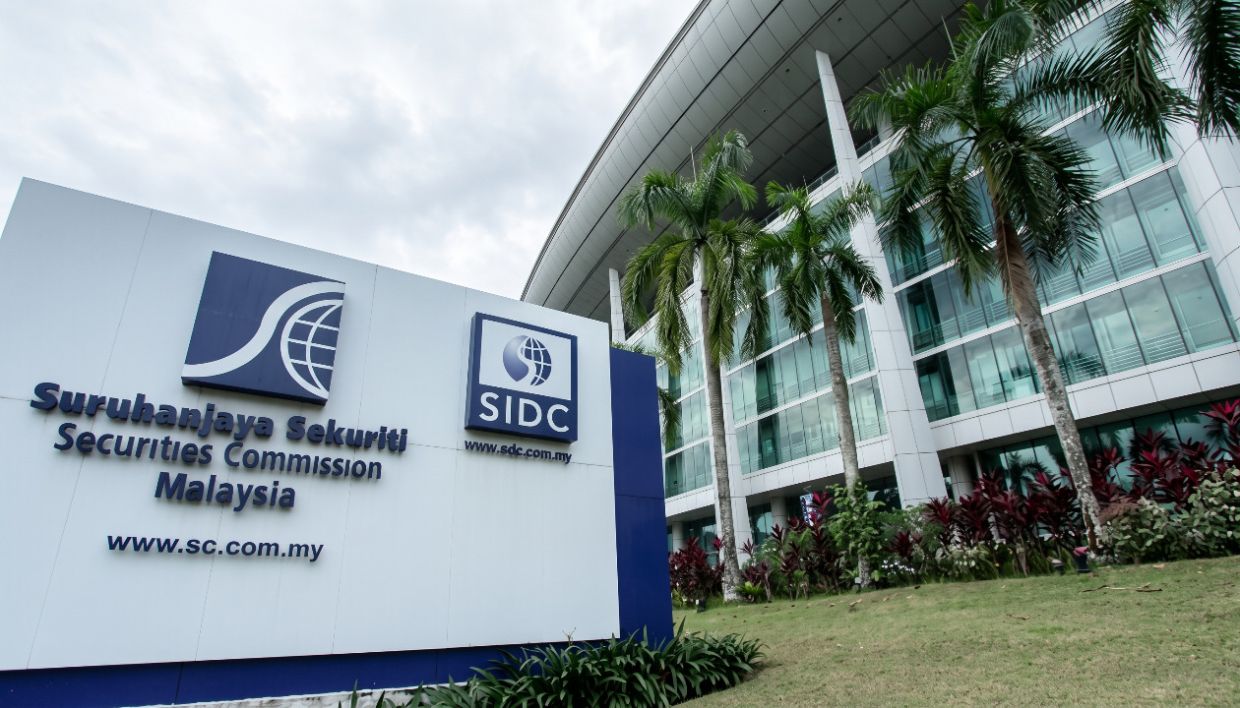
Muhamad Fadzli Jamaludin, the former director of Kyaputen Sdn Bhd, has been sentenced to five years imprisonment by the Kuala Lumpur Sessions Court following his conviction on charges of running an unlicensed fund management business and engaging in money laundering. The verdict represents a significant enforcement action by Malaysian financial regulators against fraud that exploited vulnerable investors seeking investment opportunities.
The Securities Commission Malaysia revealed that the case against Fadzli commenced in November 2023, when he faced three initial charges under the Capital Markets and Services Act 2007 for presenting himself as a fund manager without proper regulatory authorisation. His legal troubles deepened a month later when authorities added nine additional charges related to money laundering under the Anti-Money Laundering, Terrorism Financing and Proceeds of Unlawful Activities Act 2001. Rather than being tried separately, both sets of charges proceeded through a joint trial, streamlining the judicial process and presenting a comprehensive picture of his criminal conduct to the court.
During the trial, prosecutors marshalled an extensive case supported by 23 witnesses, among them six victims who suffered tangible financial losses totalling RM1.263 million. The investigative work spanned the period from August 2018 through April 2020, with the fraudulent operations centred in Kuala Lumpur and Melaka. This two-year window demonstrates how systematically Fadzli operated his scheme, continuing to solicit funds and manage accounts despite lacking the mandatory licence from the Securities Commission. The involvement of multiple victims across two states indicates that his activities were not isolated or opportunistic but rather formed part of a deliberate operation designed to accumulate investor capital.
Fadzli's defence strategy proved ineffective during trial proceedings. He elected to testify on his own behalf, taking the oath and presenting his account to the court. Notably, he called no supporting witnesses, corroborating evidence, or expert testimony that might have bolstered his position. Sessions Court judge Puan Hamidah Mohamed Deril found that his testimony did not establish reasonable doubt regarding the prosecution's allegations. This judicial finding suggests that Fadzli's explanations were unable to withstand scrutiny or that they contradicted documented evidence presented by the state's legal team.
The sentencing decision imposed five years imprisonment for each of the 12 total charges, with all sentences to run concurrently rather than consecutively. This approach means Fadzli will serve a single five-year term rather than facing decades behind bars, reflecting the judge's view that concurrent sentencing was appropriate given the overlapping nature of the offences. The concurrent arrangement is significant because it suggests judicial consideration of proportionality, ensuring that punishment corresponds to the scale of the crime without excessive harshness.
Under the Capital Markets and Services Act 2007, those convicted of operating unlicensed financial services face potential penalties reaching RM10 million in fines or imprisonment up to 10 years. The money laundering statutes carry even graver consequences, including up to 15 years imprisonment and fines equivalent to five times the value of laundered proceeds or RM5 million, whichever is greater. By sentencing Fadzli to five years concurrent imprisonment, the court exercised restraint relative to these maximum penalties, though the verdict remains unambiguous in its rebuke of his conduct.
This case illuminates the persistent vulnerability of Malaysian retail investors to unlicensed fund managers operating in regulatory grey areas or outright defiance of Securities Commission oversight. Fadzli's operation demonstrates how individuals without authorisation can nonetheless present themselves as professional money managers to unsuspecting investors, often leveraging personal networks and promises of attractive returns. The absence of proper licensing removes the investor protections that regulated institutions provide, including segregation of assets, compliance audits, and compensation schemes that would cover losses from fraud or mismanagement.
The Securities Commission has used this conviction as an occasion to remind the investing public of critical safeguards. The regulatory body emphasises that fund management constitutes a strictly regulated activity requiring explicit licensing. Only individuals and entities holding current authorisation from the SC should be engaged for fund management services. This public advisory serves dual purposes: it educates consumers about due diligence and it reinforces the SC's commitment to prosecuting unlicensed operators who circumvent its regulatory framework.
For Malaysian investors and those contemplating capital deployment, the Fadzli case underscores essential precautions. Before entrusting funds to any intermediary, investors should verify licensing status directly through the SC's registry of authorised persons. The substantial losses incurred by Fadzli's victims, exceeding RM1.26 million across just six identified parties, illustrate the serious financial consequences of investing with unlicensed managers. Many informal investment schemes rely on trust relationships, family connections, or community networks to operate without regulatory scrutiny; this prosecution demonstrates that such informality offers no protection when schemes fail or prove fraudulent.
The case also reflects broader challenges facing financial regulators across Southeast Asia, where rapid growth in investment demand and digital connectivity have outpaced investor sophistication and consumer awareness. Unscrupulous operators exploit information asymmetries and regulatory gaps to establish operations that appear legitimate to ordinary investors but operate entirely outside authorised frameworks. Enforcement actions like the conviction of Fadzli signal that regulatory agencies possess investigative capacity and prosecutorial will to hold perpetrators accountable, yet they also reveal that such violations continue to occur despite existing legal frameworks.
Moving forward, the Securities Commission faces the ongoing task of balancing investor protection with facilitating legitimate financial services. This case reinforces the importance of public education campaigns highlighting the risks of unlicensed fund managers and the necessity of verifying regulatory credentials. Financial institutions, banking associations, and industry bodies should similarly educate members and customers about the characteristics of unlicensed schemes and proper licensing verification. For policymakers, the persistence of such fraud raises questions about whether current penalties and detection mechanisms sufficiently deter would-be offenders or whether additional legislative measures might prove warranted.
Muhamad Fadzli Jamaludin's conviction and sentencing represents not merely the punishment of individual wrongdoing but also a reaffirmation of the legal and regulatory architecture designed to protect Malaysian capital markets from exploitation. The five-year prison term, while measured against possible maximums, nonetheless communicates that unlicensed financial operations and money laundering attract serious consequences in Malaysian courts. For investors considering where to place their savings and capital, the message is equally clear: verification of regulatory authorisation through the Securities Commission website and registries represents an essential first step before engaging any fund manager.

