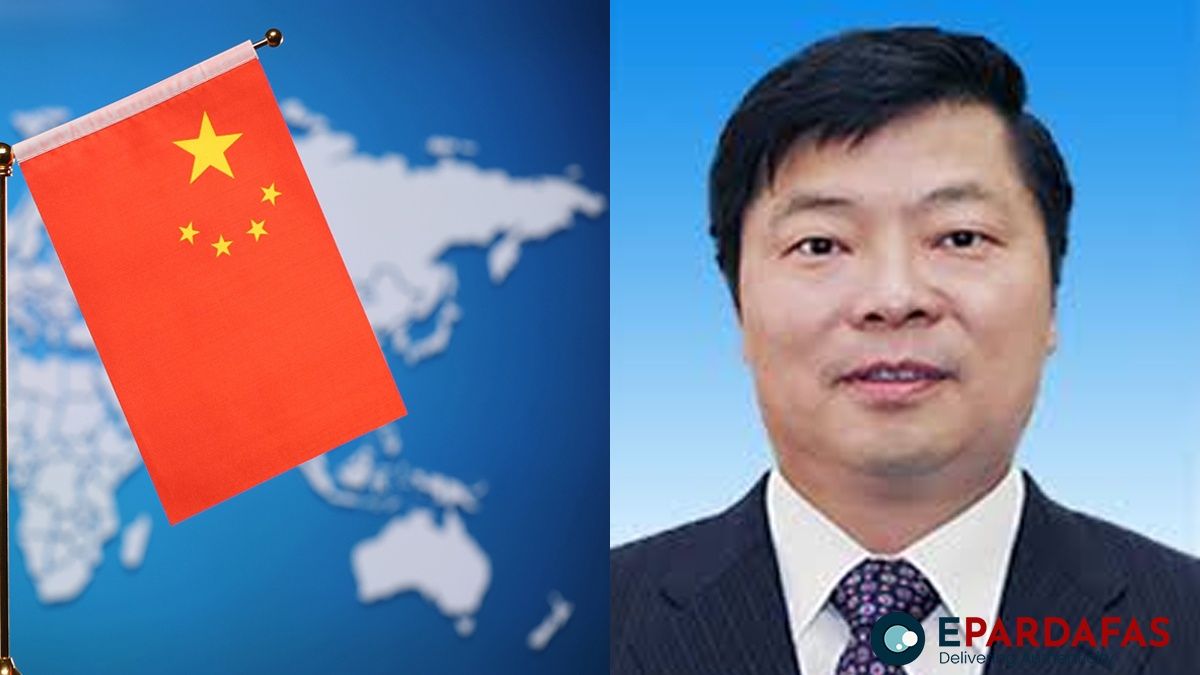
Beijing's highest anti-corruption authority announced on Sunday that Ouyang Weimin, the former president of the China Development Bank, has been placed under investigation for allegedly committing serious violations of party discipline and breaching the law. The Central Commission for Discipline Inspection and the National Commission of Supervision issued the brief announcement without elaborating on the specific allegations or the nature of the misconduct under review.
Ouyang's career in the financial sector spans several decades, beginning when he joined the Chinese Communist Party in 1986 and subsequently building his professional foundation at the People's Bank of China during the formative stages of his tenure. His ascent through the ranks of China's state financial apparatus reflected his prominence within the banking and development finance hierarchy, eventually positioning him for more senior appointments in both provincial and national leadership roles.
Prior to his appointment at the state development lender, Ouyang held the significant position of vice-governor of Guangdong, the prosperous province neighbouring Hong Kong that serves as one of China's most economically vital regions. His provincial responsibilities would have exposed him to complex financial governance, regional economic management, and intergovernmental coordination during a period of rapid economic activity and development across the Pearl River Delta.
In 2019, Ouyang was elevated to the presidency of the China Development Bank alongside the position of deputy party secretary, marking the pinnacle of his professional career managing one of China's most influential state-owned financial institutions. However, his tenure in this commanding position proved relatively brief, concluding in 2023 when he relinquished the presidency, though the circumstances surrounding his departure were not publicly detailed at that time.
The China Development Bank, established in 1994, operates as a cornerstone institution within China's state financial apparatus, commanding substantial capital and wielding considerable influence over sectoral development and infrastructure financing. As a state-funded and state-owned entity, the bank functions under direct oversight by the State Council and concentrates its lending activities on supporting economic growth within strategically important industries and economically disadvantaged regions that require targeted investment and development support.
Ouyang's investigation arrives amid Xi Jinping's expansive anti-corruption campaign, which has persisted throughout the president's tenure and has systematically targeted officials at multiple administrative levels alongside military personnel and Communist Party functionaries. The comprehensive nature of this enforcement drive has transformed governance across China's political and administrative structures, fundamentally altering accountability mechanisms and establishing new precedents for institutional oversight.
International observers and political analysts have noted that the anti-corruption campaign, while ostensibly designed to strengthen institutional integrity and eliminate graft, has simultaneously functioned as an instrument through which Xi Jinping has consolidated political power and removed potential rivals from positions of influence. The selective targeting of prominent figures, coupled with the opacity surrounding investigation outcomes, has prompted scrutiny regarding the campaign's dual nature as both an anti-graft initiative and a mechanism for political consolidation.
For Malaysia and the broader Southeast Asian region, developments within China's financial leadership carry significant implications given China's substantial role as a development financier and investor throughout the region. The China Development Bank represents a critical channel through which Beijing extends influence across infrastructure projects, regional connectivity initiatives, and economic cooperation frameworks that directly affect Southeast Asian nations' growth trajectories and strategic positioning.
The circumstances of Ouyang's investigation underscore the precarious position occupied by senior officials within China's political-financial ecosystem, where institutional responsibilities intersect with party loyalty and where the boundaries between professional conduct and party discipline remain ambiguously defined. His case demonstrates the vulnerability of even high-ranking administrators to sudden reversal of fortune within the Chinese system, regardless of their previous prominence or professional achievements.
As the investigation proceeds, international observers will monitor developments for signals regarding China's governance direction and the continued evolution of Xi Jinping's consolidation strategy. The outcome of Ouyang's case may carry implications for how Beijing manages leadership transitions within critical state institutions and the extent to which institutional autonomy coexists with centralised political control in contemporary Chinese governance structures.

