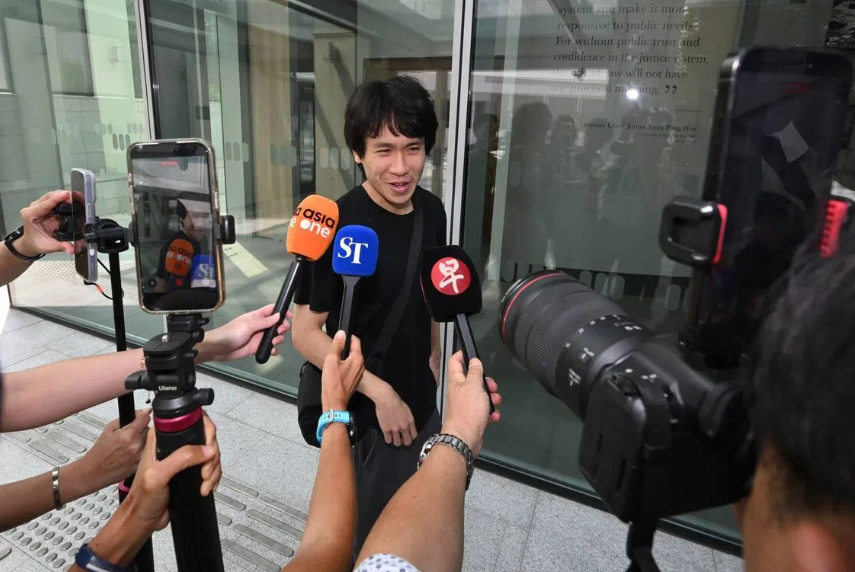
Former child actor Amos Yee faced a significant legal escalation when he appeared before Singapore's District Court on August 26, where prosecutors handed down four new charges that expanded his mounting legal troubles. The 27-year-old now confronts seven charges in total, a portfolio of offences that spans inflammatory speech on racial lines, dangerous advocacy related to child exploitation, and breaches of compulsory military service regulations. The case underscores the tensions between free speech and public order in the tightly regulated Singapore context, and raises broader questions about online conduct and social responsibility that resonate across Southeast Asia.
The racial disharmony allegations form a particularly contentious component of the charges. Yee is accused of knowingly attempting to promote discord between Singapore's ethnic communities through a series of blog posts published on April 7 and April 11. According to the prosecution, these posts explicitly alleged that the Malay and Indian populations faced systemic discrimination orchestrated by the Chinese majority, and he reportedly urged these communities to mount protests against the Government. This framing represents a deliberate attempt to mobilise ethnic grievances as a political tool, crossing what Singaporean law defines as the threshold of acceptable discourse. A video upload on May 27 allegedly contained similar claims about heavy discrimination against the Malay and Muslim community, extending the pattern of accusation.
Particularly alarming to authorities are two separate charges under the Protection from Harassment Act stemming from videos Yee created in 2021 in which he purportedly advocated decriminalising sexual material involving children and normalising child sexual abuse. According to court documents, Yee allegedly claimed that infants and children possessed the capacity to consent to sexual contact with adults—a proposition that strikes at fundamental legal and ethical protections for minors. He reportedly went further by calling for the abolition of laws prohibiting the production and distribution of child exploitation material. A further post published on June 30 allegedly reiterated these positions, suggesting a pattern rather than isolated comments. The gravity of these allegations cannot be overstated; they touch directly on child safety, an issue where Southeast Asian nations have increasingly tightened legislation and enforcement.
The Singapore Police Force received multiple complaints between April and July 2026 regarding Yee's online publications, triggering the formal investigation that culminated in these charges. Upon his August 26 appearance, the court set bail at S$15,000 but imposed stringent conditions reflecting the nature of the accusations. Notably, Yee was prohibited from posting anything online relating to his views on paedophilia or any content that might incite communal tensions between racial or religious groups. These restrictions, while severe, are designed to prevent further dissemination of material that authorities contend poses direct harm to public order and child safety. Yee is scheduled to return before the court on September 18 for a pre-trial conference that will determine procedural pathways forward.
The legal consequences attached to these charges are substantial. A conviction for knowingly promoting racial disharmony carries a potential sentence of up to three years' imprisonment, along with the possibility of substantial fines. Each violation under the Protection from Harassment Act carries a maximum fine of S$5,000, and with multiple counts, penalties could accumulate significantly. These sentencing ranges reflect Singapore's determination to treat such matters with utmost seriousness, positioning them as threats to social cohesion and child protection rather than mere expressions of unpopular opinion. For Malaysian and other Southeast Asian observers, the case illustrates how different jurisdictions calibrate the balance between expression rights and public protection.
Three additional charges under Singapore's Enlistment Act round out the prosecution's case against Yee. These charges allege he failed to report for mandatory pre-enlistment medical screening and breached exit permit requirements by leaving the country without authorisation. Specifically, prosecutors claim Yee departed Singapore without a valid exit permit during two separate periods: from December 13, 2015, to April 19, 2016, and again from December 15, 2016, to March 19, 2026. The timeline suggests a pattern of non-compliance with national service obligations spanning over a decade. Violations of enlistment rules expose offenders to fines reaching S$10,000, imprisonment up to three years, or both—penalties comparable in severity to those for the speech-related charges.
The role of digital platforms in amplifying Yee's message became evident when the Singapore Police Force issued a disabling direction under the Online Criminal Harms Act on August 18. In response, the social media platform X removed Yee's video content, demonstrating the mechanism through which authorities can compel platform cooperation in removing material deemed harmful. Separately, Yee received stop communication directions requiring removal of posts from his blog, extending enforcement beyond mainstream social media to independent publishing platforms. This multi-layered approach to content removal reflects Singapore's sophisticated regulatory approach to online speech, one that leverages both platform policies and direct legal instruments.
For the broader Southeast Asian context, the Amos Yee case exemplifies emerging tensions in the digital age regarding where speech ends and harmful conduct begins. Malaysia, with its own complex landscape of sedition laws, religious sensitivity provisions, and evolving approaches to online governance, may find instructive lessons in how Singapore balances the right to express controversial views against protecting vulnerable populations and maintaining social cohesion. The intersection of racial harmony considerations with child protection creates a compelling case study in how democracies with diverse populations manage competing interests. The relatively harsh penalties available under these charges, while reflecting Singapore's particular legal philosophy, also signal how seriously governments across the region treat threats to communal peace and child safety.
Yee's case also raises questions about rehabilitation and proportionality that animate legal discourse throughout Southeast Asia. At 27 years old, Yee has the potential for a lengthy legal and possibly correctional process ahead. Whether the judicial system will ultimately view him as a danger requiring incapacitation, a person requiring rehabilitation, or something between represents a significant determination not just for his personal future but for broader jurisprudential trends in the region. His earlier prominence as a child actor adds a layer of public interest and potential sympathy, factors that historically have influenced how courts and public opinion receive high-profile cases. The coming months will reveal whether the pre-trial conference on September 18 produces plea negotiations, settlement discussions, or confirmation of a contested trial.
The broader implications extend to digital citizenship and the responsibilities that come with online platforms in the modern age. Yee's charges suggest that even in relatively open information environments, there exist boundaries—particularly those protecting children and preventing ethnic violence—that remain non-negotiable. For civil society organisations, legal scholars, and policymakers across Malaysia and the broader region, the case provides an opportunity to examine how their own jurisdictions address similar challenges, whether existing frameworks adequately protect vulnerable populations, and whether the mechanisms currently in place strike appropriate balance between liberty and protection. The outcome of Yee's proceedings will likely influence how similar cases are prosecuted across Southeast Asia.

