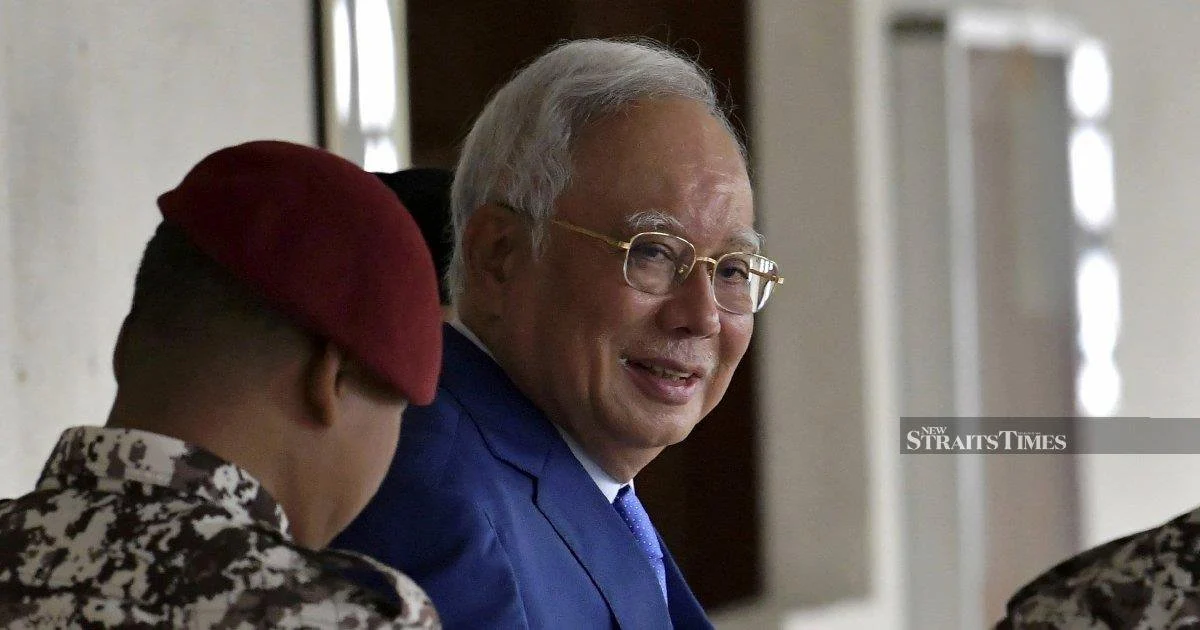
Former Skudai assemblywoman Marina Ibrahim has levelled serious accusations against the Democratic Action Party, contending that a DAP leader privately supported the notion of obtaining a royal pardon for former prime minister Datuk Seri Najib Razak and permitting him to serve his remaining sentence in his home rather than prison.
These claims, made in Johor Baru, strike at the heart of ongoing debates surrounding political accountability and the rule of law in Malaysia. The allegation suggests a gap between DAP's public positioning on governance standards and what party officials may be prepared to countenance behind closed doors. Such allegations are particularly significant given the Democratic Action Party's traditional role as a vocal advocate for institutional integrity and anti-corruption efforts throughout its history in Malaysian politics.
Najib Razak remains one of Malaysia's most controversial political figures following his conviction on charges related to the misappropriation of funds from 1Malaysia Development Berhad (1MDB). His case has dominated the nation's political discourse since 2015 and continues to generate intense debate about consequences for high-level corruption. Any suggestion that opposition figures might entertain softer outcomes for the former prime minister would represent a considerable shift in public expectations about how the political establishment treats former leaders implicated in financial scandals.
The nature of Marina Ibrahim's allegations encompasses two distinct elements that warrant separate consideration. The first involves securing a royal pardon, a prerogative power held by the Yang di-Pertuan Agong that requires the advice of the Cabinet and is ordinarily deployed sparingly. The second element concerns house arrest arrangements, which would effectively allow Najib to avoid incarceration while serving his sentence. Together, these measures would substantially alter the consequences he currently faces for his conviction.
Marafox's background as Skudai's representative adds credibility to her position within local political circles, though her current political affiliation and relationship with DAP merit examination. Former parliamentarians and assemblypeople frequently maintain relationships across party lines and gain access to confidential political conversations that rarely become public. Her willingness to disclose such discussions suggests either a significant deterioration in relations or a calculated strategic move in Malaysia's fractious political landscape.
The timing of these allegations deserves scrutiny within the broader context of Malaysian politics. Johor has been a crucial battleground between opposing political coalitions, and tensions between component parties within both governing and opposition structures have periodically generated internal criticism. DAP's position in Johor's political ecosystem is complex, balancing its national anti-corruption messaging with practical coalition arrangements and electoral considerations that sometimes require difficult compromises.
From a Malaysian governance perspective, such allegations highlight the gap that frequently exists between political positioning during elections and private negotiations once parties contemplate assuming or maintaining power. This phenomenon is not unique to DAP but affects Malaysian political parties across the spectrum. The suggestion that opposition figures might accommodate variations on punishment for convicted former leaders challenges simplistic narratives about principled political divisions in Malaysian politics.
The implications for regional observers are equally notable. Southeast Asian democracies frequently grapple with questions of transitional justice and how new administrations handle predecessors implicated in corruption or abuse of power. Malaysia's approach to former leaders like Najib Razak influences regional perceptions about whether systems can genuinely hold powerful figures accountable or whether political pressures eventually lead to accommodation.
For Malaysian voters, these allegations underscore the importance of scrutinising public claims against private conduct by political organisations. Citizens considering their electoral choices must weigh whether parties can be trusted to implement their stated commitments to accountability when they face genuine opportunities to govern. The credibility gap between campaign promises and governing realities represents a persistent challenge to democratic legitimacy.
DAP's response to Marina Ibrahim's allegations will prove significant in shaping how the public interprets the claim. The party's historical positioning as a guardian of anti-corruption standards means that public perception of inconsistency on such matters carries amplified consequences. Whether the party dismisses the allegation, provides context, or acknowledges any private discussions will influence both its standing among supporters and broader confidence in the opposition's commitment to institutional reform.
These accusations also highlight the substantive question of how Malaysia should treat Najib Razak going forward. His legal challenges continue through the appellate process, and questions about eventual pardons or sentence modifications will eventually confront whichever coalition holds power. The political establishment's handling of this matter—whether through consistent application of rules or through eventual accommodation—will communicate important lessons about Malaysian democracy's capacity to maintain standards.
The broader concern emerging from Marina Ibrahim's allegations involves whether Malaysian political culture can sustain commitments to accountability when internal political pressures mount. These dynamics extend beyond any single individual or party, touching fundamental questions about institutional strength, political culture, and whether democratic governance can survive the persistent tension between principle and pragmatism that characterises contemporary Malaysian politics.

