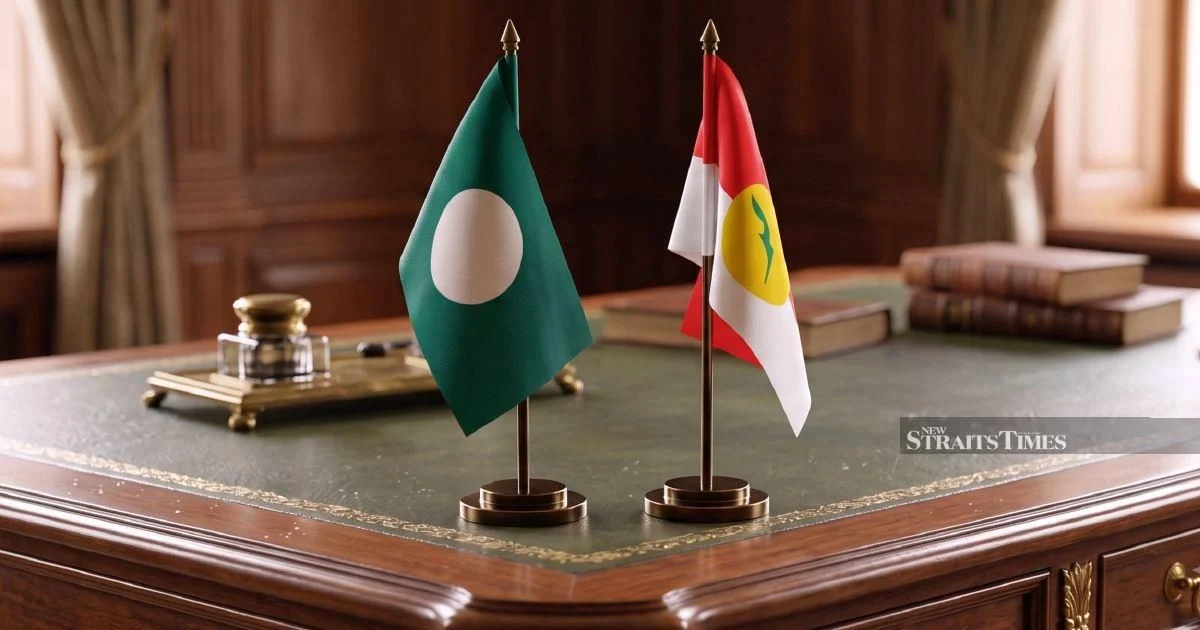
Political observers in Kuala Lumpur have dismissed speculation that Umno and Pas will cement a formal alliance ahead of the Negri Sembilan state election, even as Barisan Nasional's emphatic victory in Johor has reinvigorated coalition politics in the country. The assessment reflects deeper structural tensions between the two parties that transcend electoral mathematics and speaks to the ideological divergence that has long complicated their relationship at both national and state levels.
Analysts point to the divergent foundations of Umno and Pas as the principal obstacle to deeper institutional integration. Umno, as the backbone of Barisan Nasional since Malaysia's independence, has historically positioned itself as a moderate Malay-Muslim party accommodating multireligious governance. Pas, by contrast, has anchored its political project in Islamic governance principles and has repeatedly stressed that its vision for Malaysia diverges fundamentally from secular frameworks embedded in the federal constitution and the Barisan Nasional model. These doctrinal differences create structural incompatibility that no electoral calculus alone can dissolve.
The Johor victory, while undoubtedly significant for Barisan Nasional's revival, does not automatically translate into momentum for state-level formal mergers. Johor presented a unique political environment where Umno faced relatively fragmented opposition and where Barisan Nasional's traditional organisational machinery operated effectively. Negri Sembilan, however, presents a distinct electoral landscape with different demographic configurations, local political histories, and opposition dynamics. Analysts caution that template-based assumptions about replicating Johor's success oversimplify the nuanced politics that operate at state levels across Malaysia's federation.
A formal arrangement would require both parties to compromise on matters of constitutional interpretation, religious governance, and secular-religious boundaries—issues on which they have demonstrated intransigence during previous coalition negotiations. Umno's commitment to constitutional monarchy and secular administration, alongside its stewardship of federal institutions, sits uneasily alongside Pas's stated commitment to positioning Islamic law and Islamic governance principles at the centre of policy formulation. These are not mere rhetorical differences but rather reflect fundamentally different visions of the Malaysian state.
Moreover, the political incentive structure for Pas has shifted considerably in recent years. Pas's growth in electoral support, particularly in Peninsular Malaysia, has reduced its dependency on larger coalition partners. The party has achieved parliamentary representation and state-level influence through standalone campaigns or through selective cooperation with Perikatan Nasional. For Pas leadership, a formal subsumption within Barisan Nasional structures might diminish the party's bargaining power, reduce its ability to articulate a distinct Islamic governance agenda, and potentially alienate grassroots supporters who view the coalition as ideologically compromised. These internal party considerations operate independently of broader electoral outcomes.
For Umno, equally, a formal alliance carries significant costs. The party's base contains constituencies deeply uncomfortable with Pas's religious conservatism and its historical advocacy for substantive changes to Malaysia's secular constitutional architecture. Umno has worked methodically to position itself as the guardian of moderate Islamic politics and constitutional federalism, a positioning that would be muddied by institutional merger with Pas. Furthermore, Umno's traditional stakeholders—Chinese and Indian community leaders—have expressed reservations about political arrangements that elevate Pas's role in coalition governance, viewing such arrangements as potentially compromising the secular safeguards embedded in the Federal Constitution.
The distinction between tactical cooperation and formal alliance also merits attention. Umno and Pas have operated together in various configurations across different states and at the federal level without institutionalising merger. This flexible arrangement allows both parties to cooperate on specific electoral objectives while maintaining separate organisational identities, distinct messaging strategies, and independent revenue streams. Such ad hoc cooperation, analysts suggest, may be the sustainable equilibrium between the two parties rather than a transitional phase toward structural integration.
Negri Sembilan specifically presents complications that make formal alliance less strategically attractive. The state has historically balanced Umno dominance with residual Pas presence and a significant non-Malay-Muslim electorate distribution. The state's political dynamics have incorporated independent Malay-Muslim politicians, PKR representation in certain constituencies, and localised political movements that respond to specific grievances around land, development, and governance. A formal Umno-Pas arrangement might mobilise certain voting segments while simultaneously alienating others—a calculation that parties will conduct separately rather than through an integrated alliance structure.
Analysts also note that formalising an alliance would require both parties to establish binding agreements on candidate selection, resource allocation, campaign coordination, and post-election government formation. These institutional arrangements demand transparency and binding commitment; informal cooperation permits flexibility. Given that both Umno and Pas have occasionally competed directly against one another in recent elections, and given historical instances where cooperation broke down into conflict, the transaction costs of formal institutionalisation remain substantial. The reputational risks for each party of alliance breakdown similarly create incentives against formal commitment.
The timing of the Negri Sembilan election in Malaysia's broader political cycle further influences this calculation. The state poll occurs within a context of fluid federal politics, where both Umno and Pas must balance state-level objectives against national positioning, internal party pressures, and relationships with coalition partners and rivals. Neither party has strong incentives to lock themselves into rigid state-level arrangements that might constrain their flexibility at the federal level or create intra-party divisions. Electoral pragmatism, in other words, may actually argue against formalisation.
Moving forward, political observers anticipate continued cooperation between Umno and Pas in Negri Sembilan conducted through traditional informal mechanisms rather than institutional merger. This approach permits both parties to claim credit for joint electoral success while avoiding the structural constraints and internal party complications that formal alliance would entail. The Johor victory will likely influence tactical calculations—candidate selection, campaign intensity, and resource allocation—rather than propelling the parties toward permanent institutional integration. For Malaysian politics, this suggests that coalition arrangements will continue operating in a fluid, context-specific manner rather than crystallising into stable, formalised blocs.

