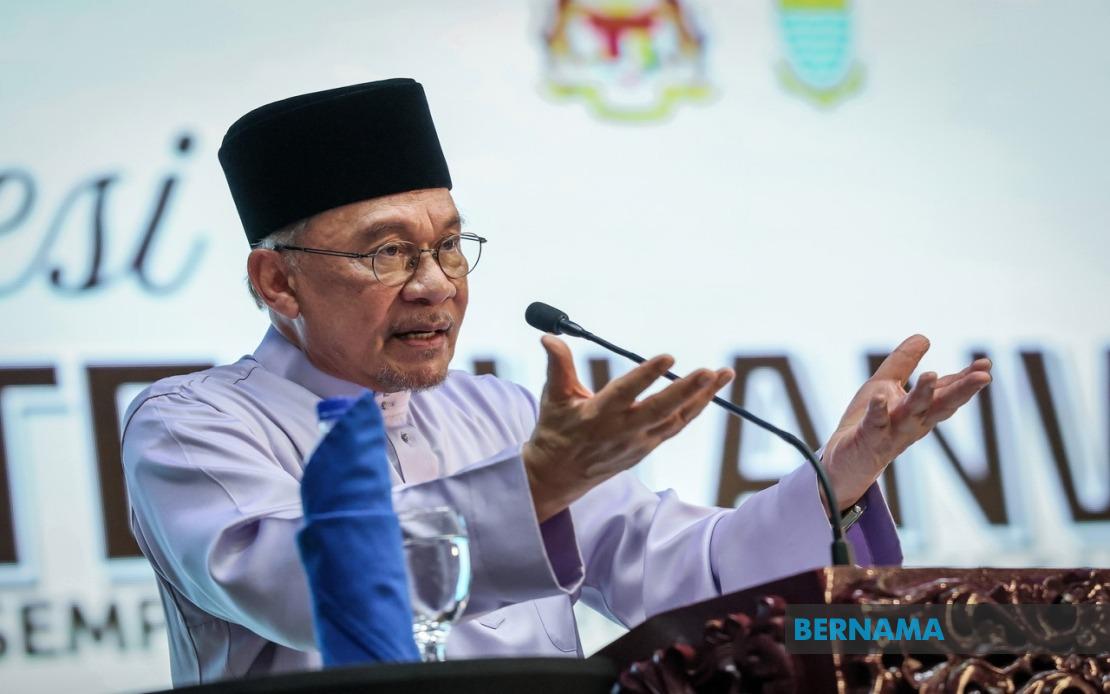
Prime Minister Datuk Seri Anwar Ibrahim has committed the government to allocating funds for Form Six student allowances in the 2027 Budget, which Parliament will consider in October. The announcement, made during a campus engagement event in Bukit Mertajam, represents a policy shift to address what Anwar described as an inequitable gap in the nation's education financing framework.
The Malaysian education system currently provides financial assistance to students across multiple levels, yet Form Six—the two-year pre-university pathway taken by thousands of Malaysian teenagers—has remained excluded from this safety net. Anwar, who serves concurrently as Finance Minister, acknowledged this disparity directly, noting that primary and secondary students through Form Five already benefit from government allowances, as do university students. This oversight has left Form Six pupils at a relative disadvantage despite occupying a critical transition phase in their academic journey.
During a dialogue with pre-university students, Anwar became aware of this inconsistency and resolved to correct it through the upcoming budget allocation. The decision reflects broader government efforts under the MADANI framework to ensure comprehensive educational support across all age groups and academic stages. By extending allowances to Form Six, the administration aims to reduce financial barriers that may prevent lower-income families from pursuing higher education pathways.
Education Minister Datuk Seri Fadhlina Sidek confirmed that the Form Six allowance proposal emerged from the MADANI Pre-University Congress convened in Klang earlier that day. Among twelve resolutions tabled by student delegates, the allowance request garnered sufficient backing to warrant ministerial endorsement and budget consideration. Fadhlina stated that the Education Ministry had accepted all resolutions presented and would conduct detailed feasibility studies to determine implementation mechanisms and timelines.
The allocation amount remains undetermined at this stage, contingent upon the government's fiscal position when October's budget is finalised. Anwar cautioned that while the political commitment is firm, the actual quantum will depend on available resources and competing budgetary priorities. This prudent approach reflects the complexity of managing Malaysia's public finances amid competing demands from healthcare, infrastructure, and social welfare programmes.
The timing of this announcement carries significance for Malaysian education policy. Form Six has traditionally been pursued by approximately 15 to 20 percent of secondary graduates, serving as a domestic alternative to overseas pre-university qualifications. By financially supporting Form Six students, the government may encourage greater retention within the local education system whilst simultaneously alleviating household expenses during a formative educational period.
For families in lower-income brackets, Form Six allowances could prove transformative. Currently, many talented students forgo pre-university education due to financial constraints, instead entering the workforce or pursuing alternative tertiary pathways. Removing this financial disincentive may unlock human capital that would otherwise remain underdeveloped, strengthening Malaysia's competitiveness in knowledge-based sectors.
The policy also aligns with the government's broader social protection agenda. The MADANI framework emphasises inclusion and equity, principles reflected in successive policy announcements aimed at vulnerable populations. Student allowances constitute a form of targeted social spending that directly supports household incomes during critical educational phases, complementing other welfare initiatives in health and housing.
Implementing Form Six allowances will require coordination between the Finance Ministry and Education Ministry regarding disbursement mechanisms, eligibility criteria, and verification procedures. Whether allowances will target all Form Six students or focus on needs-based distribution remains to be clarified during the budget period. Similarly, alignment with existing allowance schemes for younger students will require careful design to ensure consistency and prevent duplication.
Regionally, Malaysia's expansion of educational allowances reflects a trend among Southeast Asian governments to invest in human capital development. Countries including Thailand and Indonesia have implemented or expanded student assistance programmes, recognising that education financing barriers disproportionately affect rural and low-income populations. Malaysia's move positions it within this trajectory of enhanced education accessibility across the region.
The announcement also carries political dimensions. By responding to student feedback gathered through grassroots engagement, the government signals responsiveness to youth concerns and stakeholder consultation. In an era of declining youth political participation across democracies, such direct engagement mechanisms may strengthen institutional legitimacy and trust in governance processes.
Looking ahead, the Form Six allowance announcement provides educators and students with provisional expectations regarding October's budget, potentially influencing school planning and student aspirations. However, the finalised amount and implementation details will be crucial in determining the policy's actual impact. Stakeholders in education will monitor budget proceedings closely to assess whether the commitment translates into meaningful financial support that substantively expands Form Six accessibility.

