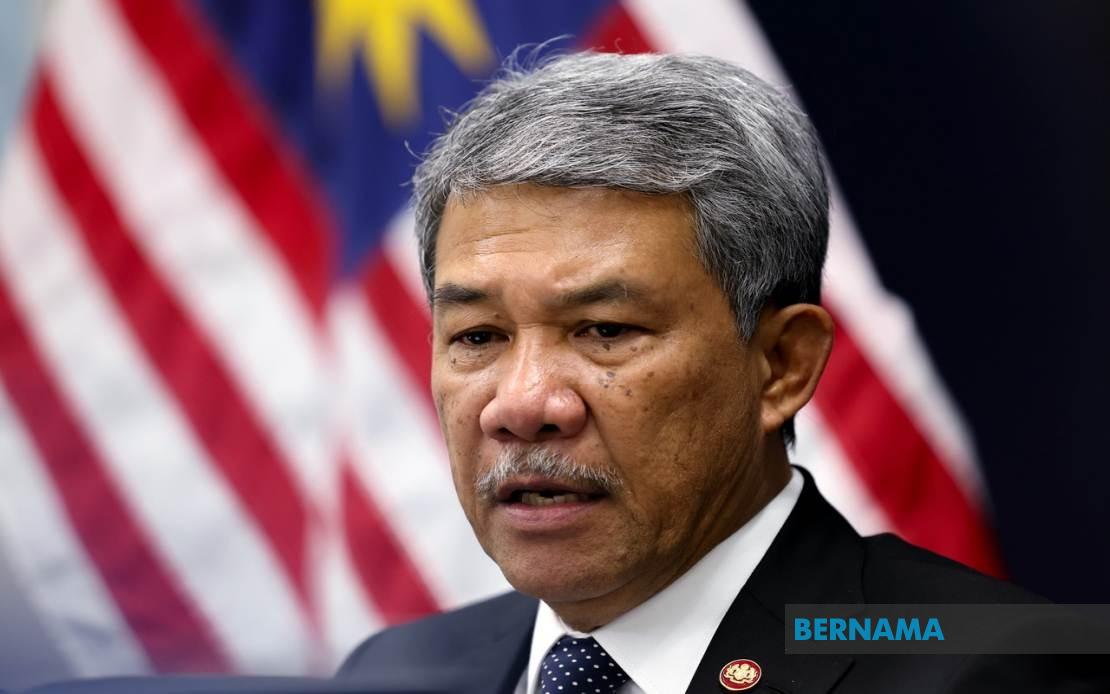
Malaysia's Foreign Minister Datuk Seri Mohamad Hasan touched down in Manila on Sunday to head the country's representation at the 59th ASEAN Foreign Ministers' Meeting (AMM), alongside a series of related ministerial gatherings. His arrival at Ninoy Aquino International Airport at 4.15 pm local time marked the beginning of a substantial diplomatic engagement under the Philippines' ASEAN Chairmanship for 2026, themed "Navigating Our Future, Together". He was formally received by the Philippine Department of Foreign Affairs Assistant Secretary and Chief of Protocol Ariel Rodelas Peñaranda, with Malaysian Ambassador to the Philippines Datuk Abdul Malik Melvin Castelino Anthony also present for the reception.
The Manila visit represents a critical juncture in ASEAN diplomacy, with discussions set to extend through Thursday and encompass some of the region's most pressing concerns. The unfolding crisis in West Asia is anticipated to dominate the agenda, reflecting ASEAN's deepening interest in geopolitical developments beyond its traditional spheres of influence. This shift underscores how interconnected regional security has become, with tensions in the Middle East now commanding attention alongside traditional Southeast Asian matters. Malaysia's participation underscores its commitment to maintaining ASEAN's voice on international challenges while balancing the group's collective interests with its own strategic positioning.
Among the most significant components of Mohamad's schedule is an extended informal consultation on implementing the Five-Point Consensus regarding Myanmar. This mechanism, developed by ASEAN to address the post-coup crisis, continues to face implementation challenges despite repeated high-level discussions. The Malaysian delegation will engage in follow-up conversations based on recommendations from the ASEAN Leaders' Review and Decision on the consensus, with particular attention to the ongoing conflicts and deteriorating humanitarian conditions within Myanmar's borders. For Malaysia, which has substantial Myanmar migrant populations and significant economic ties to the country, the situation carries both humanitarian and pragmatic dimensions that justify sustained diplomatic attention.
Beyond Myanmar, the Foreign Minister's calendar encompasses a broad spectrum of ASEAN institutional engagements. These include meetings with the ASEAN Intergovernmental Commission on Human Rights (AICHR), discussions with the Southeast Asia Nuclear Weapon-Free Zone (SEANWFZ) Commission, and participation in the 27th ASEAN Plus Three Foreign Ministers' Meeting. The AICHR interface represents an important touchpoint for addressing human rights concerns across the region, while the SEANWFZ engagement reflects ASEAN's enduring commitment to nuclear non-proliferation—a principle that carries particular significance given the region's strategic location and the involvement of major nuclear powers in regional affairs.
The schedule also includes the 33rd ASEAN Regional Forum (ARF) and the 16th East Asia Summit Foreign Ministers' Meeting (EAS FMM), both critical platforms for dialogue with major powers including China, the United States, India, Japan, and Russia. These multilateral forums provide essential channels for managing great power competition in Southeast Asia and ensuring that dialogue mechanisms remain functional even as geopolitical tensions rise elsewhere. For Malaysia, these meetings offer opportunities to articulate ASEAN's perspective on regional architecture and to reinforce the principle that regional security arrangements should remain open to all stakeholders while preserving ASEAN's centrality.
A notable addition to Mohamad's engagements is the fifth Conference on Cooperation among East Asian Countries for Palestinian Development (CEAPAD), which reflects the broader Middle Eastern concerns commanding heightened attention during this diplomatic cycle. This conference underscores Malaysia's historical commitment to Palestinian issues and signals ASEAN's broader engagement with Middle Eastern affairs at a time of significant regional instability. The inclusion of this event within the AMM framework demonstrates how traditional ASEAN meetings now encompass global concerns that directly or indirectly affect member states' interests and constituencies.
On Wednesday, Mohamad will assume a prominent coordinating role when he co-chairs the ASEAN Post Ministerial Conference (PMC) with Chinese Foreign Minister Wang Yi. This responsibility flows from Malaysia's designation as the country coordinator for ASEAN-China Dialogue Relations for the 2024-2027 period, a role that carries substantial responsibility in managing one of ASEAN's most complex bilateral relationships. The ASEAN-China relationship encompasses significant economic benefits through trade and investment, alongside territorial disputes in the South China Sea that require careful diplomatic management. Malaysia's coordination role positions it as a bridge-builder in this crucial relationship, requiring calibrated diplomacy to maintain productive engagement while addressing legitimate regional concerns.
Beyond the ASEAN PMC with China, Mohamad will also participate in separate PMC meetings with all of ASEAN's established Dialogue Partners: Australia, Canada, the European Union, India, Japan, New Zealand, the Republic of Korea, the Russian Federation, the United Kingdom, and the United States. These sequential meetings represent an intensive engagement schedule that underscores ASEAN's position at the intersection of multiple international alignments. For Malaysia, these conversations provide bilateral opportunities to discuss specific concerns ranging from trade relations to regional security cooperation, while also reinforcing ASEAN's collective approach to major power engagement.
The diplomatic calendar includes bilateral meetings on the sidelines with various counterparts, arrangements that typically address issues beyond the formal agenda and allow for candid exchanges on sensitive matters. Such bilateral engagements often prove as consequential as formal multilateral meetings, providing space for addressing bilateral grievances, exploring new cooperation frameworks, or coordinating positions on broader regional issues. For Mohamad, these one-on-one conversations will likely cover matters ranging from bilateral trade relations to regional security architecture and Malaysia's specific strategic concerns.
The timing and scope of this diplomatic engagement reflects ASEAN's ongoing effort to remain relevant and central in a rapidly evolving regional environment characterized by great power competition, transnational challenges, and evolving security concerns. Malaysia's active participation through Foreign Minister Mohamad's leadership demonstrates the country's commitment to multilateral engagement even as it navigates complex bilateral relationships with various regional and global powers. The breadth of issues being addressed—from Myanmar's humanitarian crisis to Middle Eastern developments to strategic partnerships with major powers—illustrates how ASEAN's diplomatic agenda has expanded far beyond its original focus on regional economic cooperation and non-interference in internal affairs.
For Malaysian observers and policymakers, the outcomes of these Manila meetings will likely shape Malaysia's bilateral and multilateral relationships in the coming months, particularly regarding approaches to Myanmar, positioning in ASEAN-China relations, and engagement with broader Indo-Pacific strategic developments. The meetings also provide a forum for Malaysia to articulate its interests in regional stability, sustainable development, and the preservation of rules-based regional order—principles that remain central to Malaysia's foreign policy orientation despite shifting regional power dynamics.

