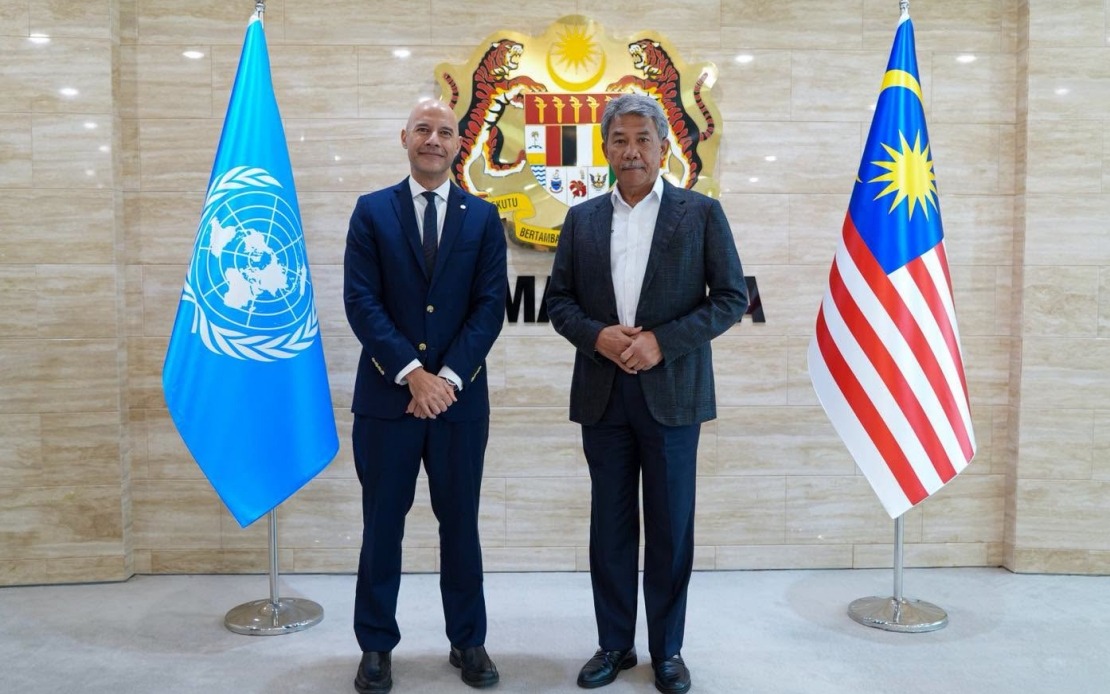
Foreign Minister Datuk Seri Mohamad Hasan hosted a courtesy call from the United Nations Resident Coordinator (UNRC) for Malaysia Nikolas Myint at the ministry's headquarters in Wisma Putra on Wednesday, signalling Malaysia's commitment to deepening engagement with the global multilateral system at a time when regional and international challenges demand coordinated responses.
The meeting provided both officials an opportunity to explore the breadth of potential collaboration between the Malaysian government and United Nations agencies operating within the country. Such diplomatic encounters, while seemingly ceremonial, often establish the groundwork for substantive partnerships on development, humanitarian, and governance matters that directly affect Malaysian citizens and regional stability.
In remarks posted on social media, Mohamad underscored Malaysia's recognition of the United Nations' crucial role in tackling multifaceted global challenges ranging from climate change and pandemics to conflict resolution and sustainable development. This acknowledgment reflects Kuala Lumpur's broader positioning as an active participant in international affairs rather than a passive observer, particularly as Malaysia navigates complex geopolitical dynamics in Southeast Asia and beyond.
The Foreign Minister emphasized that Malaysia intends to maintain robust working relationships with both Myint's office and the various UN agencies embedded throughout the country. This collaborative approach aligns with Malaysia's development priorities and its commitment to contributing meaningfully to global progress, suggesting that the government views UN partnerships not merely as diplomatic courtesy but as practical instruments for advancing domestic and regional objectives.
Myint, who assumed his position on May 31, 2026, carries responsibility for coordinating UN operations across three nations—Malaysia, Singapore, and Brunei—a tri-country arrangement that underscores the United Nations' efficiency in deploying limited resources across Southeast Asia. His appointment comes as the region faces mounting pressure from climate-related crises, migration flows, and economic uncertainties that increasingly demand multilateral solutions transcending national borders.
The timing of this courtesy call is noteworthy given the evolving landscape of international cooperation in Southeast Asia. Malaysia, as the most populous nation among the three countries under Myint's purview, typically takes the lead in setting regional UN engagement patterns. The meeting therefore carries implications not just for bilateral Malaysian-UN ties but for how the broader UN presence in the region operates and responds to local priorities.
Such diplomatic exchanges also reflect Malaysia's careful balance between maintaining productive relationships with established international institutions while navigating its own strategic interests. By receiving the UN Resident Coordinator prominently and reaffirming commitment to cooperation, Mohamad signals continuity in Malaysia's multilateral engagement regardless of domestic political shifts or international tensions that periodically test the cohesion of global systems.
For Malaysian stakeholders in development sectors, humanitarian work, governance reform, and environmental protection, the strength of the relationship between the Foreign Ministry and the UNRC matters considerably. A well-coordinated partnership can facilitate smoother implementation of UN-supported programmes, faster mobilization of technical expertise, and more efficient utilization of international resources for domestic priorities including poverty reduction, education, health services, and climate adaptation.
The courtesy call also demonstrates Malaysia's openness to the UN system's oversight and advisory functions at a moment when some nations have grown increasingly skeptical of international institutions. By maintaining warm diplomatic ties and publicly endorsing UN work, Mohamad positions Malaysia as a responsible stakeholder within the global order, a posture that carries diplomatic dividends when Malaysia seeks support for its own initiatives at the United Nations or requires international backing on regional matters.
Myint's mandate covering three distinct nations with different governance systems, development trajectories, and UN engagement histories presents unique challenges requiring diplomatic finesse and contextual understanding. Malaysia's openness to his coordination efforts, as demonstrated through this high-level meeting, sets a constructive tone for the practical implementation of UN programmes across the subregion and potentially influences how Singapore and Brunei approach their own UN partnerships.
Looking ahead, the substance of Malaysia-UN cooperation will likely focus on sustainable development goals implementation, disaster risk reduction given the region's vulnerability to typhoons and floods, technical capacity building, and potentially expanded engagement on global governance issues where Malaysian expertise and perspectives can contribute meaningfully to international deliberations. The courtesy call thus represents not merely a diplomatic formality but an investment in institutional relationships that will shape how Malaysia responds to and influences global developments affecting regional prosperity and security.

