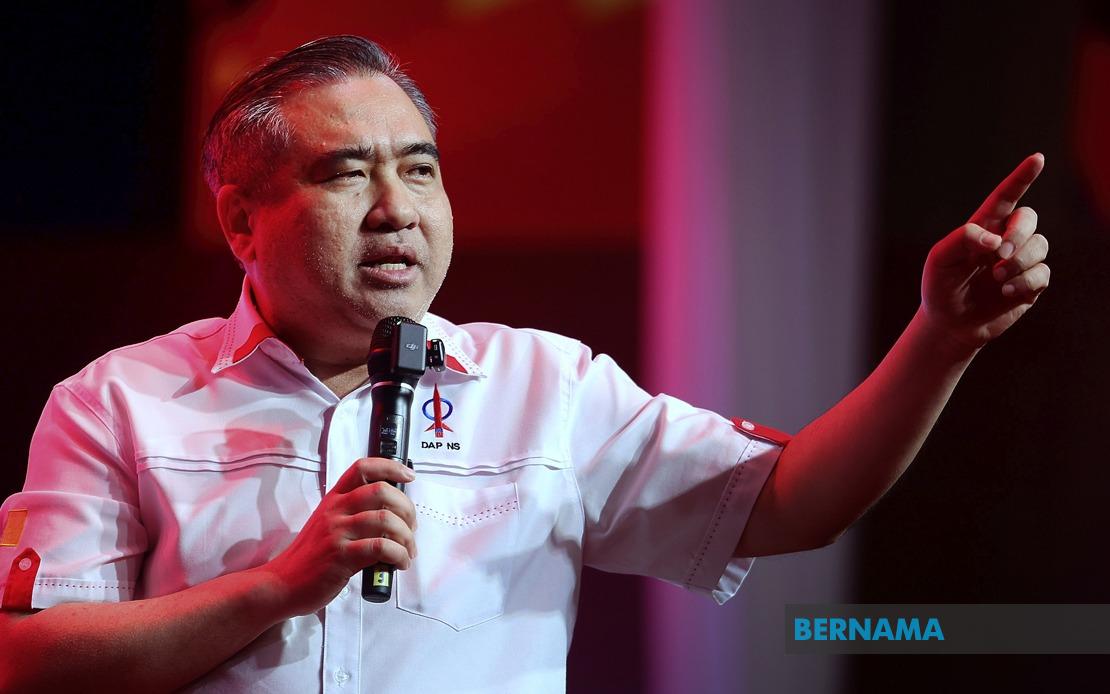
Anthony Loke, the DAP secretary-general and Transport Minister, has made a clear pledge to steer clear of personal attacks during the 16th Negeri Sembilan state election campaign, arguing instead that electoral contests should centre on substantive proposals and the concrete benefits parties can deliver to voters. Speaking in Seremban following a Pakatan Harapan dinner, Loke emphasised that meaningful political discourse requires candidates and parties to articulate their vision and policy offerings rather than resort to mud-slinging or character assassination.
Loke's approach reflects a broader disciplinary line established by Prime Minister Datuk Seri Anwar Ibrahim, who has advised government office holders to exercise restraint and avoid launching broadsides against the federal administration while campaigning in state contests. By adopting this stance, Loke demonstrates alignment with the administration's attempt to maintain decorum and professionalism across the political landscape, even as electoral competition intensifies. This measured posture stands in contrast to the often acrimonious tone that has characterised previous Malaysian election cycles, where personal jibes and attacks on rivals' character frequently dominated the campaign narrative.
The Transport Minister's decision to refrain from attacking Cabinet colleagues, particularly Foreign Minister Datuk Seri Mohamad Hasan, reflects the practical realities of governing in a coalition administration. Loke highlighted that government ministers work collaboratively on a weekly basis during Cabinet meetings to address shared national priorities and responsibilities. In this context, launching personal salvos during election season would undermine the collegial working relationships essential for effective governance. This tension between electoral competition and governmental cooperation represents a distinctive challenge for administrations built on multi-party coalitions, where rivals may contest in one election while remaining ministerial partners in another.
Furthermore, Loke's decision to abstain from campaigning in the Rantau state constituency, where Mohamad Hasan stands as the BN candidate, constitutes a symbolic gesture aimed at preserving harmony within the broader Unity Government framework. By strategically limiting his presence in certain battlegrounds, Loke signals respect for coalition partners and acknowledges the delicate political balance that holds the federal administration together. Such restraint, though potentially limiting his campaign's reach, underscores the premium placed on institutional stability over short-term electoral advantage.
Instead of diversifying his campaign efforts, Loke is concentrating his energies on the Chennah constituency, which he himself contests, whilst simultaneously marshalling support for DAP candidates across the state. His additional campaign role supporting Menteri Besar Datuk Seri Aminuddin Harun in the Linggi seat demonstrates the interconnected nature of state elections, where federal ministers often leverage their standing and resources to benefit coalition partners at the state level. This layered approach allows Loke to maintain relevance across multiple electoral frontiers whilst adhering to his stated principle of avoiding personal confrontations.
Addressing concerns that his ministerial duties have caused him to neglect Chennah, Loke reframed his Cabinet position as an asset rather than a liability to his constituency. He argued that holding ministerial office provides him with enhanced capacity to channel developmental resources and government allocations to his constituents, citing specific initiatives such as Kampung MADANI projects. This counterargument challenges a common criticism levelled against cabinet ministers who contest seats—that their divided attention leads to constituency neglect. Instead, Loke positioned his ministerial role as a vehicle for accelerated development and improved service delivery, implicitly suggesting that voters benefit from electing representatives embedded in the highest echelons of government.
Loke further buttressed this argument by emphasising his establishment of a dedicated full-time team tasked with managing constituency affairs and addressing resident grievances. This institutional mechanism, he suggested, compensates for any time constraints imposed by his ministerial portfolio, enabling constituent services to proceed without interruption regardless of his own schedule pressures. Such an approach reflects the professionalisation of Malaysian electoral politics, where successful candidates increasingly construct administrative support structures parallel to formal government machinery.
The election timeline now moves toward its climactic phase, with early voting scheduled for July 28 and main polling day set for August 1. These dates create a compressed campaign window during which candidates must crystallise their messaging and maximise voter engagement. For Loke and other Pakatan Harapan candidates, the challenge involves presenting compelling policy alternatives whilst adhering to disciplinary guidelines that restrict their ability to deploy certain rhetorical weapons against opponents.
The Negeri Sembilan contest carries broader implications for the stability and direction of Malaysia's Unity Government. A strong performance by Pakatan Harapan could strengthen the federal coalition's political legitimacy and electoral credibility ahead of future national contests, whilst conversely, significant losses might embolden critics questioning the administration's capacity to deliver. For Loke personally, the election provides a platform to validate his political strategy of combining ministerial effectiveness with measured campaign conduct, demonstrating that electoral success need not rely on personal attacks or scorched-earth tactics. Southeast Asian observers watching Malaysian politics may also find instructive lessons in how coalition administrations balance intra-alliance harmony with healthy democratic competition.
For Malaysian voters in Negeri Sembilan, the emerging campaign dynamic suggests a somewhat constrained choice environment, wherein key decision-makers on the governing side have voluntarily accepted restrictions on their ability to articulate criticisms of their opponents. Whether this produces the elevated policy discourse that Loke envisions, or instead results in muted campaign messaging that leaves voters with insufficient information to make informed choices, remains a question that will unfold across the coming weeks.

