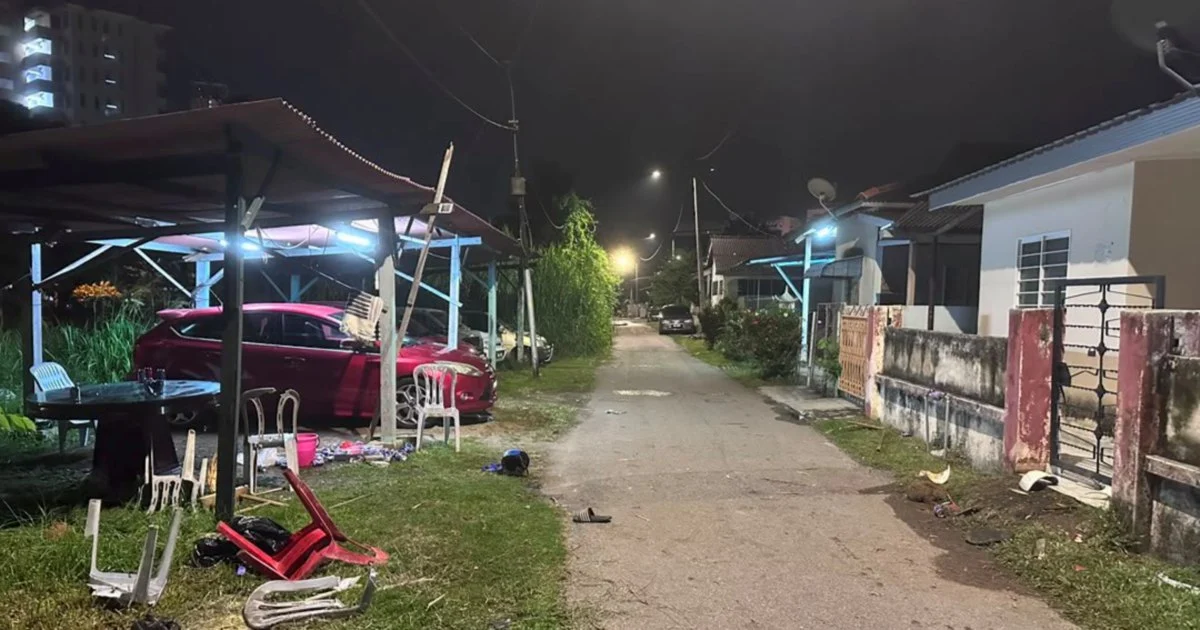
Police in Melaka have arrested five individuals suspected of carrying out a vicious attack that hospitalised two men, leaving one victim in critical condition with a fractured skull. The incident unfolded in the pre-dawn hours in Jalan Pengkalan, Kampung Pengkalan Rama Pantai, as the injured pair attempted to recover a motorcycle parked near a local temple.
The circumstances surrounding the assault paint a picture of calculated violence that raises fresh concerns about public safety in the state. Initial reports suggest that the two victims arrived at the location with the specific purpose of retrieving the motorcycle, unaware that they would encounter a larger, organised group intent on committing violence. The timing of the incident—during the early morning when foot traffic and witness presence would be minimal—suggests a degree of premeditation, though police investigations continue to establish the precise sequence of events.
The victim left in critical condition sustained a fractured skull, injuries that demand immediate and potentially prolonged medical intervention. Head trauma of this severity carries substantial risks of permanent neurological damage, casting a shadow over the long-term prognosis for the affected individual. The second victim sustained injuries of a less severe nature, though both men required emergency medical treatment following the assault.
The rapid apprehension of five suspects within hours of the incident demonstrates the responsiveness of Melaka police operations, though the swift conclusion belies the serious questions raised by the attack itself. The fact that five individuals acted in concert suggests this was not a spontaneous confrontation but rather a deliberate assault, potentially rooted in prior disputes or territorial tensions. Police are now working to establish the motive behind the violence and the relationship—if any—between the perpetrators and their victims.
The location of the assault near a place of worship adds another troubling dimension to the incident. Temples and other religious spaces are traditionally considered sanctuaries, areas where community members should feel safe regardless of the hour. An attack occurring in such close proximity to a temple strikes at the fabric of social trust that underpins community cohesion, particularly in Malaysia's multicultural context where religious sites command respect across communal lines.
Investigators will likely focus on establishing whether the victims were specifically targeted or whether they became victims of opportunity. The circumstances—that they arrived to retrieve a motorcycle—suggest either that the assault was premeditated and the victims were expected, or that the attack was opportunistic in nature. The involvement of five perpetrators makes random victimisation less probable, pointing instead toward a conflict with defined participants.
The incident serves as a stark reminder of the persistent challenge posed by street violence in urban and semi-urban Malaysian areas. While headline-grabbing shootings and gang-related deaths dominate the national discourse, assaults of this nature—brutal, organised, and capable of inflicting life-altering injuries—occur with concerning frequency across the country. The fractured skull sustained by one victim represents exactly the type of grievous bodily harm that transforms what might be dismissed as a 'street altercation' into a serious criminal matter with potential lifelong consequences.
For residents of Melaka, particularly those in the Jalan Pengkalan area, the incident will likely prompt reflection on personal security practices. Early morning or late-night retrieval of vehicles or property now requires careful consideration of risks, and many may shift toward daylight or accompanied activities. This represents a subtle but real erosion of the freedom residents should reasonably expect to enjoy in their own neighbourhoods.
The arrest of the five suspects marks the beginning rather than the conclusion of the justice process. Investigators must now compile evidence, establish the hierarchy of the assault group, and determine individual culpability. Whether the case proceeds swiftly or becomes mired in procedural complexities will likely depend on the quality of evidence gathered at the scene and witness cooperation. The severity of the victim's injuries will almost certainly result in charges of grievous bodily harm rather than mere common assault.
Authorities have not yet released the identities of the suspects or disclosed whether they have prior criminal histories. Such information would prove invaluable in understanding whether this represents the work of a criminal network or gang, or whether the individuals involved acted for specific motivations. Gang-related assaults often follow escalation patterns that predict future violence; if these five are connected to a broader criminal enterprise, their actions may signal intensifying territorial disputes or internal power struggles.
As investigations continue, the Melaka community awaits updates on both the medical condition of the critically injured victim and the progress of police efforts to establish the complete sequence of events. The incident underscores the need for continued public vigilance and cooperation with law enforcement, particularly in areas where prior incidents suggest elevated risk. For now, two men bear the physical and psychological scars of an early morning attack, while five individuals face the criminal justice system's reckoning.

