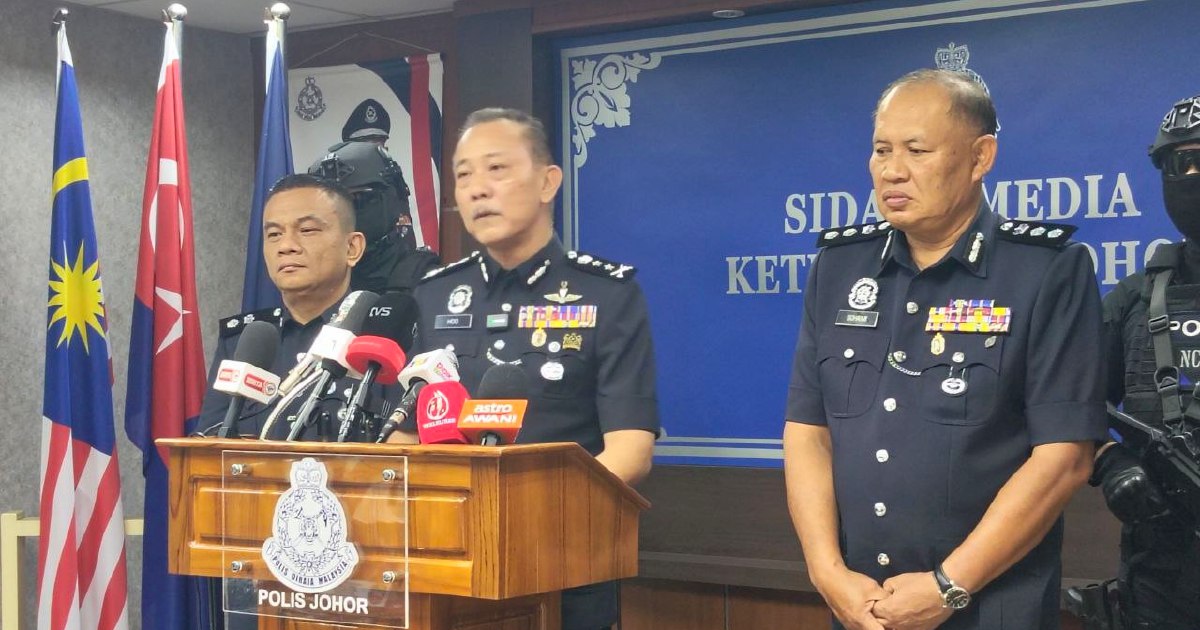
Five individuals are in police custody following investigations into three separate incidents across Johor involving the deliberate inversion of the Jalur Gemilang and Johor state flags. The detentions mark an intensified enforcement effort by authorities to protect Malaysia's national symbols against what officials view as acts of disrespect and potential breach of public order.
The arrested individuals are being questioned over their alleged involvement in displaying the Malaysian flag and the Johor state ensign in an upside-down position at different locations throughout the state. Police have not disclosed the specific dates, locations, or identities of those detained, but confirmed that investigations span three distinct cases rather than isolated incidents at a single venue.
This development underscores the sensitivity surrounding Malaysia's national symbols, particularly the Jalur Gemilang, which occupies profound significance in the country's constitutional framework and national identity. The inversion of any national flag carries heavy symbolic weight and is widely understood as disrespectful in Malaysian society, triggering swift official responses from law enforcement agencies.
Johor, as Malaysia's southernmost peninsular state and one of the nation's most politically significant regions, maintains strict oversight of flag protocols and public displays. The state government has long emphasized respect for national and state emblems as a fundamental civic duty, and police enforcement in this area reflects broader national standards regarding patriotic conduct.
The investigation into these three cases demonstrates police commitment to enforcing regulations governing the proper display of national symbols. Under Malaysian law, there exist provisions that address disrespect toward the flag and other national emblems, though specific charges have not yet been detailed by authorities. The cases may potentially fall under sedition laws or regulations specifically protecting national symbols from defacement or improper handling.
For Malaysian readers, such incidents resonate within the context of ongoing national debates about respect for constitutional institutions and shared civic values. Johor, with its diverse population and significant economic importance to Malaysia, represents a microcosm of the nation's commitment to preserving symbols that unite citizens across different backgrounds and communities.
The timing of these detentions comes amid global trends of heightened awareness regarding national symbols and their treatment in public spaces. In Southeast Asia, several nations have witnessed similar controversies, making this development part of a broader regional conversation about nationalism, protest expression, and state authority.
Authorities have not indicated whether the flag inversions were accidental, deliberate political protests, or actions motivated by other factors. This distinction carries considerable legal and social implications, as Malaysian law recognizes different degrees of culpability based on intent. Police investigators will likely examine the circumstances surrounding each incident thoroughly before determining appropriate charges.
The investigation reflects Malaysia's constitutional framework, which accords special status to national symbols including the Jalur Gemilang. Federal law establishes protection mechanisms for these emblems, and state police forces actively enforce such provisions. Johor's enforcement action aligns with nationwide standards for preserving the dignity of national insignia.
For Malaysian businesses and residents, particularly those in Johor, the detentions serve as a practical reminder of legal boundaries around national symbols. Public and private organizations increasingly incorporate flag protocols into their operational procedures to ensure compliance with prevailing standards and avoid potential legal complications.
The incident also highlights the evolving nature of public order enforcement in digital-age Malaysia, where photographic and video evidence of such incidents can circulate rapidly across social media platforms, prompting official investigation and response. Police capacity to identify and locate individuals involved in such incidents has expanded considerably through surveillance technology and public reporting mechanisms.
As investigations proceed, these cases will likely clarify the boundaries between protected expression and conduct that authorities deem incompatible with respect for national institutions. The outcomes may influence how similar situations are handled across other Malaysian states and contribute to evolving jurisprudence around national symbol protection. Stakeholders in Johor and beyond await further details as police complete their inquiries into the detained individuals.

