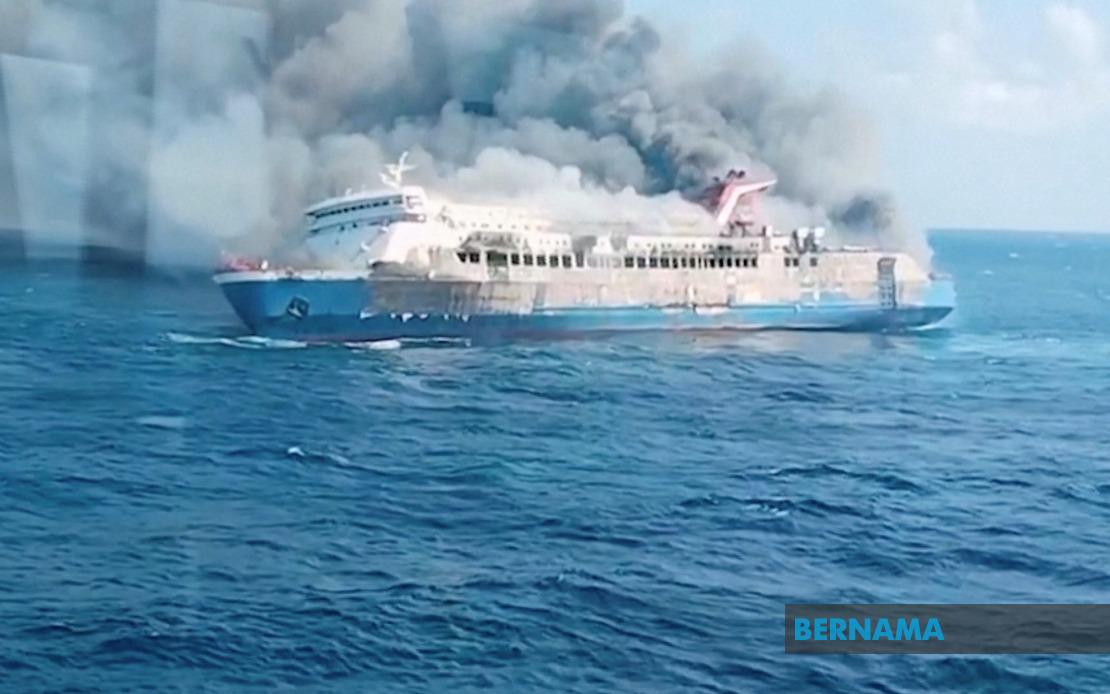
A major maritime disaster unfolded off the coast of northern Sumenep, Madura on Thursday morning when the passenger ferry KMP Mutiara Santosa 2 caught fire while en route from Surabaya to Makassar. The incident has claimed at least five lives, with 41 passengers and crew members still unaccounted for as search and rescue teams work against the clock to locate survivors. The vessel was carrying a total of 232 passengers and 39 crew members when the fire broke out, making this one of Indonesia's more serious maritime incidents in recent times.
According to Nanang Sigit, chief of the Surabaya Search and Rescue Office, distress calls came through at 8.24 am local time, prompting an immediate response from multiple agencies. By 4 pm the same day, 225 people had been pulled to safety, leaving a significant gap in the passenger manifest that has triggered an intensive hunt for the remaining missing. The speed of the initial rescue effort appears to have prevented what could have been a far more catastrophic loss of life, though the situation remains fluid and deeply concerning for the families of those unaccounted for.
The vessel itself sustained catastrophic damage from the flames. Nanang revealed that most of the ferry was consumed by fire, forcing passengers to congregate on the bridge and forward sections as they awaited rescue. This clustering of survivors in specific areas of the ship likely facilitated their evacuation, as rescue crews could focus their efforts on particular zones rather than conducting a search across the entire vessel. The image of hundreds of terrified passengers crowded onto the bridge while fire engulfed surrounding compartments underscores the desperate circumstances that unfolded in the early morning hours.
Rescue operations drew on a coordinated response involving numerous agencies and the mobilization of multiple assets and personnel. Beyond official search and rescue teams, nearby commercial vessels responded to the emergency and assisted in plucking survivors from the water. Several passengers had apparently made the perilous decision to jump overboard in an attempt to escape the flames, trusting that they might be spotted by passing ships. The involvement of civilian mariners demonstrated how maritime communities in the region maintain informal but crucial safety networks that can mean the difference between life and death in such situations.
The incident has renewed scrutiny of maritime safety standards across Indonesia's extensive ferry network. The country relies heavily on sea transport to connect its thousands of islands, making ferries critical infrastructure for millions of Indonesians and regional travelers. However, the sector has long been hampered by aging vessels, inadequate maintenance regimes, and inconsistent enforcement of safety protocols. This disaster serves as a sobering reminder of the risks that passengers accept when boarding ferries operating on some of Southeast Asia's busiest shipping routes.
Investigators have launched an inquiry into the fire's origin, but authorities have not yet disclosed preliminary findings. The cause remains unknown, though fires aboard older vessels can stem from electrical faults, fuel system failures, or inadequate maintenance. The speed with which the KMP Mutiara Santosa 2's hull became engulfed suggests the fire spread rapidly through the vessel, potentially indicating structural or procedural vulnerabilities that allowed flames to reach fuel or electrical systems. A thorough investigation will be essential not only for accountability but for informing improvements across the wider ferry fleet.
For Malaysian maritime observers and officials, this tragedy carries particular relevance. Malaysia shares similar ferry networks and faces comparable safety challenges, particularly in services connecting the peninsula to East Malaysia and between Malaysian islands and regional destinations. The Sulu and Celebes seas, which carry significant Malaysian maritime traffic, experience similar operational conditions to those off Madura. Whether through bilateral forums or ASEAN mechanisms, the incident provides an opportunity for regional governments to review and strengthen cross-border maritime safety standards and emergency response protocols.
The human cost of this disaster extends beyond the immediate casualty figures. Families in Surabaya, Makassar, and communities throughout Sulawesi are grappling with uncertainty about missing relatives, while survivors face physical injuries and psychological trauma. The recovery of bodies and positive identification of the deceased will be a lengthy process that authorities must handle with sensitivity and efficiency. Local government support for affected families and comprehensive victim assistance programs will be essential in the weeks and months ahead.
Indonesian Search and Rescue continues conducting field operations to locate the 41 missing persons, with teams combing waters and nearby coastal areas. The passage of time, however, diminishes prospects for additional survivors, making this phase of the operation increasingly focused on recovery rather than rescue. Authorities have appealed for information from the public and from vessels that may have been in the vicinity during the fire, potentially leading to new leads about the location of missing persons or the circumstances that precipitated the blaze.
This incident underscores the vulnerability of maritime transport in Southeast Asia and the ongoing challenge of balancing accessibility with safety across the region's archipelagic nations. While ferries remain essential for connectivity and economic activity, the frequency of such disasters demands renewed commitment to vessel maintenance, crew training, emergency preparedness, and regulatory enforcement. For passengers across Malaysia and Indonesia contemplating sea journeys, the KMP Mutiara Santosa 2 fire serves as a stark reminder of the importance of maritime safety standards and the consequences when they falter.

