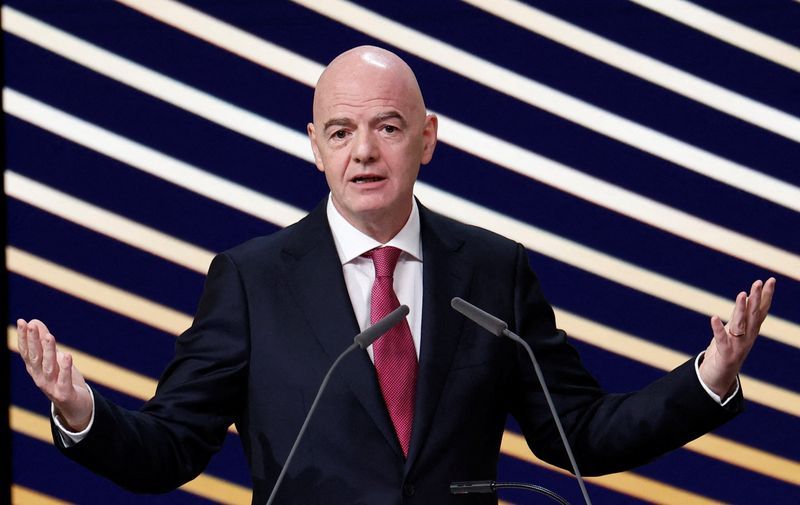
FIFA President Gianni Infantino confronts mounting pressure ahead of his re-election campaign, with national soccer federations from Serbia, Sweden, and Wales withdrawing support following the controversial collapse of his scheme to attract private investment into the World Cup. The electoral contest, scheduled for Morocco on March 18, represents an unexpectedly competitive scenario for an incumbent who previously enjoyed relative dominance within global football governance. Multiple figures have begun positioning themselves as alternatives, signalling deep institutional dissatisfaction with Infantino's leadership direction.
Victor Montagliani, who leads the CONCACAF confederation representing North American soccer interests, has emerged as a genuine contender for the FIFA presidency covering the 2027-2031 period. The Canadian businessman commands substantial influence over a confederation that will host the 2026 World Cup—the first time the tournament returns to North American soil since 1994. Though CONCACAF rejected Infantino's private equity proposal, the confederation distinguished itself from UEFA by declining to orchestrate a complete boycott, potentially positioning Montagliani as a more consensus-building alternative than the European establishment's preferred candidates.
Slovenian UEFA President Aleksander Ceferin represents the European football confederation's interests in the succession contest. Ceferin's absence from the recent World Cup final stemmed from escalating disputes with FIFA leadership, demonstrating the severity of institutional breakdown between the two organizations. UEFA emerged as perhaps the most forceful critic during what observers characterize as an exceptionally damaging period for Infantino's credibility, suggesting the European body views the 2027 election as an opportunity to reshape FIFA's strategic direction fundamentally.
Sheikh Salman bin Ibrahim Al Khalifa, serving as AFC vice president and senior FIFA Council member, has indicated opposition to several of Infantino's flagship initiatives, including World Cup expansion to 64 teams. The Bahraini official's resistance proves particularly significant given Asia's growing economic and political weight within international football. The AFC's formal statement criticizing Infantino's private equity plan as exposing fundamental weaknesses in FIFA's decision-making processes indicates the confederation views governance reform as essential to supporting any alternative candidacy.
Qatari sports executive Nasser Al-Khelaifi, who presides over Paris Saint-Germain, has attracted backing from European soccer officials seeking to consolidate behind a single challenger. According to recent reporting, Al-Khelaifi represents an emerging consensus candidate within influential European circles. His position bridging European club interests and Middle Eastern sporting ambitions may appeal to confederations seeking candidates who transcend traditional geographic factionalism within FIFA's complex power structure.
Norwegian Football Federation President Lise Klaveness stands as one of global football's most prominent female leaders and has mobilized vigorous opposition to Infantino's commercialization agenda. Klaveness previously advocated for FIFA ethics complaints concerning the suspension of disciplinary action against American player Folarin Balogun following intervention by U.S. President Donald Trump, highlighting persistent questions regarding Infantino's relationship with American political leadership and FIFA's institutional independence.
The private equity proposal that triggered this succession crisis represented Infantino's attempt to monetize World Cup broadcasting and commercial rights by selling minority stakes to investment firms. The plan's rejection by major confederations crystallized broader concerns about governance transparency, stakeholder consultation, and FIFA's appropriate role within global sports governance. Multiple continental bodies viewed the initiative as symptomatic of decision-making processes that subordinated traditional football interests to speculative financial schemes.
Infantino's vulnerability reflects accumulating institutional frustrations that transcend any single policy disagreement. European federations have bristled at perceived American favoritism, Asian confederations have questioned governance consultation mechanisms, and women's football advocates have challenged the pace of gender equity reforms. The emergence of multiple credible challengers suggests these grievances represent genuine fault lines rather than temporary political friction.
For Malaysian football stakeholders and Southeast Asian readers, this succession contest carries tangible implications regarding AFC representation within FIFA leadership. The outcome will influence how Asian football interests are prioritized in global governance, commercial negotiations, and competition development. Should AFC-backed candidates like Al Khalifa strengthen their position, Southeast Asian confederations including Malaysia may gain improved channels for advocating regional interests within FIFA's decision-making structures.
The Morocco election in 2027 will determine whether established FIFA leadership continues or yields to reformist challengers. Each candidate brings distinct visions regarding World Cup commercialization, governance transparency, and regional representation. The contest reflects fundamental questions about whether FIFA will continue pursuing aggressive financial expansion or adopt more measured approaches balancing commercial and traditional football objectives. These dynamics will reshape global football governance during a critical period of tournament expansion and technological evolution.

