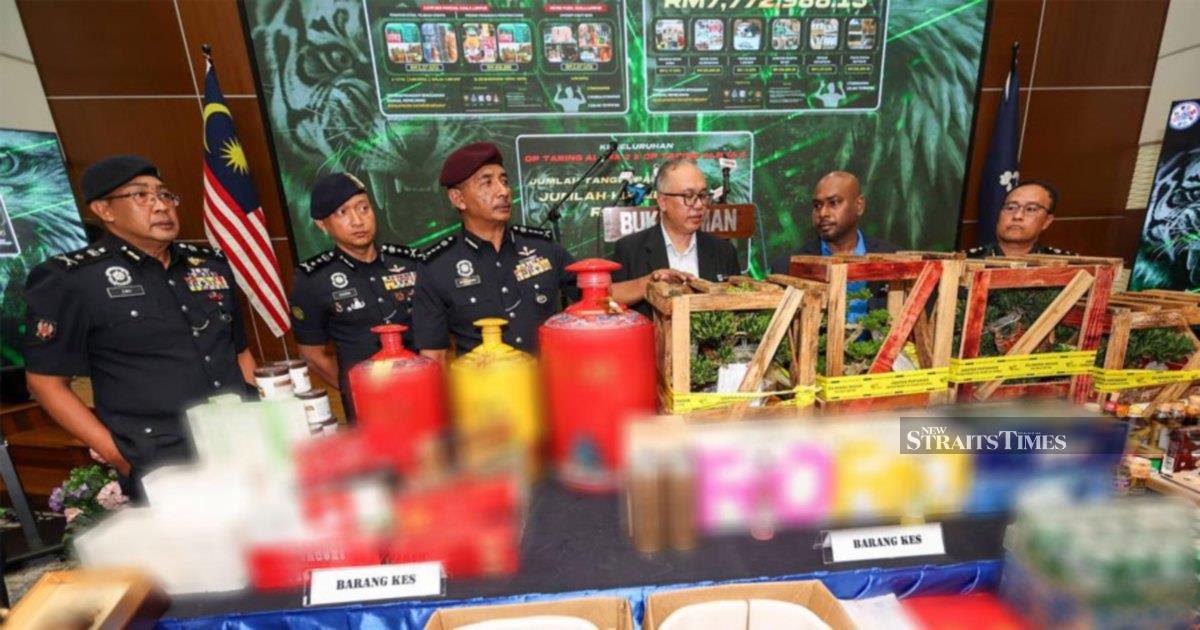
Malaysian police have dismantled a significant smuggling operation, resulting in five arrests and the seizure of contraband and merchandise valued at RM12.8 million across two coordinated enforcement actions in Kuala Lumpur and Klang. The breakthrough marks an escalation in the authorities' campaign against organised smuggling networks that have increasingly targeted Malaysia's commercial corridors and border regions.
The dual operation underscores growing law enforcement attention on illicit trade routes channelling contraband through Malaysia's western seaboard and major metropolitan areas. Smuggling operations of this scale typically exploit gaps in supply chain oversight and customs enforcement, allowing criminal syndicates to move goods with minimal detection. The recovery of such substantial assets suggests the operations targeted were well-established and represented significant profit centres for organised crime groups.
Smuggling represents one of Malaysia's most persistent law enforcement challenges, draining government revenue through evaded duties whilst destabilising legitimate markets. The activities documented in these operations likely encompassed multiple product categories, reflecting the diversified nature of contemporary smuggling networks. Such criminal enterprises frequently operate as horizontal networks rather than hierarchical organisations, making enforcement particularly complex and necessitating sustained, intelligence-led approaches.
The Klang Valley region, encompassing both operation sites, serves as a critical node in Malaysia's commercial infrastructure. Proximity to Port Klang, the nation's busiest container terminal, and Kuala Lumpur's distribution networks create optimal conditions for smuggling activity. Criminal organisations exploit the high-volume cargo movement characteristic of major logistics hubs, concealing illicit goods within legitimate shipments or diverting consignments before customs clearance.
The timing and coordination of these operations reflect improved intelligence-sharing mechanisms within Malaysia's law enforcement apparatus. Such joint actions typically involve specialist units trained in financial investigation, cargo surveillance, and supply chain analysis. The success in apprehending suspects before goods entered broader distribution channels demonstrates the effectiveness of proactive enforcement strategies that target supply sources rather than street-level distribution alone.
For Malaysian businesses operating legitimately in affected sectors, smuggling creates significant competitive disadvantage. Illicit competitors operating without tax obligations or regulatory compliance can undercut legitimate pricing structures, squeezing profit margins and incentivising further rule-bending within industries. This dynamic particularly affects sectors with narrow margins or price-sensitive consumers, where even modest duty-free advantages translate to substantial market share gains.
The five individuals detained now face investigations that will likely expand their preliminary charges. Law enforcement will typically pursue proceeds of crime legislation to trace asset origins, identify financing sources, and establish distribution networks. Such investigations frequently uncover connections between smuggling operations and other criminal enterprises, including money laundering, organised labour trafficking, or financing for illegal organisations.
International precedent suggests that operations of this magnitude require cross-border coordination. Smuggling networks operating at RM12.8 million scales typically maintain relationships with foreign suppliers, transit countries, and end-market distributors. Malaysian authorities may initiate Interpol enquiries or invoke bilateral law enforcement agreements with neighbouring jurisdictions to trace the full supply chains and dismantle upstream operations.
The recovered goods remain subject to detailed inventory and categorisation processes. Subsequent analysis will determine whether items represent consumer goods, luxury products, electronic components, or pharmaceutical merchandise—each category pointing toward specific criminal markets and customer bases. Understanding what was being smuggled provides crucial intelligence regarding which industries face infiltration threats and where demand from organised crime originates.
Regionally, Malaysia's experiences with smuggling inform broader Southeast Asian security challenges. Transnational criminal networks exploiting ASEAN's relatively open borders disproportionately target Malaysia due to its developed infrastructure and purchasing power. Continued operations like those documented here demonstrate that despite sustained enforcement efforts, smuggling networks maintain sufficient resources and sophistication to operate at scale, suggesting the problem remains far from contained.
Future enforcement approaches must balance seizure operations with systematic dismantling of criminal supply chains. Intelligence gathered during current investigations will likely guide resource allocation across Customs, police, and maritime agencies responsible for border management. The coordination demonstrated in these operations requires similar integration across Malaysia's fragmented regulatory framework, where multiple agencies hold overlapping jurisdiction but limited information-sharing mechanisms.
The arrested individuals now face prosecution under customs and smuggling legislation carrying substantial penalties including imprisonment and asset forfeiture. Successful prosecution requires detailed forensic examination of shipping documents, financial records, and communication patterns establishing criminal intent and organised involvement. Such cases typically consume significant investigative resources but generate deterrent value when high-profile convictions demonstrate credible enforcement risk to potential offenders.
As investigations deepen, the full scope of these smuggling networks will likely emerge. The coordination demonstrated across Kuala Lumpur and Klang suggests organised operations rather than opportunistic smuggling, indicating systematic criminal enterprise. Dismantling such networks requires sustained pressure on multiple fronts: source interdiction, transit disruption, and final market enforcement. This latest crackdown represents one component within the protracted contest between authorities and criminal organisations competing for control of Malaysia's trade corridors.

