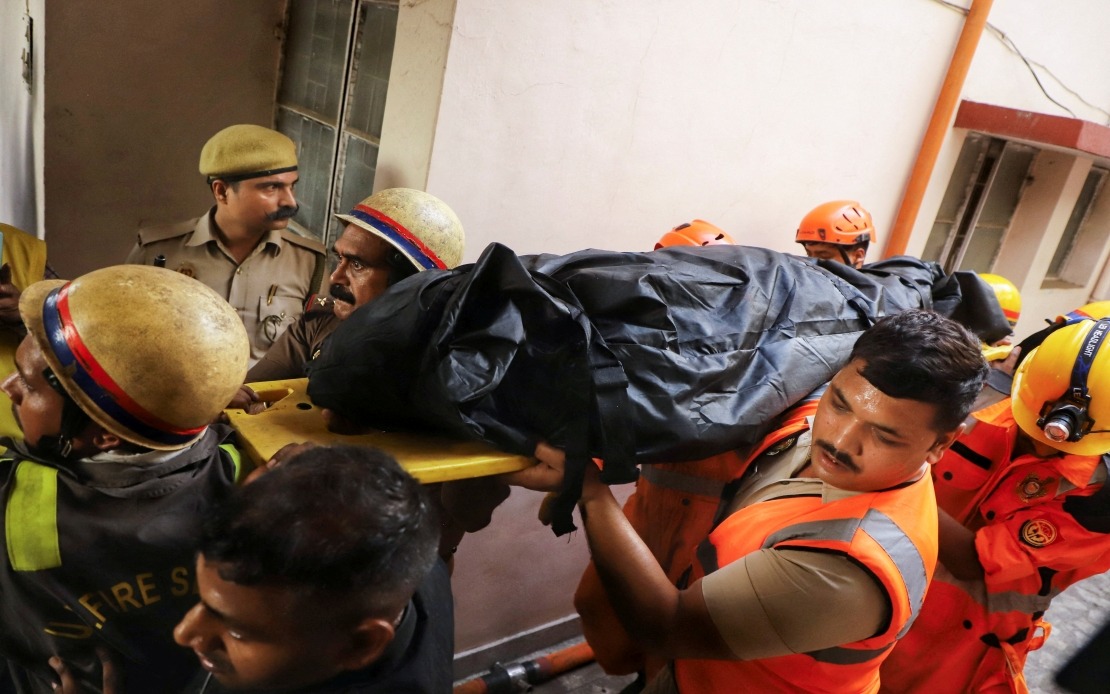
A catastrophic fire has claimed at least 15 lives in India's Uttar Pradesh state capital, Lucknow, in a tragedy that has once again exposed serious safety vulnerabilities in commercial buildings across the country. The inferno tore through a three-storey structure in the Aliganj area on Monday, destroying premises that housed an animation training centre alongside various retail shops. The majority of those killed were young students, many of whom were enrolled at the training facility when the fire broke out with dramatic speed.
The scale of the disaster became apparent as emergency responders and bystanders worked frantically to rescue occupants trapped within the smoke-filled building. Disturbing footage that circulated on social media showed children jumping from windows as crowds below desperately attempted to assist them. Police and fire services faced a race against time as the flames spread rapidly through the structure, hampering evacuation efforts and creating an overwhelming crisis that stretched local emergency resources.
King George's Medical University trauma centre received over 20 victims in the immediate aftermath of the fire. Of these, five individuals were hospitalised for ongoing treatment, while tragically, 15 others had already succumbed to their injuries by the time they arrived at the hospital. The loss of life highlights how quickly such incidents can spiral beyond anyone's capacity to respond effectively, particularly when buildings lack adequate safety infrastructure and emergency exit routes.
Yogi Adityanath, the Chief Minister of Uttar Pradesh, expressed profound shock at the tragedy, describing the loss of life as extremely tragic and heart-rending while extending condolences to bereaved families. His statement, delivered at a rally in another city, underscores the gravity with which state leadership is treating the incident and the widespread dismay that has gripped the region. However, such expressions of sympathy have become increasingly hollow in India without substantive improvements to building safety standards and enforcement.
The Lucknow fire represents the second major conflagration to strike India within a fortnight, compounding concerns about fire safety across the country. Just days earlier, Delhi experienced a devastating hotel fire that claimed at least 22 lives, many of whom were foreign medical tourists visiting the country for treatment. These consecutive disasters occurring within such a short timeframe suggest systemic failures rather than isolated incidents, pointing to widespread non-compliance with safety regulations and inadequate firefighting infrastructure in commercial establishments.
For Malaysian observers, the Lucknow tragedy serves as a cautionary reminder of the critical importance of rigorous building safety inspections and enforcement mechanisms. Malaysia has invested considerably in establishing fire safety standards and conducting regular audits of commercial properties, yet complacency remains a persistent risk. The rapid succession of major fires in India demonstrates how quickly a single oversight in safety procedures or maintenance can transform an ordinary building into a death trap, particularly when it houses vulnerable populations such as students or training centre participants.
The animation training centre, as a facility catering to young people seeking professional development, would have been expected to maintain heightened safety protocols. Yet the speed with which the fire claimed so many lives suggests that basic precautions such as adequate emergency exits, functioning fire alarm systems, and staff training in evacuation procedures may have been absent or insufficient. These are foundational requirements that should be non-negotiable in any commercial building, particularly those housing educational or training institutions with young participants.
The broader implications for South Asia extend beyond India itself. Regional regulators and building authorities across Southeast Asia and the subcontinent should scrutinise their own enforcement mechanisms in light of these disasters. Malaysia's track record in fire safety has been substantially better, owing to consistent implementation of building codes and regular inspections by relevant authorities. However, complacency represents an ever-present danger, and the Lucknow incident serves as an important reminder that maintaining vigilance requires continuous investment in safety culture and infrastructure.
Investigations into the cause of the Lucknow fire will undoubtedly reveal details about whether the building possessed valid safety certifications, whether regular fire drills had been conducted, and whether occupants received adequate warning systems. In many cases of such tragedies across India, investigations subsequently uncover a litany of violations—inadequate fire exits, blocked emergency routes, missing fire extinguishers, and a general disregard for established safety protocols. The human cost of such negligence is measured in lost lives and shattered families.
As authorities in Lucknow grapple with this crisis and begin rescue and recovery operations, questions will inevitably arise about accountability. Who approved the animation training centre's operation? Which inspectors certified its safety compliance? These are questions that demand answers not merely for justice to be served, but to prevent similar tragedies from recurring in other cities across India and the wider region. Without systemic accountability and genuine commitment to safety enforcement, expressions of condolence from political leaders will ring increasingly hollow to grieving families.