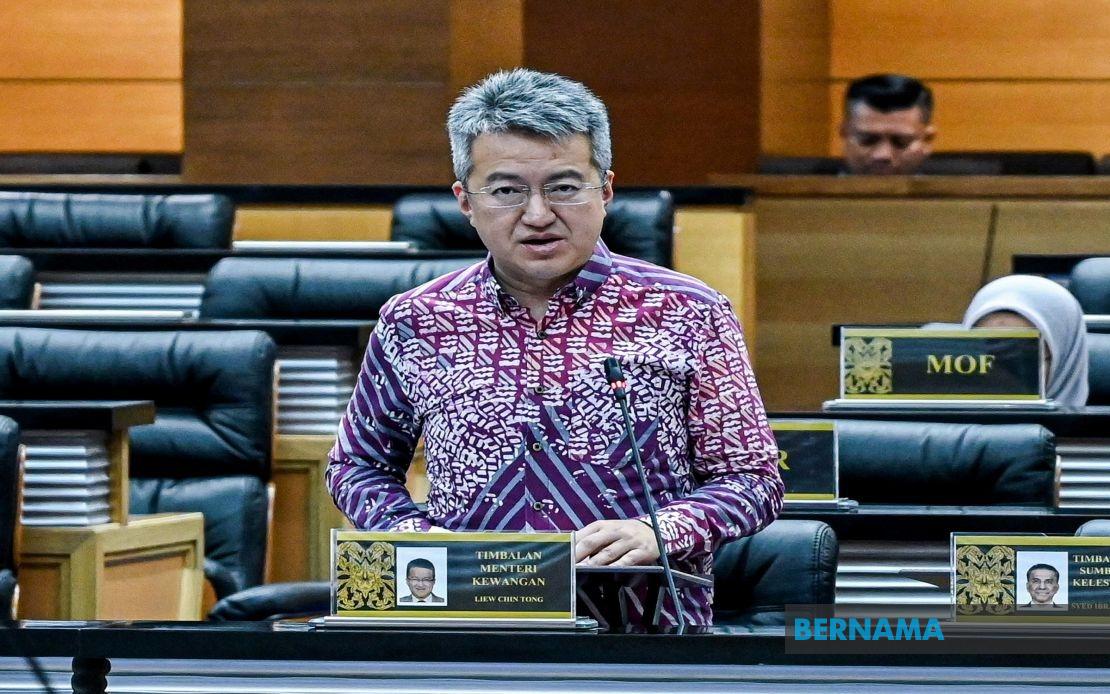
The government is moving forward with examining a potential relief measure for Malaysia's elderly care sector, with the Ministry of Finance and the Ministry of Women, Family and Community Development jointly exploring whether to remove elderly care facilities from the Sales and Service Tax framework. Deputy Finance Minister Liew Chin Tong announced the review during parliamentary proceedings, indicating that policymakers are taking seriously the financial pressures faced by families relying on professional care services for ageing relatives.
The eight per cent SST has emerged as a contentious addition to the already substantial costs of residential elderly care in Malaysia. According to concerns raised in parliament by Lee Chuan How, who represents Ipoh Timor, monthly fees at care centres typically range around RM2,500, and the tax represents a meaningful expense for households already struggling with Malaysia's cost of living crisis. For families of modest means, this additional levy can prove decisive in determining whether professional care remains affordable or whether elderly relatives must be managed through family arrangements that may be inadequate or unsustainable.
The scope of the Ministry's review extends beyond a simple yes-or-no decision on exemption. Officials will examine how current service tax categories distinguish between basic care facilities and premium establishments, recognising that elderly care encompasses a spectrum of service levels and quality standards. This differentiated approach suggests the government is considering whether exemptions should apply universally across all care centres or whether targeted relief might be more appropriate, a distinction with significant implications for both operators and the families they serve.
Liew's commitment to conduct ministerial visits to care centres signals genuine intent to understand the operational realities facing the sector. These engagement sessions with facility operators will allow the Finance Ministry to gather first-hand information about how the tax has affected business viability, staffing levels, and the quality of services offered to residents. The involvement of KPWKM brings a social welfare perspective to what might otherwise be purely fiscal considerations, ensuring that decisions reflect not just budgetary implications but also outcomes for vulnerable elderly Malaysians.
For Malaysian families, the outcome of this review carries substantial weight. The cost of elderly care has become an increasingly pressing issue as the nation's population ages and more individuals require professional support outside family homes. In many Asian societies, including Malaysia, there exists cultural expectation that families provide care, yet economic realities and urbanisation patterns mean that residential facilities have become essential infrastructure. Any reduction in out-of-pocket expenses through tax relief would directly improve the financial accessibility of these services.
The broader context involves Malaysia's complex relationship with consumption taxes. The SST itself was introduced as a replacement for the Goods and Services Tax, reflecting political preferences around taxation structure, yet its application across diverse sectors continues to generate friction between revenue imperatives and social protection concerns. Elderly care facilities occupy a distinctive category—they serve vulnerable populations and are often operated by non-profit organisations or modest commercial enterprises, distinguishing them from luxury consumer goods or services that might more naturally attract higher taxation.
Operators of care centres have increasingly voiced concerns about the tax burden, particularly given that staffing costs dominate their expense structures and margins tend to be relatively narrow, especially at facilities serving middle-income families rather than wealthy clientele. Without significant fee increases that would price out many families, operators struggle to absorb the eight per cent levy, creating pressure to reduce service quality or restrict admissions. The Ministry's planned consultations should illuminate these operational constraints more clearly than policy discussions conducted at the capital alone.
The parliamentary engagement on this issue reflects growing recognition that social policy cannot be divorced from taxation design. Lee Chuan How's intervention demonstrates that legislators remain attentive to constituent concerns, while the government's willingness to commission a detailed review rather than dismissing the proposal indicates receptiveness to evidence-based adjustments in tax policy. This represents the deliberative process functioning as intended, with parliamentarians raising concerns and executives responding through investigation rather than assertion.
The timeline for this review remains undefined, though Liew's emphasis on finalising recommendations suggests action is intended within a reasonable timeframe. Families currently paying SST on elderly care services will be watching for outcomes, as will facility operators making business decisions about staffing expansion and service enhancement. The stakes extend beyond individual centres to questions about whether Malaysia's elderly care infrastructure will expand sufficiently to serve demographic trends, a concern that policymakers should weigh in their deliberations.
Beyond the immediate SST question, this review offers an opportunity to examine the entire regulatory and fiscal framework surrounding elderly care in Malaysia. As the nation confronts an ageing population—already significant and accelerating—comprehensive policy attention to care sector sustainability becomes increasingly urgent. Whether the outcome exempts elderly care centres entirely, exempts certain categories, or maintains current arrangements, the review process itself signals that government recognises elderly care as deserving special consideration rather than standard commercial taxation.
The Ministry's approach of soliciting further stakeholder input before finalising conclusions suggests an openness to broader input beyond official submissions. Civil society organisations, facility operators, and family advocacy groups may contribute perspectives that strengthen the eventual policy decision. This consultative methodology, while sometimes criticised for slowness, typically produces more durable outcomes grounded in practical understanding rather than theoretical assumptions.

