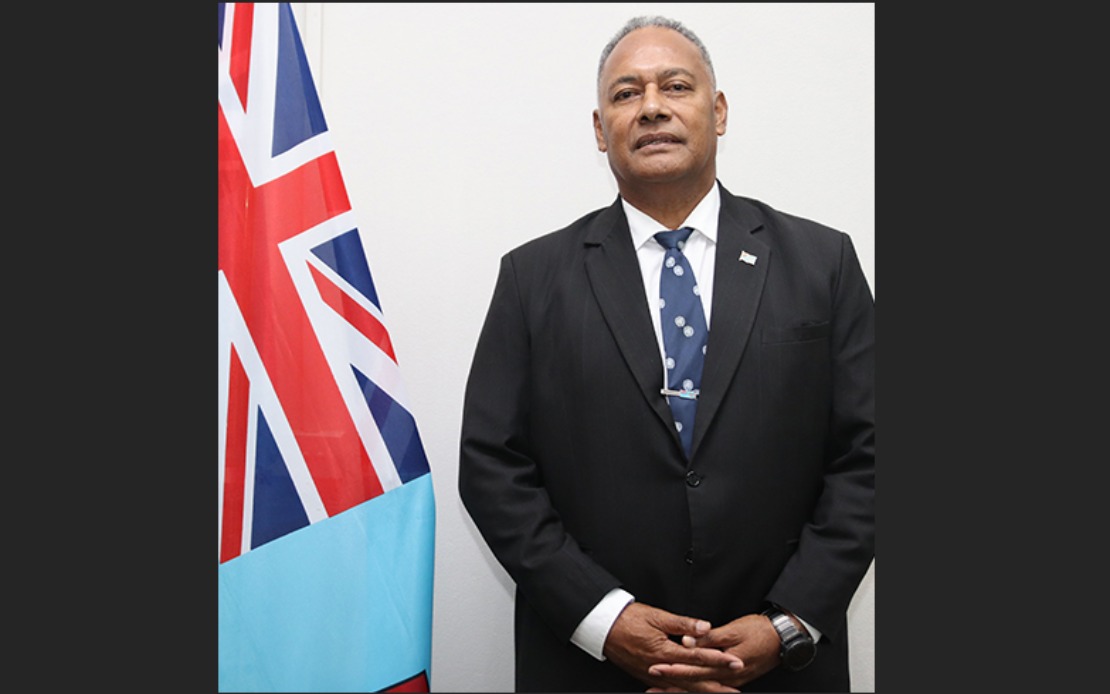
Sakiasi Raisevu Ditoka, Fiji's Foreign and External Trade Minister, is undertaking a four-day working visit to Malaysia beginning Sunday, marking a significant diplomatic engagement aimed at deepening the relationship between the two countries across multiple sectors. The visit underscores the growing importance both nations place on strengthening ties within the broader Indo-Pacific region, where Malaysia continues to play a key role in fostering partnerships with island economies in the South Pacific.
During his time in Kuala Lumpur, Ditoka will engage with senior Malaysian officials to chart the course for enhanced bilateral cooperation. His primary meeting will be with Foreign Minister Datuk Seri Mohamad Hasan, where discussions are expected to focus on practical avenues for deepening the partnership. These conversations will touch on several strategic areas including trade and investment promotion, technical capacity building initiatives, forestry collaboration, renewable energy projects, and cultural exchanges that can help foster people-to-people connections between the two nations.
The ministerial talks also carry broader regional significance, as both countries intend to use the occasion to compare notes on wider international developments and explore mechanisms for closer cooperation with Pacific Island nations collectively. Malaysia's Foreign Ministry statement emphasises that these discussions will extend beyond bilateral matters, reflecting a recognition that individual partnerships must be viewed within the context of regional stability and prosperity. This represents an opportunity for Malaysia to strengthen its diplomatic footprint in the Pacific region at a time when global attention to island nations is intensifying.
Beyond his engagement with the Foreign Ministry, Ditoka is scheduled to meet with Investment, Trade, and Industry Minister Datuk Seri Johari Abdul Ghani to identify concrete economic opportunities that could benefit both countries. This second ministerial engagement reflects the commercial dimension of the visit and signals willingness from Malaysia's economic policymakers to expand the economic footprint in the Pacific. The discussions are likely to explore sectors where Malaysian expertise and investment could contribute to Fiji's development priorities while creating profitable opportunities for Malaysian enterprises.
A major highlight of the visit involves two ceremonial elements that carry symbolic weight beyond their immediate administrative significance. Ditoka will officiate the reopening of the High Commission of the Republic of Fiji in Kuala Lumpur, marking the formal restoration of Fiji's diplomatic presence in the Malaysian capital. Simultaneously, he will inaugurate the Malaysia-Fiji Business Council, a new institutional framework designed to facilitate sustained engagement between private sector players from both nations and provide a structured channel for identifying and pursuing commercial partnerships.
The establishment of the Business Council addresses a longstanding gap in the bilateral relationship by creating a dedicated platform where Malaysian and Fijian entrepreneurs, investors, and business leaders can interact regularly, exchange market intelligence, and identify synergies. Such councils have proven effective in other regional partnerships as mechanisms for transforming high-level political commitments into concrete commercial outcomes. The reopening of Fiji's High Commission complements this business-focused initiative, as it will enhance diplomatic infrastructure and demonstrate Fiji's commitment to deepening its Malaysia engagement beyond ceremonial occasions.
Examining the current bilateral trade relationship reveals an economic dynamic heavily skewed in Malaysia's favour, though this asymmetry reflects broader patterns of trade between developed and developing economies. In 2025, total bilateral trade reached RM880.01 million, equivalent to approximately US$206.2 million. Malaysia's export-heavy position is evident from the figures: Malaysian goods valued at RM867.92 million, or US$203.41 million, flowed to Fiji, while Fijian exports to Malaysia amounted to only RM12.09 million, or US$2.80 million. This imbalance of roughly 72 to 1 suggests that Fiji's economy may struggle to match Malaysia's manufacturing and export capacity, yet it also points to significant potential for rebalancing through targeted investment.
The low volume of Fijian exports to Malaysia indicates unexplored potential in several commodity sectors where the Pacific island nation possesses natural endowments. Fiji's agricultural products, including sugar, coconut, and tropical fruits, could potentially find larger markets in Malaysia if logistics and regulatory frameworks were streamlined. Similarly, niche products from Fiji's small-scale manufacturers and artisans could tap Malaysian consumer markets through the Business Council's facilitation. The visit thus provides an opportunity to discuss how the trade imbalance might be gradually addressed through conscious effort from both sides.
For Malaysia, the visit reflects a deliberate strategy to maintain and expand influence in the Pacific region at a time when geopolitical competition for influence among larger powers is intensifying. Fiji, as a major Pacific Forum member and host to significant regional institutions, occupies a strategically important position in island diplomacy. By strengthening ties with Fiji through formal mechanisms and high-level engagement, Malaysia reinforces its credentials as a responsible developing nation partner that takes smaller economies seriously and invests in sustained relationships beyond transactional interactions.
The focus on renewable energy cooperation carries particular significance given Malaysia's own energy transition ambitions and Fiji's vulnerability to climate change and energy security challenges. Malaysia's expertise in solar and hydroelectric development, combined with Fiji's need for sustainable energy solutions, creates natural complementarity. Technical collaboration in this area could position Malaysia as a development partner of choice and potentially generate long-term commercial opportunities for Malaysian clean energy companies.
The visit also demonstrates how bilateral diplomacy remains a cornerstone of international relations even in an age of multilateral platforms. While both countries participate in regional forums and groupings, dedicated bilateral engagement allows for deeper exploration of specific interests and the cultivation of personal relationships among senior officials that can smooth cooperation across multiple fronts. The presence of ministerial-level officials indicates that both governments view this partnership through a strategic lens rather than treating it as a routine diplomatic obligation.
Looking ahead, the structural innovations introduced through this visit—particularly the Business Council and the reopened High Commission—suggest that Malaysia and Fiji intend to move beyond episodic diplomatic contact toward institutionalised engagement. If implemented effectively, these frameworks could gradually rebalance the economic relationship, create employment in both nations, and contribute to Fiji's development objectives while expanding Malaysian companies' presence in the South Pacific. The visit thus represents not merely a diplomatic courtesy but an investment in building foundations for sustained partnership in one of the world's most strategically significant regions.

