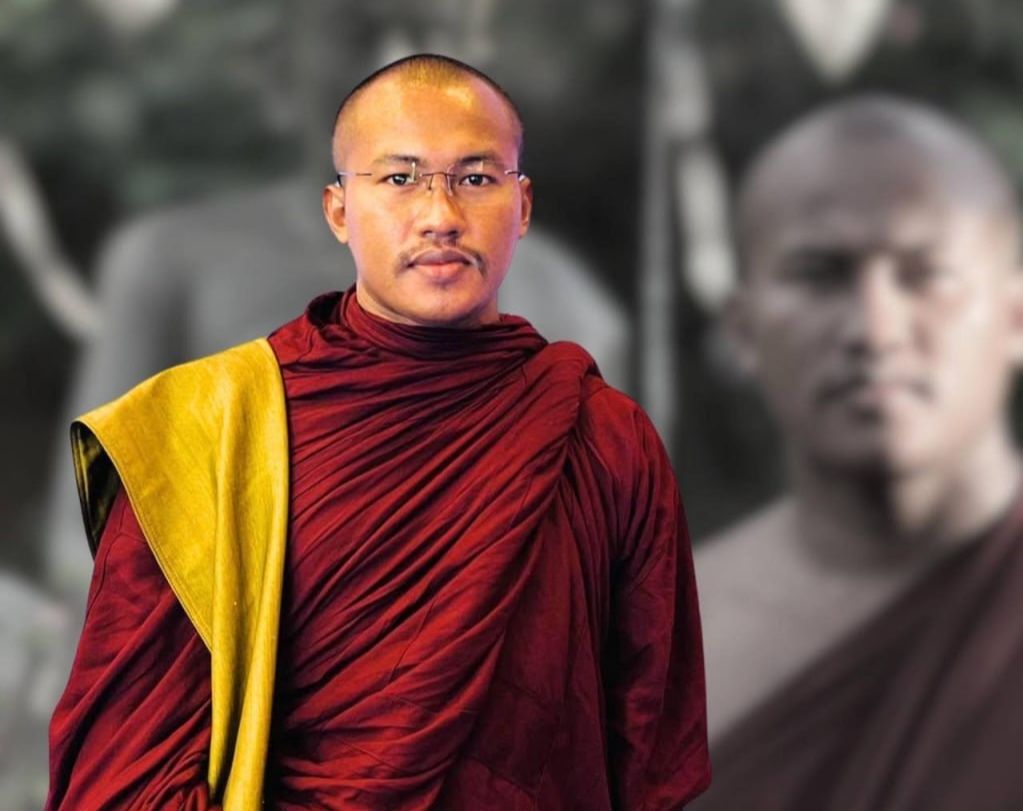
A coalition of fifty civil society organisations, trade unions and community groups in Cambodia has demanded the immediate release of Chea Vuthy, a former Buddhist monk turned citizen journalist, convicted this month for comments made in a private messaging group. The case has intensified concerns among rights advocates about the erosion of online free speech protections in Southeast Asia, particularly regarding how governments are wielding criminal laws against private digital communications.
Vuthy, aged 27, was sentenced on August 19 by the Phnom Penh Municipal Court to 18 months in prison plus a fine of two million riel, equivalent to approximately $500, on charges of incitement under the Cambodian Criminal Code. His conviction stemmed from a single remark he posted in August 2025 to a private Messenger group comprising around twenty members, in which he commented on the territorial situation along the Cambodia-Thailand border and the welfare of displaced civilians caught in cross-border tensions. Despite acknowledging authorship of the message, Vuthy maintained he had not shared the comment publicly, a distinction that the prosecution apparently disregarded during trial proceedings.
The joint statement released on August 20 and coordinated by the Cambodian League for the Promotion and Defense of Human Rights (LICADHO) articulated a fundamental tension between national security concerns and individual liberty. The signatories argued that private communications within a small, closed group cannot reasonably possess sufficient reach or influence to justify criminal prosecution under incitement statutes, let alone warrant a prison sentence of eighteen months. The organisations asserted that Vuthy's Messenger comment represented the sole evidentiary foundation for the charge against him, raising serious doubts about the adequacy and fairness of the judicial process.
International legal frameworks appear directly at odds with Cambodia's application of its incitement laws in this instance. The coalition pointed to Article 19 of the International Covenant on Civil and Political Rights, to which Cambodia is a signatory, which establishes that restrictions on freedom of expression may only be imposed when necessary and proportionate to protect legitimate interests such as national security, public order, or the rights of others. The organisations contended that Vuthy's conviction fails this test of necessity and proportionality, constituting a breach of Cambodia's binding international human rights commitments as well as protections enshrined in the country's own constitution.
Vuthy's professional background as an environmental commentator and human rights documenter adds dimension to concerns about judicial intimidation of critical voices. Prior to his arrest in April at Wat Por Veal pagoda in Battambang province, he had built a reputation covering deforestation, environmental degradation and alleged human rights violations through his citizen journalism work. His subsequent forced defrocking and placement in pretrial detention signalled what critics describe as an escalating pattern of state pressure against independent media figures and activists in Cambodia. He currently remains incarcerated at Phnom Penh's Police Judicial Prison, having been denied bail in June when the Appeal Court rejected his release request.
The broader context surrounding this conviction reveals a troubling trajectory in how Cambodian authorities have weaponised incitement charges against online commentary on the Cambodia-Thailand border. LICADHO has documented multiple prosecutions arising from social media discussions of the border dispute, including convictions of a chef sentenced in May to eighteen months and a deputy school director given a two-year sentence in June, both on similar incitement grounds. This pattern suggests a systematic approach to criminalising private expression touching on sensitive geopolitical issues, with sentences increasingly regarded as proportionate even when the alleged offences consist of remarks in closed digital spaces rather than public advocacy.
Vuthy's legal defence team, headed by lawyer Em Chantha, has signalled intention to appeal the conviction, contending that the evidence presented falls below the legal threshold required to establish incitement and questioning whether private Messenger communications can legally constitute the actus reus of the charge. This appellate strategy, while procedurally sound, highlights the deeper question of whether Cambodia's courts will meaningfully distinguish between private expression and public speech when applying criminal statutes originally designed to address threats to state stability from organised public agitation.
The coalition pressing for Vuthy's release encompasses a diverse spectrum of Cambodian civil society. Signatories include the Cambodian Center for Human Rights, the Cambodian Human Rights and Development Association, the Cambodian Center for Independent Media, the Cambodian Journalists Alliance Association, the Overseas Press Club of Cambodia, the Center for Alliance of Labor and Human Rights, the Committee for Free and Fair Elections in Cambodia, and numerous other organisations focused on labour rights, environmental protection and community empowerment. The breadth of organisational backing underscores how Vuthy's case has transcended single-issue advocacy to become emblematic of wider governance concerns.
Cambodia's Ministry of Information has responded defensively to criticism, asserting through spokesperson Tep Asnarith that the executive branch respects judicial independence and does not interfere with court proceedings. The ministry acknowledged Vuthy's entitlement to legal representation and the right to appeal, while exhorting civil society organisations to evaluate cases with greater balance and accuracy. This defensive posture, however, sidesteps the substantive arguments about proportionality and necessity raised by the coalition, suggesting the government views the matter primarily through an institutional lens rather than engaging with the human rights analysis.
For Malaysia and the broader Southeast Asian region, Vuthy's case serves as a cautionary indicator of how national security and border sensitivities can eclipse privacy protections and judicial restraint. Many regional governments similarly employ incitement and sedition statutes in ways that blur distinctions between private discussion and public advocacy, particularly when sensitive topics like territorial disputes or sensitive geopolitical relationships arise. The case illustrates how digital communication technologies, ostensibly designed to enable private speech, are being treated by some state actors as transparent and subject to the same scrutiny as public utterances, thereby effectively narrowing the practical scope of freedom of expression.
The implications extend to how Southeast Asian jurisdictions calibrate their approach to online speech regulation. As digital communication becomes ubiquitous, courts and legislatures face choices about whether criminal law should be applied to comments that, by their nature, reach limited audiences in protected spaces. Vuthy's conviction suggests Cambodia has opted for an expansive interpretation, treating private Messenger remarks as suitable subjects for felony prosecution when they touch geopolitical sensitivity. This approach carries obvious risks for journalists, activists and ordinary citizens navigating contentious political terrain, potentially chilling legitimate discourse about governance, rights and environmental concerns across the region.

