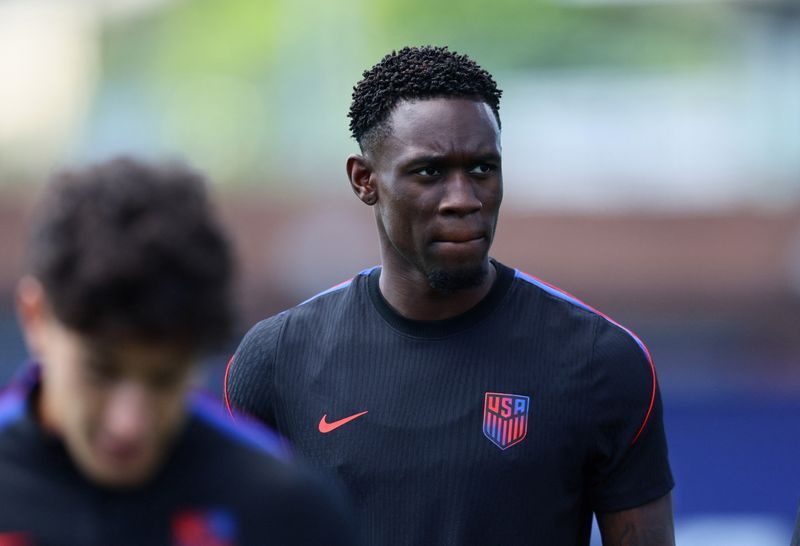
FIFA's decision to suspend the automatic one-match ban for United States striker Folarin Balogun has ignited a firestorm of protest from European football governing bodies, with critics arguing that the reversal represents a dangerous breach of sporting rules. The suspension came after U.S. President Donald Trump reportedly contacted FIFA President Gianni Infantino to urge a review of the red card issued during an earlier match, clearing Balogun to face Belgium in the World Cup last-16 encounter scheduled for the following day.
The controversy centres on a fundamental principle of football regulation: that a sending-off automatically carries a one-match suspension, a rule consistently applied throughout tournament play. FIFA justified its action by invoking Article 27 of its Disciplinary Code, which permits the suspension of enforcement for previously imposed sanctions. However, critics contend that Article 66.4 of the same code explicitly mandates automatic suspension following a red card, creating an apparent contradiction that exposes the inconsistency of FIFA's position.
The Royal Belgian Football Association issued a pointed statement highlighting this legal inconsistency, arguing that FIFA cannot selectively invoke discretionary provisions to override mandatory rules. The federation noted that similar situations during the same tournament had resulted in players serving their full suspensions without exception, raising questions about the application of equal standards. This differentiation, officials argued, fundamentally compromises the fairness that underpins competitive sport and sets a troubling precedent for the remainder of the competition.
German Football Association President Bernd Neuendorf expressed particular alarm at the circumstances surrounding FIFA's reversal, calling for an immediate public statement addressing reports of Trump's intervention. Neuendorf's concern extended beyond the specific case to the broader implications for football's autonomy and credibility. His blunt observation that July 5 should not be treated as April Fools' Day—a sharp reference to the apparent absurdity of the decision—underscored the gravity with which European federations viewed the incident. The DFB leader articulated a core fear: that the appearance of political pressure being decisive in sporting matters would permanently damage FIFA's standing and the integrity of tournament play.
For Malaysian and Southeast Asian observers, this episode carries particular resonance given longstanding concerns about governance transparency in international sports bodies. The incident demonstrates how even the world's largest sporting organization can appear vulnerable to external political pressure, raising questions about decision-making processes that ought to remain insulated from interference. The controversy reveals tensions between FIFA's stated commitment to rule-based governance and its apparent willingness to make exceptions under certain pressures—a reality that Asian football federations, often marginalized in global decision-making structures, watch with considerable interest.
Multiple football figures questioned not merely the outcome but the rationale behind FIFA's move. The inconsistency of allowing one player to escape the mandatory consequence of a red card while others in the same tournament had endured full suspensions struck observers as indefensible from a sporting standpoint. If VAR technology and the referee review process had conclusively determined the card was warranted—as the system's established protocols indicated—then overturning that determination raised fundamental questions about the reliability and purpose of such technological interventions in football.
The potential implications for the United States' progression through the tournament added another layer of controversy. If the American side advanced past Belgium, that victory would forever carry an asterisk, tainted by questions about whether the outcome would have differed had Balogun served his suspension. This prospect troubled even those sympathetic to the United States, recognizing that a tournament triumph achieved under such circumstances would lack the undisputed legitimacy that football competitions require. The shadow cast over any potential American success illustrated how FIFA's decision, intended to assist one team, might ultimately harm both that team's reputation and the tournament's credibility.
The incident also exposed FIFA's vulnerability to high-level political pressure at critical tournament moments. Whether Trump's reported intervention directly influenced Infantino's decision or simply provided cover for a decision already contemplated, the appearance of such influence proved deeply damaging. In professional sports governance, perception often matters as much as reality; when stakeholders perceive that rules can be suspended through political telephone calls, the entire regulatory framework loses its binding force. For tournaments that depend on participant faith in fair and consistent application of regulations, such perceptions represent an existential threat.
The controversy reflects broader tensions between FIFA's regulatory authority and the political contexts within which international football operates. Major football-playing nations wield disproportionate influence within FIFA's structures, and their presidents or government leaders sometimes intervene directly in sporting matters. Yet the Balogun case differed from conventional lobbying because it appeared to succeed in overturning a concrete sporting decision already rendered through established procedures. This represented not subtle influence but apparently decisive intervention in an immediate competitive matter.
European federations recognized that allowing such precedents to stand unchallenged would fundamentally alter how international football could be governed. If red card decisions could be reversed through political pressure, what other on-field decisions might similarly be subject to reversal? The principle at stake extended far beyond one player's participation in one match; it concerned whether FIFA could maintain any credible authority over the sport's fundamental rules. The unanimity of criticism from Belgium, Germany and others suggested that this concern transcended national rivalries or tournament interests.
For FIFA leadership, the decision represented a significant credibility gamble. The organization had prioritized accommodating a powerful political actor in the moment, betting that maintaining stable relations with the United States outweighed the reputational cost of appearing to compromise sporting integrity. Whether that calculation would prove sound depended largely on whether football's global community would accept the explanation offered or whether sustained criticism would force FIFA to reconsider its approach to rule enforcement in future tournaments.

