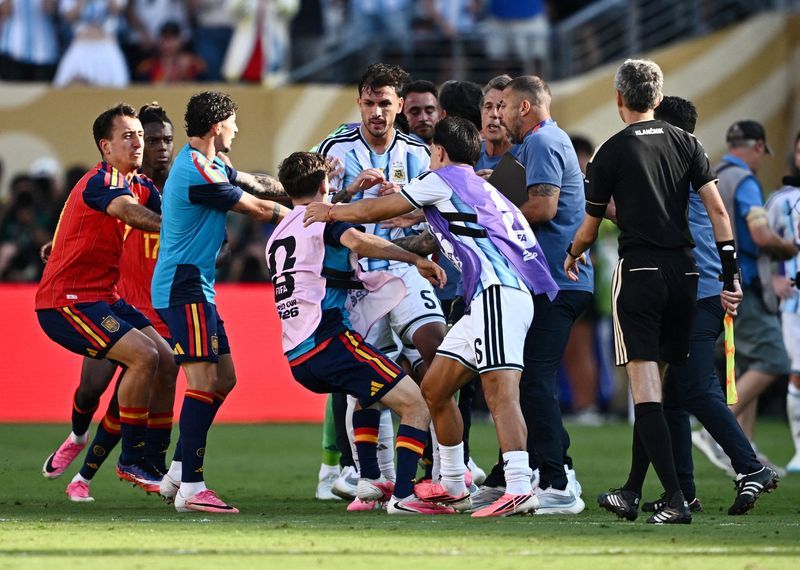
Football's international governing body FIFA has initiated a formal disciplinary inquiry into the unsavoury scenes that marred the conclusion of the World Cup final, appointing a prosecutor to examine how tensions between Spain and Argentina descended into a full-scale post-match confrontation. The investigation comes after Spain claimed their second World Cup title with an extra-time breakthrough, though the historic sporting achievement was overshadowed by the physical clash that erupted when the final whistle sounded.
Spain's victory hinged on a crucial moment in the additional 30 minutes, with winger Ferran Torres scoring the decisive goal that proved ultimately decisive in the high-stakes encounter. However, Argentina's chances of mounting a comeback had been severely compromised earlier in the match when midfielder Enzo Fernandez received his marching orders in the 93rd minute of normal time, receiving a second caution that left the South American side fighting with reduced numbers.
The immediate trigger for the brawl came when Argentine midfielder Leandro Paredes engaged in a heated exchange with multiple Spanish players as the match concluded. The confrontation involved Spain's defensive stalwart Eric Garcia and attacking midfielder Gavi among others, escalating quickly from the initial clash between the two individuals into a broader melee involving numerous players from both squads. What began as an isolated incident rapidly consumed much of the pitch as players from both benches became embroiled in the pushing and shoving.
The situation spiralled to the point where officials required considerable effort to physically separate the warring factions and restore order. Argentine head coach Lionel Scaloni was forced to intervene directly, attempting to pacify his own players and restore some semblance of composure following an exceptionally fractious contest. The scenes stood in stark contrast to the sporting excellence that had characterised much of the preceding ninety minutes, leaving a lasting impression of discord rather than celebration.
FIFA's decision to launch a formal inquiry reflects the governing body's commitment to maintaining disciplinary standards in international football. The appointment of a dedicated disciplinary and ethics prosecutor signals the severity with which the organisation is treating the incident. Such investigations typically examine video footage, match reports, and witness statements to determine what occurred and whether further sanctions are warranted beyond any action taken by match officials at the time.
For Malaysian football enthusiasts and regional observers, such incidents carry broader implications for how the sport's highest authorities manage player conduct and maintain the integrity of major tournaments. The investigation process, while necessary, underscores the growing pressure placed on players competing at World Cup level, where emotions run highest and national pride is at stake. The incident also raises questions about how referees manage temperamental situations in the dying moments of major finals, where maintaining control becomes increasingly difficult as frustrations mount.
Argentina's numerical disadvantage from the 93rd minute onwards clearly influenced the dynamics of the match, potentially contributing to heightened tensions that accumulated throughout the remainder of regulation time and into extra-time. The reduced manpower may have forced more aggressive positioning and frustrated displays from the South American squad as they attempted to compensate for their disadvantage. Such circumstances can create pressure cooker environments where even minor provocations risk igniting larger confrontations.
The investigation's outcome remains uncertain, with FIFA providing no timeframe for when the disciplinary process will conclude or what sanctions might be imposed. Potential disciplinary measures could include fines, suspension bans for individual players, or both, depending on the severity of the findings and the extent of participation by various parties. For teams involved in future competitions, such measures could have significant implications for squad availability and preparation.
This incident represents a challenging moment for international football, highlighting the tension between competitive intensity and the sportsmanship expected at the highest level. While passion and determination are essential elements of World Cup football, the scenes that unfolded serve as a reminder that authorities must continually emphasise the importance of maintaining professional standards throughout matches, particularly in their closing moments. The investigation itself demonstrates that such conduct does not pass without scrutiny, sending a clear message to the football community about expected behavioural standards in elite competition.

