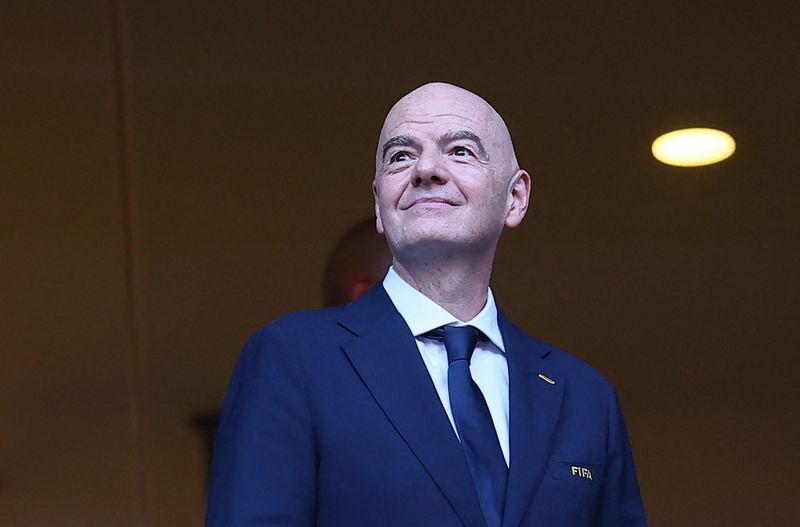
The collapse of FIFA President Gianni Infantino's audacious plan to privatise World Cup commercial rights has unleashed unprecedented turmoil within global soccer governance, with three powerful continental confederations now reportedly working in concert to unseat him from office. The 56-year-old Swiss-Italian leader hastily abandoned his proposal to sell stakes in a new commercial entity that would have raised $4.2 billion just days after unveiling it, but the damage to his political standing appears irreversible. What began as an attempt to modernise football's financial architecture through private investment has morphed into an existential crisis for Infantino's tenure, which he seeks to extend until 2031.
The immediate fallout has been swift and severe across football's governing structure. Five major European football associations, including England's Football Association, have formally retracted their public endorsements for Infantino's reelection campaign ahead of the FIFA Congress scheduled for March in Morocco. Denmark went further, making clear it would never have supported him regardless. This represents a dramatic reversal for a leader who had cultivated the image of an administrator commanding broad consensus. The mathematical reality remains challenging for his opponents—211 national federations hold votes at Congress—but the symbolic weight of losing prominent European backing signals deeper fractures in his coalition.
Conversely, a handful of national associations have doubled down on their support. Morocco, Qatar, Kuwait, Lebanon and Sri Lanka have publicly declared continued backing for Infantino, underscoring a familiar fault line in international sports governance between wealthy traditional football powers and developing nations that depend heavily on FIFA distributions. This geographical split has characterised FIFA politics for decades, with less affluent federations often providing crucial votes for incumbent leaders in exchange for financial support.
The three continental confederations—UEFA, CONCACAF, and the Asian Football Confederation—have emerged as the flashpoint for organised resistance. UEFA and CONCACAF, which governs football across North America, Central America and the Caribbean, issued withering statements over the weekend expressing lost confidence in Infantino's leadership. The AFC, typically more cautious in challenging authority, nevertheless labelled the lack of consultation around the proposal as "totally unacceptable" and demanded institutional reform at FIFA. According to reporting from the Times of London, these three confederations are allegedly coordinating a strategy to remove Infantino entirely, even discussing the creation of alternative competitions should he resist stepping down.
The fundamental miscalculation in Infantino's approach lay in the manner of the proposal's presentation rather than its substance alone. By approaching less developed associations with promises of $20 million to $40 million dividend payments from the start of next year, Infantino appeared to circumvent proper consultation mechanisms. This top-down strategy alienated confederations that expected advance notice and dialogue on matters affecting global football's commercial structure. UEFA has already issued a formal "document preservation letter" instructing FIFA to retain all materials related to the proposal, signalling potential legal action may follow.
The timing of this internal conflict carries broader implications for Southeast Asian football, particularly given the AFC's role as a dissenting voice. Malaysian football administrators and other Southeast Asian representatives participate in AFC decision-making structures, and any shift in AFC strategy toward greater pushback against FIFA centralisation could reshape how Asian football interests are represented. The AFC's typically deferential posture toward FIFA leadership may be shifting, suggesting that even regional confederations are reaching limits to accepting unilateral decision-making from the global body.
Infantino's immediate tactical priority is avoiding the calling of an Extraordinary Congress, which would require written requests from 43 or more FIFA member associations. Such a gathering would formally debate his leadership and potentially trigger a recall election before the scheduled March contest. With seven months remaining before the Congress, his strategy must focus on relationship repair and shoring up support among developing federations who have historically provided his electoral backbone. Yet the erosion of FIFA's institutional legitimacy makes this path considerably more difficult than his predecessors faced.
Historically, FIFA presidents have built power bases by distributing financial resources to developing associations that lack alternative revenue streams. Both Sepp Blatter and Joao Havelange, Infantino's immediate predecessors, employed this model successfully for decades. However, Infantino's attempted privatisation proposal, by attempting to unlock vastly larger sums, inadvertently triggered fears among developed associations that they would lose influence over FIFA's future direction. The plan essentially represented a bet that developing nations' financial incentives would outweigh concerns from traditional powers about governance and transparency.
The November 18 deadline for nominations to the FIFA presidency adds urgency to confederation strategy discussions. Infantino's challengers must identify a candidate capable of appealing to both the poorer associations dependent on FIFA distributions and the more affluent confederations demanding governance reform. This balancing act has confounded FIFA election contestants for years, as the interests of wealthy European leagues and struggling African or Caribbean federations often prove irreconcilable. The search for such a figure suggests that potential opponents view the field as genuinely open for the first time in Infantino's presidency.
The geopolitical dimension extends beyond football administration into broader questions about international institutions' responsiveness to stakeholder input. FIFA's relative insularity from transparency and consultation pressures that affect other global bodies became starkly apparent through the World Cup commercialisation debacle. The spectacle of continental confederations threatening parallel competitions underscores how little institutional trust FIFA has accumulated, even as it commands enormous commercial resources. For Malaysian football stakeholders, these developments highlight the precarious position of smaller federations in organisations where voting power correlates imperfectly with market size or developmental capacity.
The ultimate resolution remains uncertain, but the configuration now resembles less a matter of individual personalities and more a structural reckoning. Whether Infantino survives the political siege depends less on his diplomatic skills than on whether he can mobilise sufficient numbers from the developing world while simultaneously offering concessions to restless confederations. The stakes extend beyond one administrator's tenure to questions of how global football governance functions, who influences its direction, and whether consent remains a meaningful principle at FIFA or merely ornamental.

