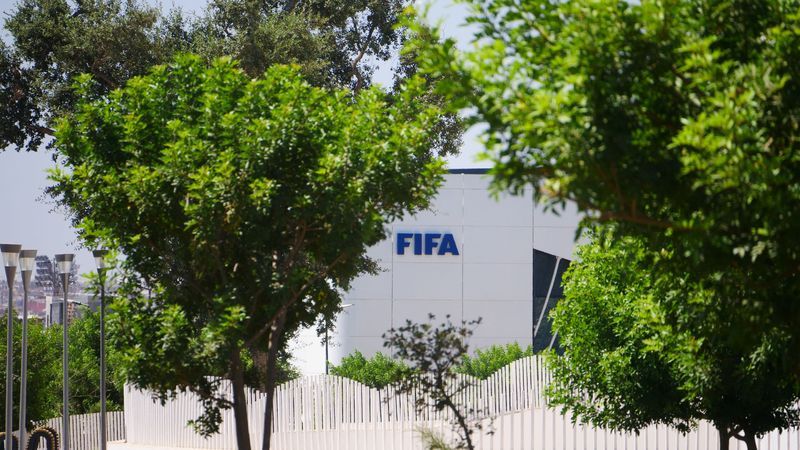
The governance crisis engulfing world football has escalated beyond a simple question of leadership continuity. David Terrier, president of FIFPRO Europe, has declared that FIFA requires comprehensive institutional overhaul rather than merely deciding whether Gianni Infantino should remain in office. Speaking in Paris on Wednesday, Terrier characterised the current situation as emblematic of deeper structural failures that have systematically undermined confidence among the sport's member federations and continental confederations.
The immediate trigger for this intervention centres on Infantino's contentious proposal to sell commercial rights to the World Cup tournament, a move that prompted three major confederations—UEFA, AFC, and CONCACAF—to publicly attack the FIFA president's conduct and demand his resignation within the past fortnight. This coordinated pushback from such influential regional bodies signals an unprecedented fracturing of the consensus typically maintained within football's governance structures. The proposal's collapse and the surrounding fallout have exposed what Terrier describes as a state of open institutional conflict, with relationships between FIFA's leadership and its constituent members deteriorating to alarming levels.
Terrier's assessment reframes the current debate in fundamentally important ways. Rather than focusing on whether Infantino personally should step down, he argues that the real question involves whether FIFA's internal power structures can sustain credibility under their present configuration. The concentration of authority in the president's office, combined with what Terrier characterises as insufficient checks and balances, has created an environment of pervasive distrust. This erosion of confidence extends across the federation, affecting relationships that are essential for football's effective global governance. The players' union chief suggests that simply replacing one individual while preserving the existing institutional framework would merely postpone an inevitable reckoning.
The comparison Terrier draws to the Sepp Blatter era carries particular weight for regional football stakeholders. FIFA's corruption scandals that culminated in Blatter's 2015 resignation represented a catastrophic failure not merely of individual ethics but of institutional oversight. Yet Terrier contends that the contemporary situation mirrors and potentially exceeds those earlier problems in severity. He warns that FIFA risks repeating historical mistakes by failing to address the systemic vulnerabilities that enabled past misconduct. The current governance style, in his assessment, perpetuates precisely the conditions that previously destabilised world football and damaged the sport's reputation across Asia, Europe, Africa, and the Americas.
Following a crisis meeting in Morocco last week, FIFA issued an apology to its 211 member associations regarding the World Cup commercial rights proposal, acknowledging errors in process and communication. The organisation simultaneously reaffirmed its support for Infantino and cautioned against efforts to undermine his presidency outside formal constitutional procedures. However, these defensive gestures have failed to satisfy international stakeholders who perceive the underlying problem as institutional rather than communicative. FIFA's insistence that its actions complied with existing regulations, while perhaps technically accurate, misses the fundamental critique that those regulations themselves require substantial revision.
Terrier emphasises that the present moment represents potentially the final opportunity to implement meaningful structural change within FIFA. Without sweeping reforms addressing the concentration of executive power, he argues, football's governing body will remain perpetually vulnerable to the conflicts currently threatening its legitimacy. The proposed solutions involve redistributing authority more broadly across FIFA's governance structures, establishing robust counter-balancing mechanisms, and creating genuine oversight capabilities independent from the president's influence. Such reforms would require a FIFA president genuinely committed to constraining his own office's power—a transformation that would demand placing institutional health above personal political survival.
The implications for Malaysian and Southeast Asian football extend beyond abstract governance concerns. FIFA's credibility directly affects how regional confederations like AFC exercise their authority, how international competitions are organised, and ultimately how investment and resources flow to football development across the continent. When FIFA's institutional stability is questioned by major confederations, the uncertainty permeates downward through regional structures and national football associations. This instability can complicate strategic planning, undermine confidence in competition integrity, and potentially affect commercial arrangements that sustain football infrastructure throughout Asia.
Terrier's characterisation of FIFA's internal situation as a "real war" involving profound loss of trust among confederations should not be dismissed as hyperbole. The simultaneous public criticism from UEFA, AFC, and CONCACAF represents an extraordinary display of institutional dysfunction at the highest levels of global football governance. Such coordinated pushback occurs rarely and reflects genuine consensus that existing arrangements have become untenable. The fact that these geographically and culturally diverse confederations found common cause suggests the problems extend well beyond regional grievances or factional disputes.
A critical dimension of Terrier's argument involves questioning whether FIFA's administration possesses the institutional capacity to serve as an effective counterweight to presidential authority. He contends that the current structure fails to maintain meaningful independence from the executive, effectively preventing FIFA's administrative apparatus from protecting the organisation's own statutes and regulations. This institutional weakness mirrors patterns observable in poorly governed organisations worldwide, where executive dominance undermines the very regulatory frameworks designed to constrain it. Restoring institutional health requires establishing separations of power that function in practice, not merely on paper.
Looking toward the March election when FIFA members will decide on Infantino's future, Terrier's analysis suggests that personnel changes alone cannot resolve the underlying institutional crisis. Whether Infantino remains in office or is replaced, the fundamental question concerns what structural safeguards can prevent similar governance failures. A newly elected president would inherit the same concentrated authority structure, creating risk of repeating comparable patterns. Only through comprehensive reforms addressing executive power concentration, establishing genuine oversight mechanisms, and creating genuine accountability can FIFA potentially restore the institutional legitimacy currently eroding across its member confederation base.
For football stakeholders throughout Southeast Asia, the resolution of FIFA's governance crisis carries real consequences for the sport's development and management at regional levels. The instability currently roiling the international governing body creates uncertainty that ripples downward through confederation and national association structures. Malaysian football, along with that of neighbouring countries, depends on a functioning FIFA capable of providing consistent governance and managing global competitions with institutional credibility. Terrier's insistence on systemic rather than superficial change reflects an understanding that football's future requires restoring genuine institutional health at its highest levels.

