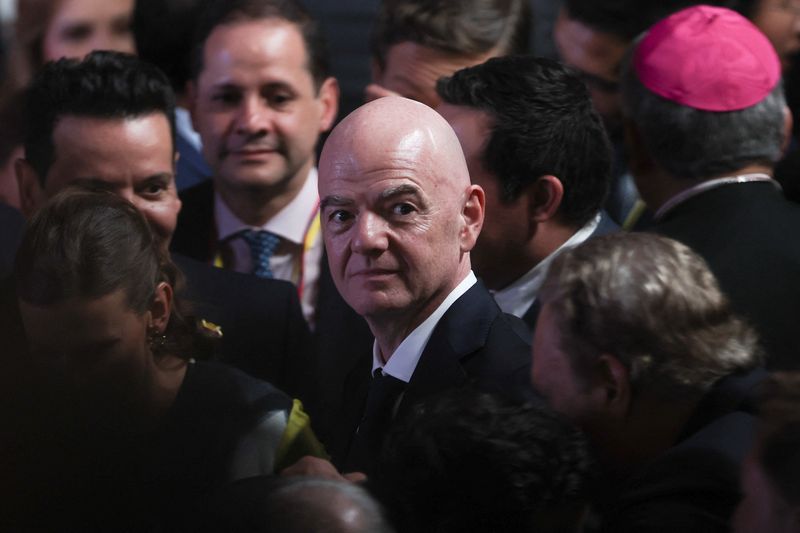
The leadership crisis engulfing world football's governing body has sparked a vigorous debate about due process and accountability, with the Confederation of African Football pushing back against calls for Gianni Infantino's immediate removal. Patrice Motsepe, the CAF president, has framed the controversy as precisely the kind of institutional challenge that democratic mechanisms are designed to resolve, arguing that FIFA's 211 member associations possess both the right and responsibility to determine whether the incumbent should continue in office when the organisation convenes for its 77th Congress in Rabat, Morocco on March 18, 2027.
The scrutiny facing Infantino intensified dramatically after three continental confederations — UEFA representing Europe, AFC covering Asia, and CONCACAF representing North America and the Caribbean — publicly denounced his leadership and openly called for his resignation. Their grievances centre on his controversial attempt to attract private investment into FIFA competitions, including the flagship World Cup tournament itself. This initiative proved deeply divisive across football's global hierarchy, with several regional bodies viewing it as a threat to the sport's fundamental character and the autonomy of national federations.
Motsepe's intervention represents a significant counterweight to the mounting pressure on Infantino from these powerful confederations. Speaking to Sky News, the South African football administrator articulated a philosophy emphasising institutional legitimacy and established procedures over informal pressure campaigns. His position reflects not blanket support for Infantino's policies but rather a conviction that FIFA's democratic framework must be preserved and strengthened, even when difficult leadership questions arise. This distinction matters considerably in a sport where governance has historically been fraught with controversy and accusations of unaccountability.
The African confederation leader explicitly invited alternative candidates to enter the race, suggesting that competitive elections represent the proper venue for addressing concerns about any FIFA president's direction or record. This approach implicitly acknowledges legitimate grievances while channelling them toward formal electoral processes rather than public campaigns for forced resignation. Motsepe emphasised that all 211 member associations deserve equal standing in making this consequential decision, rejecting any notion that a handful of powerful confederations should dictate the outcome through coordinated pressure.
Motsepe's framing positions accountability and scrutiny as essential features of institutional health, though not necessarily demands that circumvent established procedures. He explicitly acknowledged that leaders must be subject to interrogation about their governance practices, their adherence to due process, and their compliance with organisational rules. However, he insisted that legitimate mechanisms exist within FIFA's structure to address such complaints and that these pathways represent the appropriate venue for examining any president's conduct or decisions.
For Southeast Asian readers and football stakeholders across the region, this debate carries tangible implications. The AFC represents Asian interests within FIFA's governance structure, and the confederation's public criticism of Infantino signals deep concerns about the direction of the global game. However, the outcome of the March 2027 election will significantly influence how FIFA operates, what competitions look like, and how revenue is distributed among member associations. The AFC's own relationship with FIFA's central authority will shape whether Asian football can continue competing effectively and developing sustainably.
Motsepe's emphasis on unity and continued football development beneath the leadership controversy addresses a genuine anxiety among football leaders worldwide. Whatever the merits of specific policy disagreements with Infantino, protracted institutional conflict risks distracting from the sport's core missions: developing players, strengthening governance in developing regions, and ensuring competitions remain accessible and competitive. The CAF president's appeal for focus on substantive challenges rather than personality-driven politics reflects this concern.
The support that Motsepe confirmed CAF maintains for Infantino provides an important counterbalance to the defections from UEFA and CONCACAF. Africa's largest football confederation represents dozens of member nations with substantial interest in maintaining stable relationships with FIFA's central administration. Motsepe noted that Infantino has demonstrated loyalty to African football interests and enjoys continent-wide backing, suggesting that the global picture regarding the FIFA president's standing remains genuinely mixed rather than universally hostile.
The philosophical tension underlying this dispute reflects broader questions about democratic legitimacy in international sports governance. Infantino's critics argue that his attempted reforms represent a fundamental threat requiring emergency action outside normal procedures. His defenders, including the African confederation, contend that even flawed leadership decisions do not justify circumventing the democratic institutions designed to hold executives accountable. This distinction between what might be desirable in terms of outcomes versus what serves institutional integrity over the long term remains sharply contested.
Motsepe's insistence on due process, fair treatment, and governance legality as non-negotiable principles strikes a careful balance. Rather than defending Infantino's specific policies or dismissing the confederations' concerns as illegitimate, he argued that proper institutional channels exist to address them. This position allows the African confederation to maintain relationships across the fractured football landscape while signalling that it will not endorse circumventing established democratic procedures, however much one might disagree with particular leadership directions.
The March 2027 election will represent a genuine test of global football governance. If Infantino faces competitive challengers, the campaign and voting process will demonstrate whether the sport's democratic institutions retain sufficient credibility and legitimacy to resolve high-stakes leadership disputes. Conversely, if the conflict continues to fester through coordinated pressure campaigns rather than electoral competition, it may suggest that FIFA's governance structures have become insufficiently robust to handle fundamental institutional disagreements. Motsepe's advocacy for the electoral process thus carries significance extending well beyond this particular controversy.

