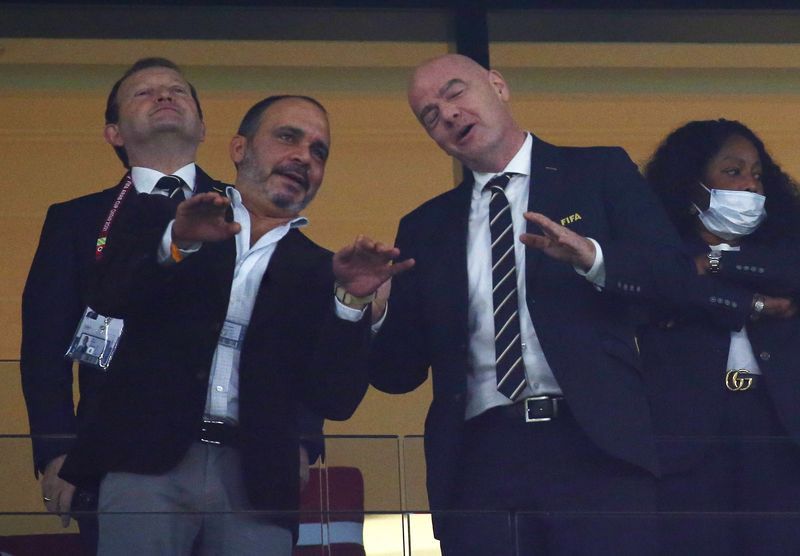
Jordan's national football team and coaching staff have finally received payment for their participation in December's Arab Cup tournament in Qatar, marking the end of an eight-month waiting period that sparked a diplomatic row between the kingdom's football leadership and FIFA's governing structure. The announcement came Thursday through Jordan Football Association President Prince Ali bin Hussein, who disclosed that funds arrived just two days after he levelled accusations of coercive conduct against FIFA leadership. The delayed disbursement has become emblematic of deeper governance tensions that routinely surface during FIFA presidential election cycles, raising questions about how the world's governing football body manages its financial obligations to member associations across the developing world.
Prince Ali's public criticism centred on what he characterised as implicit quid pro quo arrangements allegedly made during World Cup discussions. According to the JFA chief, FIFA officials communicated verbally that his endorsement of President Gianni Infantino "would go a long way to helping our FA out," suggesting linkage between prize money distribution and political support for the incumbent president. This assertion carries significant implications for how FIFA allocates resources and manages relationships with member federations, particularly smaller associations that may lack the financial cushion to absorb extended payment delays. The timing of the funding delivery—occurring mere hours after Prince Ali's allegations circulated publicly—lends credence to his contention that withholding had been deliberate rather than merely administrative.
The background to this dispute involves Infantino's ill-fated proposal to sell commercial rights to the World Cup tournament, a scheme that encountered fierce resistance from confederations and national associations globally. Facing sustained pressure from football governance stakeholders, the FIFA president ultimately withdrew the proposal, a retreat that appears to have prompted a reassessment of his political position within the organisation. FIFA subsequently issued an apology to member associations for errors connected to the abandoned initiative, acknowledging missteps in how the controversial proposal had been handled. Nevertheless, FIFA's leadership moved swiftly to reaffirm its backing for Infantino following an emergency gathering in Morocco on Wednesday, demonstrating institutional resistance to challenges to the president's authority.
Jordan's specific grievance extends beyond simple administrative oversight. The national team's achievement in reaching the Arab Cup final represents a significant accomplishment for Jordanian football, yet the associated prize funding proved remarkably elusive for eight consecutive months. This protracted delay illuminates how smaller football nations, lacking the political clout and financial independence of major football powers, navigate unequal relationships within FIFA's hierarchical structure. For Malaysian football authorities and other Southeast Asian associations, the Jordan case offers cautionary insight into how prize money and development funding can become entangled with political considerations at FIFA's highest levels. The implicit message—that financial support may hinge upon alignment with incumbent leadership during electoral periods—creates uncomfortable dynamics that undermine the ostensible meritocratic basis of sporting competition and reward.
Prince Ali's refusal to endorse Infantino represents a notable defection within FIFA's political landscape. By publicly committing that his association would neither endorse the president nor vote in his favour, the Jordanian leader has positioned himself among growing numbers of critics questioning FIFA's governance model. His statement that the delayed payment "does not change my clear position concerning the leadership of FIFA" suggests that the overdue funds, while materially important, could not purchase his political allegiance—a distinction that speaks to deeper concerns about institutional integrity. This principled stance carries consequences for a smaller football association, as FIFA's administrative apparatus wields considerable influence over funding, tournament allocations, and development programme access for member federations.
The episode underscores persistent vulnerabilities within FIFA's governance framework that have repeatedly surfaced across multiple presidential terms. Financial obligations to member associations should operate independently of electoral politics, yet the sequence of events in this instance suggests otherwise. For Southeast Asian nations competing in regional tournaments and qualifying competitions, understanding these dynamics proves essential. Should prize money for achieving tournament milestones become contingent upon backing particular FIFA candidates, it fundamentally corrupts the competitive and meritocratic principles that international sport ostensibly represents. Malaysian football administrators, already navigating complex international football politics, must recognise how smaller associations negotiate power imbalances with FIFA's centralised authority.
FIFA's silence regarding Prince Ali's allegations represents a notable institutional response. The organisation declined to comment on the accusations, neither denying the characterisation of events nor defending its payment processes. This reticence suggests awareness that substantive engagement with the Jordanian chief's claims could expose institutional vulnerabilities or validate criticisms of how FIFA manages member relations. The absence of transparency regarding payment timelines, decision-making processes, and potential linkages between financial distribution and political support perpetuates uncertainty about FIFA's operational integrity. For other national associations awaiting tournament funds or development investments, FIFA's non-response provides minimal reassurance about equitable treatment of member interests.
The broader regional context matters significantly for Southeast Asian stakeholders. The Arab Cup, though geographically distant, operates within FIFA's competitive architecture that affects Asian football generally. How FIFA allocates tournament revenues and manages prize distributions across different confederations influences resource availability and competitive opportunities throughout Asia. Should financial incentives become weaponised as political tools during FIFA leadership contests, it could systematically disadvantage associations whose leadership maintains independence from incumbent power structures. This reality demands heightened vigilance from Malaysian and other Southeast Asian football authorities regarding governance accountability within FIFA's institutions.
Looking forward, Prince Ali's public stance and the circumstances surrounding the delayed payment may catalyse broader conversations about FIFA reform. Pressure for transparent, rule-based financial procedures and separation of prize distribution from electoral considerations could gain momentum if multiple member associations voice similar concerns. For Malaysian football, engagement with like-minded federations to establish collective positions on FIFA governance standards may prove increasingly necessary. The Jordan case demonstrates that individual associations can challenge FIFA's arrangements, though doing so carries political and institutional costs. Regional coordination among Southeast Asian football bodies could strengthen negotiating positions and reduce individual exposure to potential retaliation through funding or allocation decisions.

