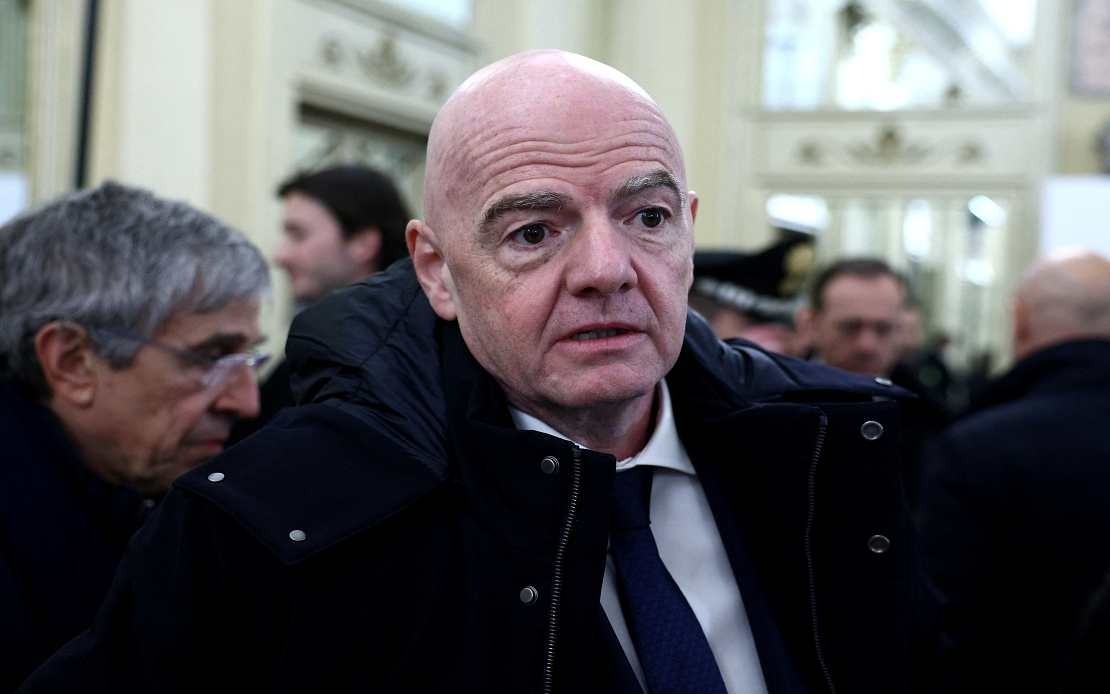
A human rights advocacy group has escalated its concerns about FIFA President Gianni Infantino's conduct by lodging a formal complaint with the International Olympic Committee, alleging he has repeatedly violated rules designed to ensure political impartiality in sports governance. The filing represents a significant escalation in scrutiny of Infantino's tenure, particularly regarding his interactions with world political leaders during major football tournaments.
FairSquare, the organization submitting the complaint, contends that Infantino has breached multiple provisions of the Olympic Charter and the IOC's code of ethics since becoming an IOC member in 2020. The group points to his recent handling of disciplinary matters at the World Cup as the most recent example of conduct they argue undermines the independence that international sports organizations must maintain. Such accusations strike at the heart of concerns about political interference in football governance—a perennial issue in a sport watched by billions globally.
The catalyst for the complaint centres on American footballer Folarin Balogun, whose one-match suspension was mysteriously rescinded by FIFA's disciplinary committee, enabling him to participate in his team's knockout-stage match against Belgium. The timing and circumstances of this reversal have raised eyebrows within the global football community, particularly given the high-profile nature of World Cup fixtures and their political dimensions.
Central to FairSquare's allegations is a reported telephone conversation between United States President Donald Trump and Infantino that preceded the disciplinary decision. Infantino has publicly maintained that FIFA's committee structures operate with complete autonomy and that no external political pressure influenced the outcome. However, the apparent proximity between the presidential call and the disciplinary reversal has fuelled speculation about whether FIFA's governance systems can truly insulate decision-making from political considerations. For Southeast Asian sports administrators watching governance standards internationally, this situation illustrates the persistent tensions between political power and institutional independence in global sports.
The complaint details five explicit alleged violations of IOC political neutrality requirements, alongside what FairSquare characterizes as additional serious breaches supported by preliminary evidence. Rather than being an isolated grievance, this represents the culmination of mounting concerns about Infantino's conduct that multiple international actors have begun documenting formally. The breadth of the allegations suggests a pattern rather than individual incidents, a distinction that carries greater weight in institutional investigations.
FairSquare first lodged concerns through FIFA's own ethics committee in December, initiating an internal review process. That initial complaint apparently failed to generate satisfactory resolution, prompting the organization to pursue a parallel track through the IOC. This dual-track approach reflects growing frustration with FIFA's internal accountability mechanisms and suggests that external oversight may be necessary to address perceived governance failures. For countries in the region with interests in major sporting events, the question of whether international sports bodies can self-police effectively remains crucial.
The Norwegian football federation subsequently reinforced FairSquare's position by formally requesting that FIFA's ethics committee examine the original complaint. This intervention from a respected national football body lent institutional weight to the concerns and signalled that the controversy extended beyond advocacy groups into the mainstream international football community. Such moves by established national federations carry significant diplomatic and procedural implications for FIFA's standing.
European Parliament members added their voices to the growing chorus of concern when fifty representatives jointly wrote to FIFA's ethics committee on June 29, explicitly urging examination of FairSquare's allegations. This parliamentary intervention represents political pressure at the supranational level and indicates that the matter has transcended sports governance to acquire political significance across multiple European democracies. The involvement of elected legislators underscores perceptions that fundamental questions about institutional integrity and democratic accountability are at stake.
The absence of any public explanation from FIFA regarding its decision to suspend the Balogun ban has intensified questions about the transparency of its disciplinary processes. In an era where sports organizations face mounting pressure to demonstrate robust governance and ethical standards, unexplained reversals of significant decisions undermine institutional credibility. For Malaysian readers following international football governance, the case illustrates why many now question whether large international sports bodies can maintain the impartiality their mandates demand, particularly when powerful political actors become involved in sporting matters.
Infantino's position as IOC member places him within the Olympic system's own governance structure, creating both accountability leverage and potential conflict of interest. The complaint filed with the IOC directly engages his status within that organization and raises the prospect of formal sanctions through Olympic channels. This interconnectedness of sports governance bodies means that misconduct allegations in one sphere—FIFA—can trigger investigations in another—the IOC—creating multiple pressure points for accountability.
The broader implications of this complaint extend beyond individual personalities or decisions to fundamental questions about how global sports governance structures can effectively separate sporting matters from political interference. As football continues expanding its global footprint and commercial significance, maintaining institutional independence becomes increasingly challenging and increasingly crucial. The Infantino case has become a test of whether international sports organizations possess the mechanisms and will to enforce genuine political neutrality or whether economic and political power ultimately determines outcomes.
Moving forward, FIFA and the IOC face critical decisions about how to respond to these coordinated complaints. Their handling of this matter will signal to the international community—and to governments and sports bodies across Southeast Asia and globally—whether these organizations can credibly claim to operate according to the high governance standards they publicly espouse. The resolution of this dispute carries implications far beyond one disciplinary decision or one president, potentially reshaping how the world's largest sports bodies approach political accountability.

