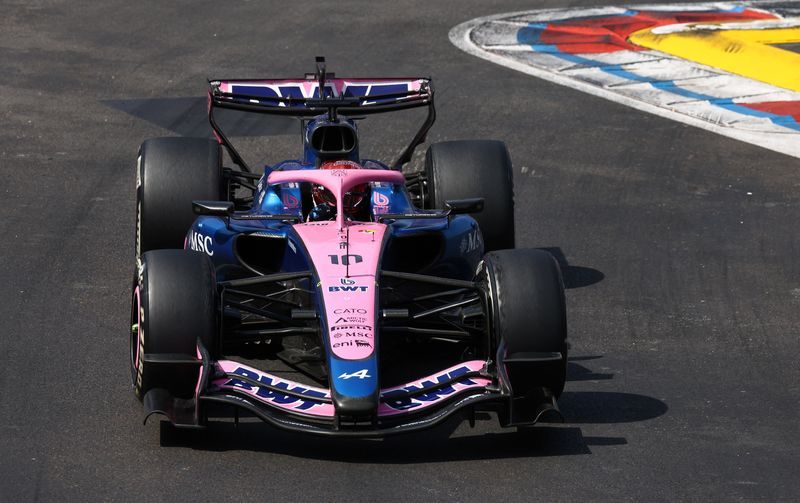
The sport of Formula One faces an unusual situation this week as its international court of appeal prepares to render a binding judgment on a podium position from the Monaco Grand Prix, an event contested more than sixty days earlier. The dispute centres on third place at the prestigious June 7 event in the Mediterranean principality, a matter that has already seen multiple reversals and now threatens to set precedent for how the sport handles penalty appeals and timekeeping procedures.
Pierre Gasly of Alpine appeared to secure third place on race day, only to be stripped of the position hours later when stewards imposed two five-second penalties for excessive speed during pit-lane activity. The penalties demoted the French driver to seventh, allowing Red Bull's Isack Hadjar to inherit the podium spot and the accompanying honours. What should have been a straightforward finish instead became the catalyst for weeks of legal wrangling that would eventually involve multiple teams and raise fundamental questions about the consistency of Formula One's regulatory framework.
The initial verdict stood for merely five days before being entirely overturned. On June 12, stewards reconsidered the decision after Alpine presented evidence pointing to a timekeeping error, leading officials to reverse the penalties and restore Gasly's third-place finish. Hadjar was obliged to return the trophy in a reversal that seemed final, yet the decision ultimately proved premature. The episode sparked considerable concern among paddock observers, with multiple sources warning that the precedent of removing penalties post-race created ambiguity about the permanence of sporting decisions.
This uncertainty prompted both McLaren and Red Bull to lodge formal appeals with Formula One's international court on June 16. Their joint challenge reopened the matter despite stewards' explicit reversal, setting up the current situation where a higher authority must now definitively settle which competitor truly earned the position. The appeals demonstrate how contested rulings can escalate beyond initial steward decisions when teams believe fairness has been compromised or when the interpretation of regulations affects championship points.
McLaren's specific grievance extends beyond the immediate podium positioning. Oscar Piastri, who finished fourth before being bumped to fifth when Gasly was reinstated, had already served five-second penalties during the race for the identical pit-lane speeding infraction. Crucially, Piastri served his penalty in real time, meaning the lost minutes in the pits directly affected his subsequent performance and strategic position in the race. Unlike Gasly, who received time penalties applied after the conclusion and therefore avoidable if his penalty were later removed, Piastri had no recourse for the genuine race impact of his penalty.
The Australian driver accepted the penalties on the assumption that excessive pit-lane speed was unavoidable, yet subsequent events cast doubt on whether the original speeding actually occurred or whether similar timekeeping ambiguities affected his case. This asymmetry between drivers penalised at different stages created the fairness concerns that prompted McLaren's challenge. The team's argument emphasizes that allowing post-race penalty reversals introduces unpredictability that disadvantages drivers who comply with penalty protocols during the race itself.
McLaren team principal Andrea Stella articulated the team's dual concerns during the Dutch Grand Prix weekend, where the Woking-based outfit celebrated victory through Lando Norris. Stella emphasized that the appeal encompassed both systemic fairness within the sport and McLaren's direct material interest in championship points. The Italian manager warned that permitting penalties to be unilaterally removed after the event undermines regulatory consistency and creates precedent that threatens the competitive integrity of the championship.
"The process that happened after the race in Monaco needs to be reviewed because from a standpoint of fairness for all competitors, the fact that the penalty was removed introduces some significant elements of concern," Stella explained to media gathered at Zandvoort. He further stressed that McLaren suffered concrete championship damage through a penalty that Piastri could not appeal and could not mitigate through post-race administrative action. The combination of procedural concerns and tangible competitive harm formed Stella's justification for escalating the matter to the court.
The distinction between penalties served during the race and those applied afterward has crystallized as the central issue in this appeal. Gasly's penalties, technically imposed after the chequered flag, theoretically could be revisited and amended through administrative processes. Piastri's penalties, served immediately during the event, locked in their consequences within the live race dynamics. This fundamental difference created a two-tier system where different drivers faced different remedial possibilities for identical offences, raising legitimate questions about whether the regulatory framework treats all competitors equitably.
The FIA headquarters in Paris will host the hearing, which notably excludes public and media attendance in keeping with confidentiality protocols governing international court proceedings. The federation has indicated that its decision will be released promptly following the tribunal's deliberation, though the exact timeline remains unspecified. The confidential nature of the proceedings reflects the sensitivity surrounding the matter and the desire to protect the reasoning of justices from external pressure.
This appeal carries implications that extend well beyond the single position at Monaco. Should the international court uphold Gasly's podium, it would affirm post-race penalty reversals as legitimate remedies, potentially encouraging similar appeals in future races and establishing that timekeeping errors can be corrected regardless of when they are discovered. Conversely, if the court reinstates Hadjar or imposes an alternative outcome, it would signal that race results achieve finality quickly and that penalty reversals require extraordinarily compelling evidence. Either outcome will shape how Formula One handles disputed decisions in the remainder of the season and establish precedent for future regulatory interpretations.
The two-month delay itself underscores the complexity of Formula One's legal structures and the detailed examination required when multiple teams' interests intersect. Rather than viewing this as procedural dysfunction, the thoroughness reflects the sport's commitment to ensuring that its most prestigious events and outcomes withstand legal scrutiny. Nevertheless, the extended timeline raises questions about whether the regulatory environment could be streamlined to resolve such matters with greater expedition, particularly when championship implications accumulate as the season progresses.

