Malaysia's growing commitment to preserving and promoting Islamic intellectual heritage has taken a significant step forward with the elevation of the Festival Turath Islami Selangor to national status. Beginning September 13 at Putrajaya's Putra Mosque, the expanded Festival Turath Islami Malaysia 2026 will operate as an eight-day platform designed to deepen public engagement with foundational Islamic scholarship and its contemporary relevance for nation-building and societal development.
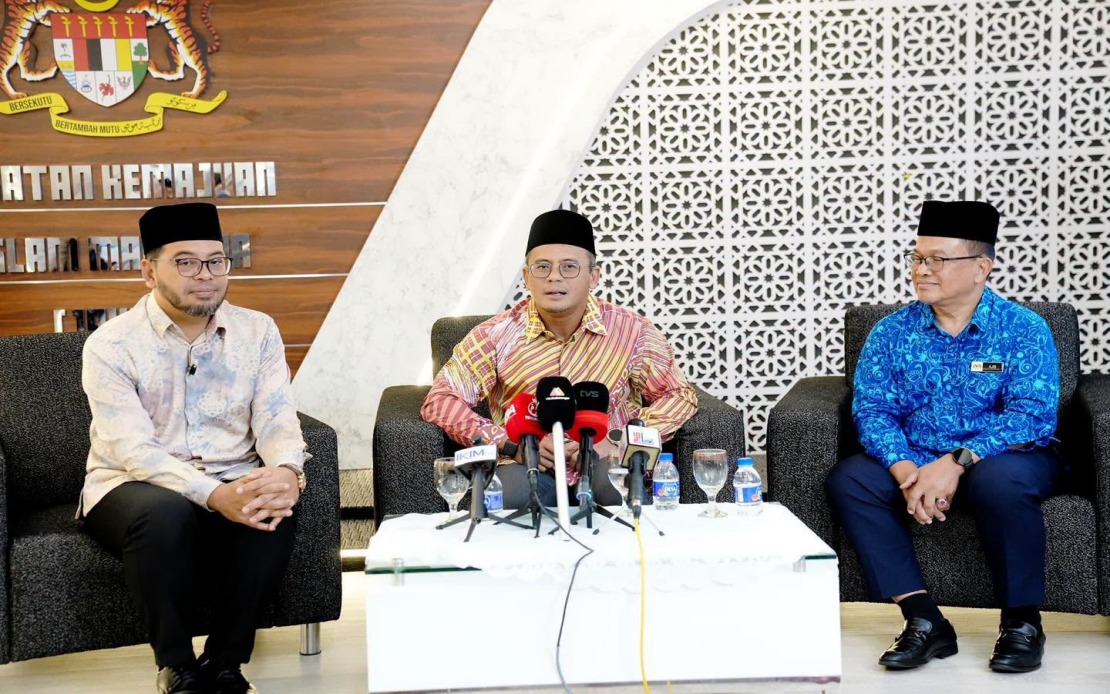
Selangor Menteri Besar Datuk Seri Amirudin Shari announced the transformation at a media briefing in Putrajaya, marking a watershed moment for an initiative that has operated at state level since 2023. The decision to relocate from the Selangor State Mosque to the Putra Mosque reflects the festival's expanded mandate and the joint commitment of both state and federal governments to position Islamic heritage studies as a matter of national importance. The relocation signals recognition that classical Islamic texts and their scholarly traditions possess relevance beyond state boundaries and merit engagement from Malaysia's diverse Muslim communities.
This year's edition carries the thematic focus "Hikmah Warisan Islam," centring on Al-Hikam al-Ata'iyyah, a revered work by the medieval Sufi scholar Ibn Ata-illah As-Sakandari. The text, which explores profound concepts including spiritual sincerity, trust in divine providence, and the inner dimensions of worship, has exercised considerable influence throughout Islamic scholarly circles for centuries. Particularly within the Malay-Muslim intellectual tradition, Al-Hikam al-Ata'iyyah continues to shape spiritual and ethical understanding, making it a fitting subject for a festival aimed at reconnecting contemporary audiences with enduring classical wisdom.
The festival's trajectory over four editions reveals a deliberate curatorial approach to Islamic heritage. Previous iterations examined Ihya' 'Ulumuddin by Imam Al-Ghazali, Al-Arba'in al-Nawawiyah by Imam al-Nawawi, and Tafsir al-Jalalain by Imam Jalaluddin al-Suyuti. This selective focus on foundational texts of Islamic law, jurisprudence, and Quranic interpretation demonstrates an institutional commitment to engaging with scholarship that has shaped Islamic thought across generations and geographies. By rotating between different classical works, the festival creates a cumulative intellectual experience rather than treating Islamic heritage as a static archive.
The 2026 edition's scholarly credentials represent a substantial elevation in intellectual calibre. The gathering will bring together 23 scholars from within Malaysia and internationally, with over 42 scholarly sessions planned throughout the eight days. Among the distinguished participants is Sheikh Dr Ali Jum'ah, a globally recognised Islamic scholar whose works have influenced contemporary Islamic thought across the Muslim world. Joining him will be Professor Dr Sayyid Idris al-Fasi al-Fihri, alongside local luminaries including Ustaz Dr Adi Hidayat, Ustaz Wadi Annuar, and Selangor Mufti Datuk Setia Dr Haji Anhar Haji Opir. This international-local balance ensures that participants encounter both universal Islamic scholarly frameworks and their particular articulations within the Malaysian context.
Beyond formal academic sessions, the festival programme encompasses diverse activities designed to accommodate varying levels of scholarly engagement. Early morning Kuliah Subuh sessions will provide accessible entry points for those seeking to deepen their Islamic knowledge before dawn prayers. Recitation sessions of Dalail al-Khairat, a classical devotional text, and intensive five-day Talaqqi Kitab Al-Hikam programmes will serve more dedicated participants. The inclusion of an Islamic Book Festival alongside ceremonial programmes and inaugural addresses reflects recognition that heritage engagement must be multisensory and experiential, not confined to lecture halls.
A particularly significant innovation is the inaugural National Muzakarah Ulama Turath, which will convene Islamic scholars from across Malaysia's diverse regions and schools of thought. This scholarly gathering moves beyond passive reception of heritage knowledge toward active collaborative deliberation on contemporary challenges facing Muslim communities. By creating space for Malaysia's learned Islamic scholars to engage in structured dialogue about pressing issues, the festival positions classical Islamic knowledge not as historical curiosity but as living intellectual resource capable of addressing modern realities.
The federal-state partnership underlying FTIM 2026, channelled through the Prime Minister's Department (Religious Affairs), indicates strategic governmental recognition that Islamic heritage preservation serves broader national objectives. Minister in the Prime Minister's Department (Religious Affairs) Dr Zulkifli Hasan's presence at the announcement underscores this commitment. In the Malaysian context, where multiple Islamic scholarly traditions coexist and where Islamic knowledge intersects with questions of national identity and social cohesion, providing institutional support for heritage scholarship carries political and social significance beyond mere cultural programming.
For Malaysia's Muslim intellectual communities and those engaged in Islamic studies regionally, the elevation to national status potentially establishes a model for how governments can support scholarly engagement with classical Islamic texts without imposing doctrinal constraints. The festival's emphasis on Sufi and jurisprudential texts reflects a broader ecumenical approach to Islamic heritage that acknowledges multiple streams within Islamic intellectual tradition. This inclusive approach may prove instructive for other Southeast Asian nations navigating similar questions about how to honour Islamic learning while respecting theological pluralism.
The timing and scope of FTIM 2026 also reflects awareness that Islamic scholarship in the contemporary Muslim world faces challenges from both secularization and literalist interpretations that dismiss classical scholarship as irrelevant. By investing institutional resources and scholarly prestige in engaging audiences with texts like Al-Hikam al-Ata'iyyah, Malaysian authorities signal that sophisticated Islamic learning rooted in classical tradition remains vital for forming "a knowledgeable society" capable of navigating complexity with spiritual depth and intellectual rigour. Whether this initiative catalyzes broader engagement with Islamic intellectual heritage across the region will merit observation in coming years.

