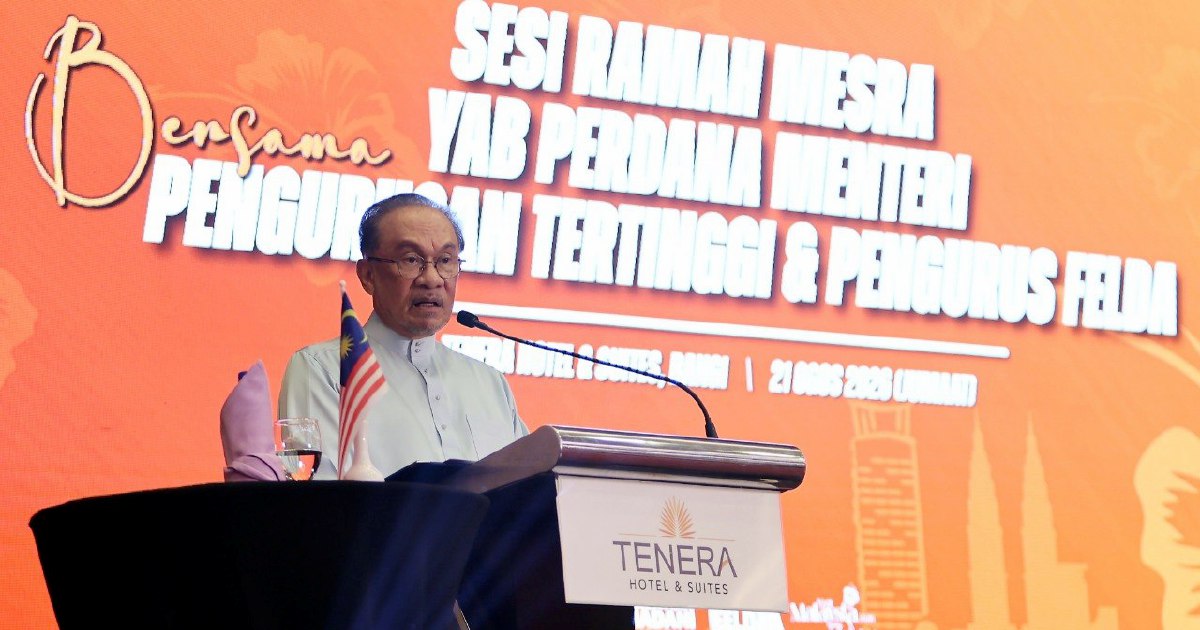
Prime Minister Datuk Seri Anwar Ibrahim announced today that investigative proceedings have commenced for a specially formed task force examining longstanding concerns at the Federal Land Development Authority, commonly known as Felda. The initiative represents a significant development in efforts to address governance and operational matters that have drawn heightened scrutiny in recent years. Anwar made the pronouncement during remarks in Bangi, signalling the government's commitment to thoroughly examining the state-owned enterprise that manages vast tracts of agricultural land and smallholder interests across Malaysia.
The establishment of this dedicated task force reflects escalating concerns about Felda's management structures and performance metrics. The Authority, which oversees one of the nation's largest network of settler schemes, has faced mounting questions regarding operational efficiency, financial sustainability, and the welfare of scheme participants who depend on the organisation for their livelihoods. These issues have gained prominence as stakeholders and observers increasingly question whether existing governance frameworks adequately serve the interests of Felda settlers and taxpayers alike.
Anwar's confirmation that investigative work has already begun suggests momentum is building for what many observers view as an overdue comprehensive review. The scope of the task force's mandate remains expansive, potentially encompassing financial audits, organisational restructuring possibilities, and assessment of how effectively Felda allocates resources to support its membership. Such thoroughness is particularly crucial given Felda's substantial influence over agricultural development across multiple states and its historical importance to rural Malaysian communities.
The timeline for completion remains undisclosed, though the Prime Minister made clear that findings will be communicated publicly once the investigative process concludes. This commitment to transparency represents an important signal to concerned parties, including Felda settlers who have expressed frustrations over various operational challenges. The decision to release findings openly also suggests confidence that the process will withstand public scrutiny and contribute meaningfully to informed policy discussions about Felda's future direction.
For Malaysian stakeholders invested in agricultural sector governance, this development carries significant implications. Felda manages approximately 3.63 million hectares across multiple schemes, with tens of thousands of settler families depending on these operations for income. Any substantive changes emerging from the task force's recommendations could reshape how these communities engage with the Authority and influence broader agricultural policies affecting rural economic development.
The investigation arrives at a critical juncture for Malaysia's smallholder farming sector. Global commodity price volatility, climate pressures, and shifts toward sustainable agriculture have created a complex environment requiring adaptive governance structures. The task force's examination of Felda's operational frameworks could yield insights into how Malaysia positions itself competitively while maintaining support systems for scheme participants vulnerable to market fluctuations.
Internally, the task force effort may address persistent concerns about administrative efficiency and cost structures within Felda's hierarchical system. Questions about overhead expenses, management compensation, and resource allocation between administrative functions and direct settler support have periodically surfaced. A comprehensive review could identify operational redundancies and recommend streamlined approaches that deliver greater value to participants.
The investigation also occurs within Malaysia's broader governance agenda emphasising institutional accountability and transparency. The government's willingness to subject Felda to systematic review aligns with wider efforts to strengthen oversight mechanisms across state-linked entities. For regional observers, Malaysia's approach to examining performance at such established institutions signals shifting expectations about governance standards for long-established organisations.
Settlers and industry analysts will likely scrutinise the task force's eventual recommendations closely. Potential findings could influence how Felda structures support for scheme participants, manages its substantial land portfolio, and positions itself within Malaysia's evolving agricultural landscape. The recommendations may also shape policy discussions around modernising settler schemes and balancing commercial viability with social welfare objectives.
The announcement underscores recognition that institutions operating in the modern economic environment must periodically undergo comprehensive assessment. For Felda, whose historical role and current challenges span decades, such examination offers opportunity to recalibrate operations for contemporary realities. The task force's work ultimately carries significance extending beyond administrative matters, touching on economic security for vulnerable rural populations and Malaysia's capacity to nurture inclusive agricultural development.
As investigations proceed, stakeholders across government, farming communities, and civil society will anticipate findings that clarify Felda's operational strengths and areas requiring reform. The transparent reporting Anwar committed to will provide baseline information for subsequent policy refinement and resource allocation decisions. Whether the process ultimately validates existing frameworks or recommends substantial restructuring, the task force's conclusions will shape Felda's trajectory during a transformative period for Malaysian agriculture.

