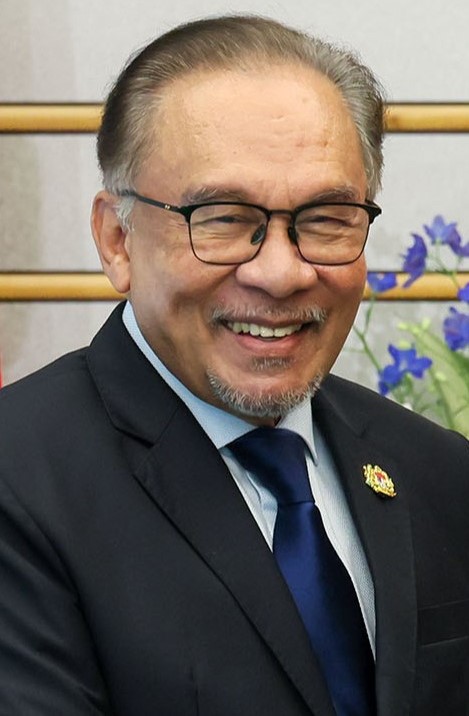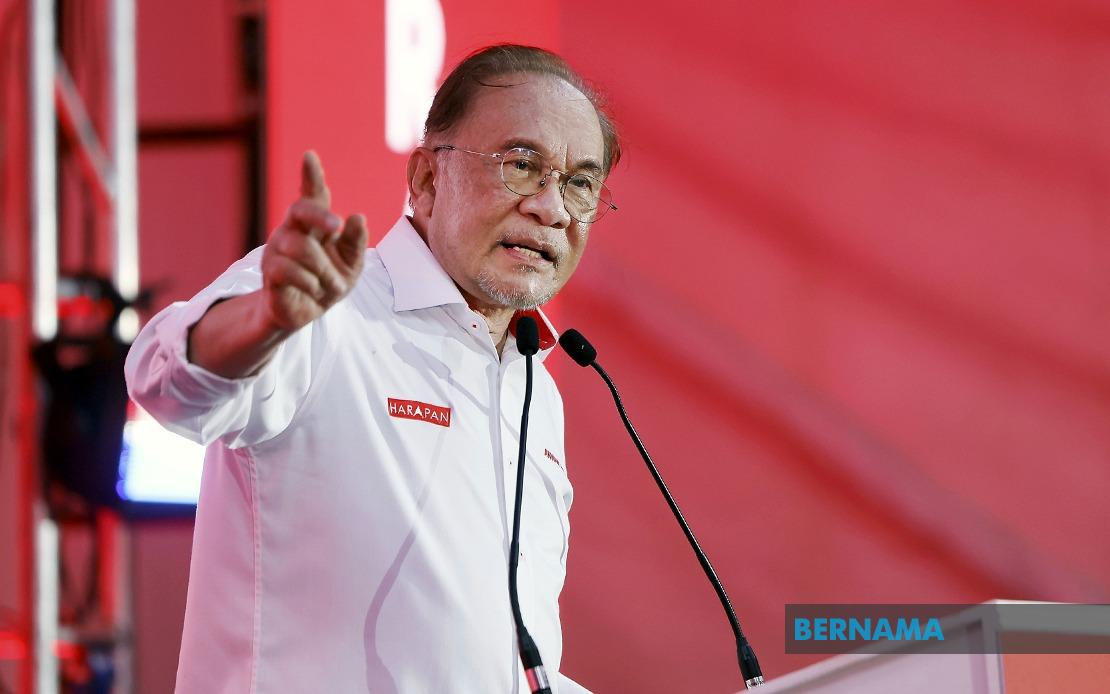
Prime Minister Datuk Seri Anwar Ibrahim has presented figures demonstrating that the Federal government has directed substantially more resources to Johor than the state generates in revenue contributions, underscoring what he characterises as the MADANI administration's fiscal commitment to the peninsular state. Speaking at a Pakatan Harapan candidate announcement in Tangkak on June 22, Anwar detailed the financial relationship between Kuala Lumpur and Johor's state coffers, offering a perspective that the federal system benefits the southern economic powerhouse significantly.
According to records from the Finance Ministry presented by Anwar, Johor remitted approximately RM14 billion in tax and other revenues to the federal treasury across the three-year period spanning 2023 to 2025. This contribution, whilst substantial, pales in comparison to the allocation flowing back from federal channels. The Prime Minister stated that the Federal government has channelled RM16 billion to Johor during the same timeframe through an array of initiatives encompassing infrastructure projects, operational funding for state agencies, and social assistance programmes. This RM2 billion net transfer represents a deliberate policy choice that Anwar suggested warrants broader public understanding.
The Prime Minister, who concurrently holds the Finance portfolio, contextualised these figures within a comparative framework examining allocations under his administration against its predecessor. During the years prior to MADANI's inception, Johor's annual operating expenditure—the recurring costs for maintaining government functions—ranged between RM6 billion and RM7 billion. This baseline has expanded meaningfully under the current administration, reaching RM8.7 billion annually. The expansion illustrates what Anwar characterised as tangible proof of prioritisation toward Johor's welfare and development trajectory.
When scrutinising the broader budget allocation landscape, Johor emerges as a tertiary recipient of combined operating and development expenditure allocations nationally. Only Sabah and Sarawak, the resource-rich East Malaysian states, receive higher aggregate funding when both recurrent and capital spending are aggregated. This ranking reflects the federal government's distribution methodology, which factors in geographic dispersion, developmental needs, and demographic considerations across Malaysia's thirteen states and three federal territories. The positioning of Johor as the largest recipient among peninsular states carries political significance, particularly during electoral cycles when resource allocation becomes contested terrain.
Capital expenditure trends reveal acceleration in infrastructure investment directed toward Johor. Development expenditure allocations surged from RM2.3 billion in 2022 to RM4.8 billion by 2026, nearly doubling across the four-year window. This trajectory encompasses highway upgrades, port facilities, institutional infrastructure, and urban development initiatives within the state's major population centres. The doubling of capital spending reflects federal strategy to position Johor as an economic growth corridor, building upon its established industrial base and strategic location proximate to Singapore.
Beyond conventional budgetary mechanisms, Johor has benefited substantially from federal assistance programmes targeting household welfare. The state ranks as the second-largest recipient of combined Sumbangan Tunai Rahmah (direct cash assistance) and Sumbangan Asas Rahmah (basic assistance grants) allocations, trailed only by Selangor. These programmes, which represent direct income support to qualifying families, target lower-income households and constitute visible demonstrations of federal welfare commitment. For many voters, such direct transfers carry electoral resonance greater than capital project announcements, particularly when household incomes remain pressured by inflationary dynamics.
Anwar's presentation of these metrics carries strategic intent beyond mere fiscal transparency. The Prime Minister's emphasis on demonstrating federal commitment to Johor assumes particular salience given that state elections are advancing. The announcement ceremony itself served as platform for publicising governmental performance within the Pakatan Harapan electoral coalition framework. By quantifying federal investment and establishing that Johor receives surplus allocations relative to revenue contributions, Anwar attempted to construct a narrative of federal benevolence toward the state population.
The figures merit contextualisation within broader fiscal federalism principles. Malaysian states possess limited revenue-raising capacity, relying substantially on federal transfers through the revenue-sharing mechanism and development grants. Johor's status as a major commercial and industrial centre—encompassing manufacturing, petrochemicals, and port operations—positions it among higher revenue contributors nationally. The calculation that contributions exceed receipts by RM2 billion remains analytically contentious, as accounting methodologies for attributing revenue sources and allocating benefits involve discretionary judgements regarding which entities benefit from which expenditures.
From a Southeast Asian perspective, Malaysia's fiscal federalism model represents one approach toward balancing central authority with state autonomy. Unlike Indonesia's more decentralised structure or Singapore's unitary system, the Malaysian federation operates through negotiated allocations and statutory revenue-sharing formulas. The tension between contribution and benefit distribution periodically surfaces in political discourse, particularly within states viewing themselves as net contributors. Johor's substantial economic output historically generated grievances regarding fiscal imbalance, making Anwar's public accounting exercise a deliberate effort at reconciliation.
The MADANI Government's expansion of operating expenditure allocations reflects broader policy reorientation toward social priorities following the preceding Perikatan administration's austerity emphasis. With enhanced operational funding, state governments gain capacity for expanded healthcare provision, educational services, and welfare delivery. The RM8.7 billion operating allocation represents practical investment in institutional capacity and service delivery quality across Johor's population of approximately 4.1 million residents. This funding expansion enables the state government to address service demands without exhausting its own limited revenue base.
The political economy of these allocations operates within Malaysia's broader party-political landscape. Whilst Johor remains under Barisan Nasional state governance, federal Pakatan Harapan resources flow toward both coalition and opposition-controlled states according to statutory formulas and discretionary grants. The demonstration of federal resource commitment toward Johor serves coalition electoral interests, particularly if Johor state elections materialise within the medium term. Voters evaluating party performance naturally factor in visible infrastructure improvements and welfare programme accessibility.
Looking forward, sustaining elevated development expenditure toward Johor depends upon federal revenue dynamics and broader budgetary pressures. With Malaysia confronting persistent fiscal deficits and escalating debt servicing costs, future allocation decisions will encounter competing demands from various states and federal priorities. Johor's economic significance as a manufacturing and logistics hub positions it advantageously within infrastructure investment hierarchies. Nevertheless, political dynamics—encompassing intergovernmental relations between federal and state administrations and electoral calculations—will inevitably influence the trajectory of future allocations.