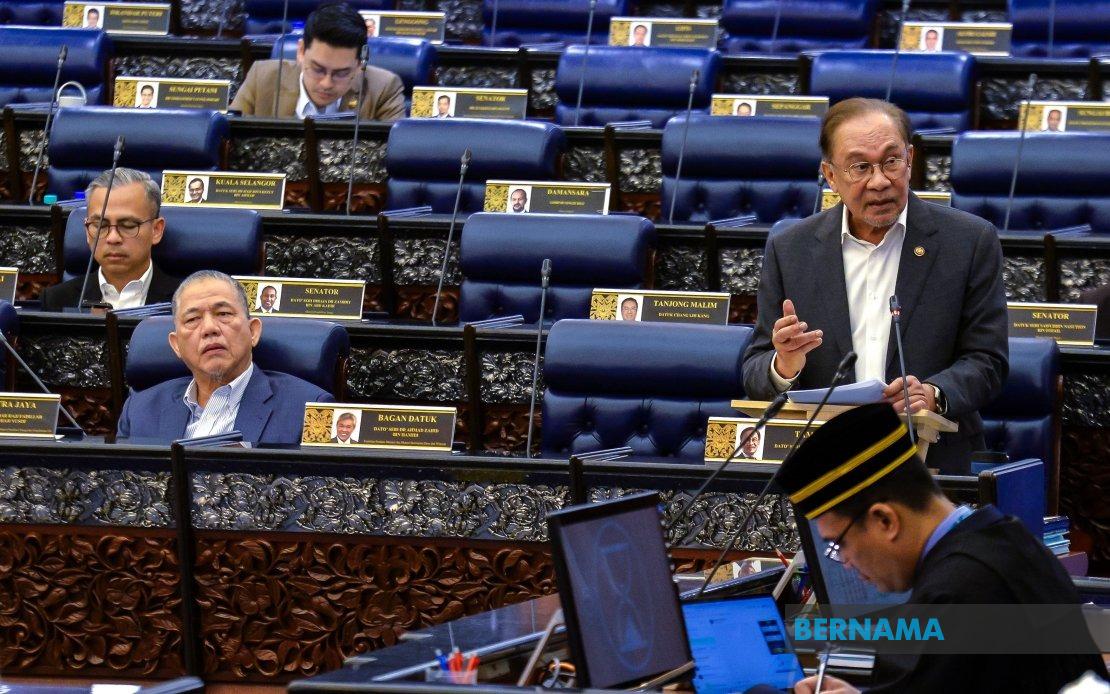
Prime Minister Datuk Seri Anwar Ibrahim has moved to quash perceptions of unfair federal funding distribution, clarifying that the vast majority of Malaysian states are receiving allocations that exceed their contributions to federal tax revenue. Speaking during parliamentary question time in Kuala Lumpur on June 30, Anwar identified Selangor and Penang as the only exceptions to this pattern, noting these two states generate tax revenue surpassing their respective federal allocations. The clarification comes as the government faces scrutiny over how it divvies up federal resources among the states, with critics questioning whether the system adequately serves all regions.
The Prime Minister's remarks pivot away from a revenue-based justification toward a needs-driven rationale for federal disbursements. Rather than allocating funds proportional to what each state contributes to national tax coffers, the MADANI Government employs a methodology that prioritises addressing specific development gaps and improving living standards in each jurisdiction. This approach represents a deliberate policy choice to redistribute resources from wealthier, higher-revenue states toward those facing greater infrastructure deficits and socioeconomic challenges. Such a framework aligns with federal systems globally that seek to balance national cohesion by ensuring equitable access to public goods regardless of regional economic capacity.
The funding determinations, according to Anwar, factor in an expansive range of urgent requirements spanning multiple policy domains. Flood mitigation and disaster resilience initiatives feature prominently in the allocation calculus, reflecting Malaysia's vulnerability to seasonal inundation and the escalating costs of climate-related infrastructure adaptation. The Pan Borneo highway upgrade programme represents another significant expenditure stream, addressing connectivity constraints in East Malaysia and supporting economic integration across the island. Road development, water drainage infrastructure, and potable water system improvements round out the physical infrastructure priorities, each addressing deficiencies identified through government assessments.
Beyond hard infrastructure, the federal allocation framework encompasses human development and poverty reduction efforts. The government has designated funding for school development and educational facility expansion, acknowledging disparities in access to quality learning environments across states. Poverty eradication programmes receive dedicated resources, targeting households and communities with the greatest economic vulnerabilities. These social policy investments reflect an understanding that federal allocations serve not merely to construct buildings and highways, but to advance broader objectives around human capital development and living standards.
Anwar's parliamentary statement directly challenged assertions that certain states experience marginalisation or neglect under the current federal funding architecture. By emphasising that most states receive disbursements exceeding their tax revenue generation, the Prime Minister positioned the allocation system as fundamentally redistributive and equitable. The framing implicitly rejects zero-sum narratives suggesting that some regions must lose so others gain, instead presenting federal funding as a mechanism for compensating less prosperous states and ensuring nationwide development progress.
The comparison Anwar drew with previous government administrations carries political significance for the MADANI administration. He highlighted that states including Kedah, Terengganu, and Kelantan have received increased allocations under the current framework compared to the prior regime's distributions. This observation serves multiple purposes: it provides empirical support for claims of improved intergovernmental resource distribution, it demonstrates commitment to historically underserved constituencies, and it implicitly validates the government's policy direction to parliamentary constituencies and wider constituencies potentially affected by federal investment decisions. Whether these states had previously experienced relative neglect or simply benefited from greater federal attention remains a subject for electoral and political debate.
The parliamentary question prompting Anwar's remarks originated from Datuk Seri Doris Sophia Brodi, representing the GPS party from Sri Aman in Sarawak. This line of inquiry suggests that concerns about federal allocation fairness persist in East Malaysia, where distance from federal administrative centres and lower population densities sometimes translate into infrastructure disadvantages. The question's emphasis on comparing allocations to revenue contributions indicates a parliamentary appetite for greater transparency regarding how the government determines funding distributions and justifies the quantum assigned to specific states.
For Malaysian readers and policymakers, Anwar's articulation of the allocation methodology clarifies the government's position that fairness in federal resource distribution should be evaluated through a needs-based lens rather than a revenue-return perspective. This principle has profound implications for federal-state relations, interstate equity, and public perception of governmental legitimacy. States that contribute proportionally less tax revenue but receive proportionally greater allocations might view this as appropriate national solidarity and wealth redistribution. Conversely, higher-revenue states like Selangor and Penang might experience allocation constraints that advocates argue should be reconsidered as those states also face growing infrastructure demands from rapid urbanisation and population growth.
The MADANI Government's allocation framework ultimately reflects a particular conception of federalism emphasising equal development opportunity across regions. This contrasts with allocation models that privilege revenue generation as the primary determinant of resource distribution. The practical implications extend beyond budget cycles to shape long-term regional development trajectories, influencing which states attract investment, retain talent, and build economic competitiveness. As Malaysia navigates competing pressures between fiscal sustainability and inclusive development, how federal allocations are determined and justified will remain central to national politics and governance debates.

