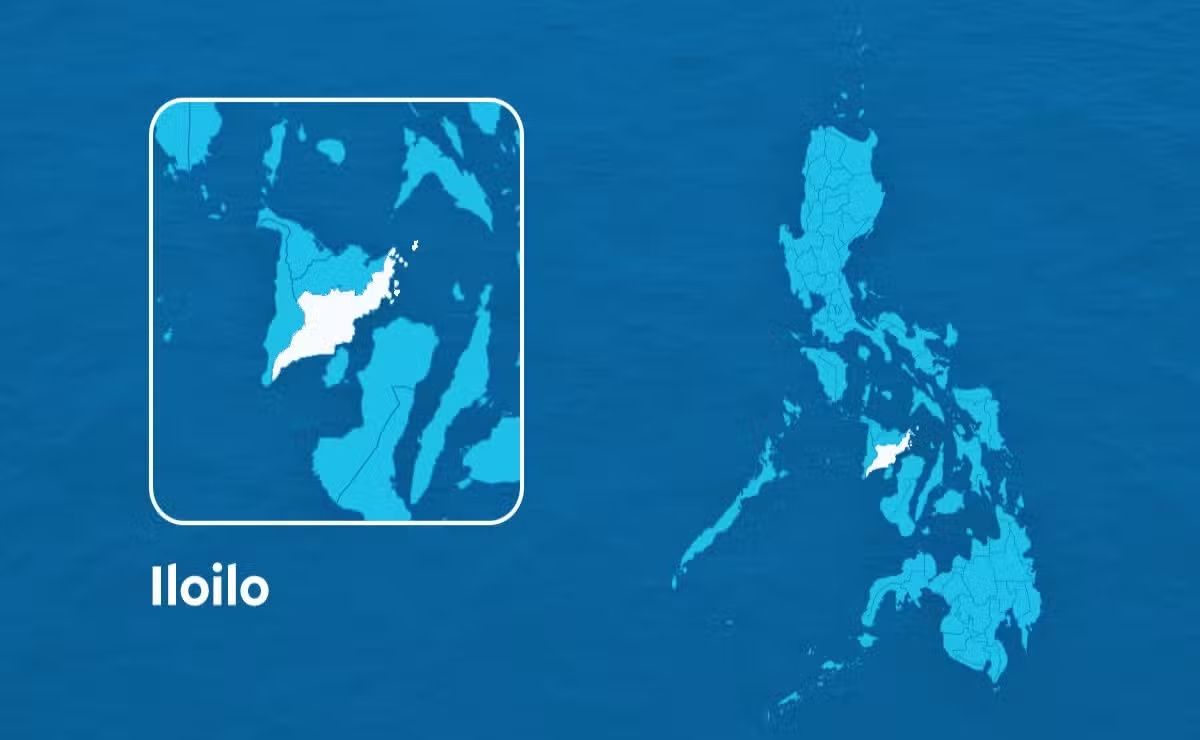
An Ilonggo businessman has surfaced as the latest addition to the US Federal Bureau of Investigation's Most Wanted Fraudsters list, sparking considerable attention in his home province of Iloilo. Rey Grabato II was designated by federal authorities on Thursday, August 13, following an investigation into a sprawling financial fraud scheme. His family confirmed on Friday that he remains within Philippine territory, specifically in Iloilo province, though they have cautioned the public and media against premature judgement pending clarification of the circumstances.
The disclosure came from his father, Rey Grabato, who serves as mayor of Mina, Iloilo town. The elder Grabato acknowledged his son's presence in the province during a Friday statement but provided no additional detail, citing privacy concerns and his focus on attending to his son's immediate medical needs. The circumspect response reflects the family's apparent strategy to manage the public narrative whilst prioritising what they describe as urgent health matters requiring ongoing professional care.
According to statements released by Christopher Rey Grabato, the businessman's youngest brother, Rey Grabato II has been rendered partially paralysed following a severe stroke. The family's immediate concern, Christopher Rey explained, centres on his brother's rehabilitation and recovery rather than engaging with the legal proceedings unfolding in the United States. The statement underscored that Rey II continues to experience significant impediments to mobility, speech, and cognitive function, necessitating continuous medical supervision and therapeutic intervention.
The Federal Bureau of Investigation charges Rey Grabato II with multiple financial crimes spanning conspiracy to commit securities fraud, securities fraud proper, conspiracy to commit wire fraud, wire fraud, and conspiracy to defraud the United States with respect to taxation. These allegations paint a picture of coordinated financial misconduct spanning both securities markets and wire-based transactions, suggesting a sophisticated scheme with far-reaching consequences. The breadth of charges indicates that investigators believe Grabato's involvement extended across multiple jurisdictional and operational layers.
Crucially, the Grabato family has mounted a strategic defence centred on the claim that Rey II's leadership position within the National Realty Investment Advisors, the entity at the centre of the investigation, was essentially nominal in character. Christopher Rey invoked the authority of Barron's, a financial publication operated by Dow Jones & Company, which reportedly cited federal prosecutors themselves describing Grabato's title at NRIA as merely ceremonial. This argument, if substantiated, could prove significant in distinguishing between titular responsibility and active culpability in the alleged fraud.
The family further contends that actual operational control of NRIA resided with another individual, Thomas Nicholas Salzano, who has already been apprehended by United States federal authorities. This deflection strategy positions Rey Grabato II as a figurehead rather than an architect of fraudulent schemes, a distinction that may carry legal weight in subsequent proceedings. Salzano's prior arrest and detention would logically provide additional documentary evidence regarding the hierarchy and decision-making structures within the investment advisory firm.
Notably, neither Rey Grabato II nor his family's authorised representatives have received any formal notice, summons, or legal documentation from either Philippine or American authorities, according to Christopher Rey's statement. This procedural detail assumes significance because it suggests that whilst the FBI has designated Grabato as wanted, no formal extradition request has been transmitted through official diplomatic channels. Such a gap between public designation and formal legal process is not uncommon when suspects are known to be overseas and authorities are coordinating international enforcement efforts.
The family's appeal for public restraint and understanding reflects broader tensions between media scrutiny, public perception, and due process rights during international investigations. In the Philippines, where family networks and personal reputation carry considerable weight in business and political circles, such public statements serve to shape discourse and maintain social standing pending final legal determination. The family's emphasis on Rey II's medical vulnerability and incapacity may also constitute a preliminary argument regarding his fitness to stand trial or be extradited, a consideration that could become relevant in future legal proceedings.
For Malaysian and Southeast Asian observers, the Grabato case illustrates the expanding reach of United States financial crime enforcement across the region and the vulnerability of regional business figures to prosecution under American statutes. The involvement of an investment advisory firm suggests connections to broader capital markets and potentially cross-border asset flows that implicate multiple jurisdictions. As financial globalisation deepens, Southeast Asian businesspeople increasingly face exposure to foreign regulatory and enforcement frameworks, a reality that creates new legal and reputational risks for regional entrepreneurs.
The precise role of national authorities in the Philippines remains unclear at this stage, with no indication of parallel local investigations or charges. This asymmetry in enforcement, whereby American authorities initiate prosecution whilst Philippine authorities maintain silence, raises questions about the coordination of international financial crime investigations and the respective priorities of different jurisdictions. Rey Grabato II's continued residence in the Philippines, with his family's apparent acquiescence, suggests either confidence in the adequacy of Philippine jurisdiction or uncertainty regarding extradition prospects under existing bilateral agreements.
The broader significance of the Grabato designation lies in its demonstration of how financial crimes, regardless of geographic origin, increasingly become subject to American federal jurisdiction and enforcement action. The charges against Grabato span not merely fraudulent investment schemes but allegations of conspiracy to defraud the United States government itself through tax mechanisms, positioning the case within the framework of national security and fiscal integrity concerns that resonate strongly with American prosecutors.

