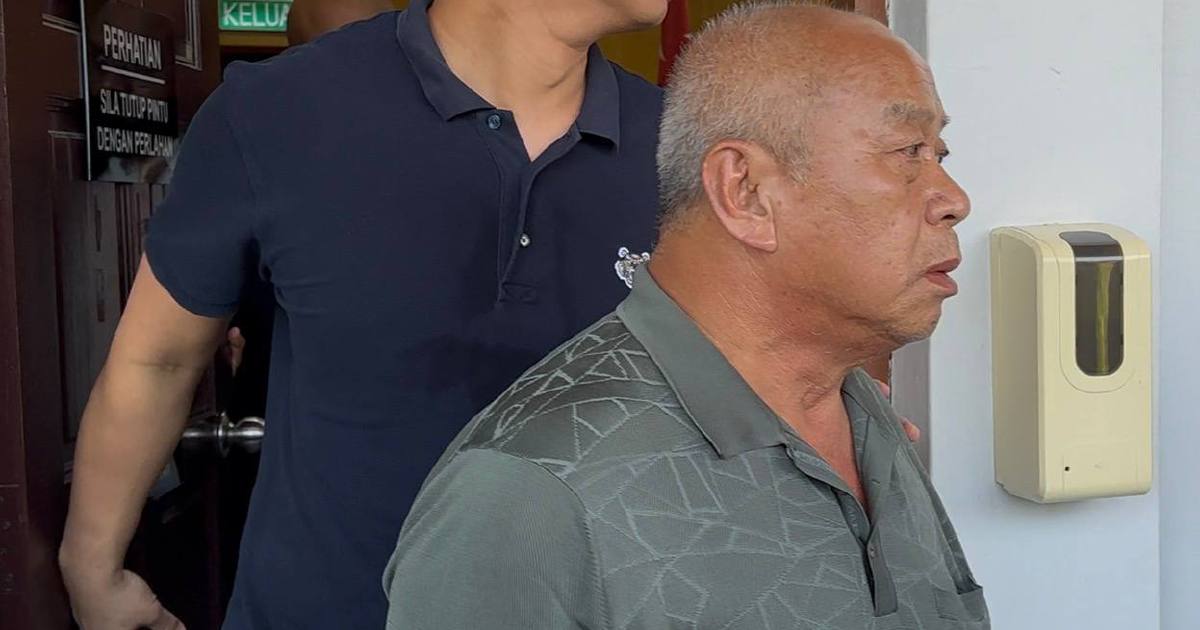
A devastating scene unfolded in Batu Pahat's courtroom today when the father of deceased businessman Low Kai Xian broke down emotionally as four men faced formal murder charges related to his son's death. The court proceedings marked a significant milestone in a case that has gripped the local community since the grim discovery of the victim's remains earlier this month, dumped into a river in what investigators allege was a calculated attempt to conceal the crime.
The emotional testimony and formal charging of the accused represent a turning point in an investigation that has involved intensive police work to piece together the circumstances surrounding Low Kai Xian's death. The businessman's body, when recovered, was reportedly encased within a net as part of an apparent effort to ensure it would remain submerged and undetected. This deliberate method of disposal suggests the alleged perpetrators went to considerable lengths to hide evidence of their involvement.
Court appearances of this nature typically draw significant public attention in Malaysia, particularly when they involve serious crimes against business figures. The presence of the victim's grieving family members underscores the human tragedy underlying what has become a high-profile criminal case. For the father, witnessing the accused in court and hearing the charges formally read constituted a deeply emotional ordeal, highlighting the personal anguish experienced by families caught in the machinery of serious criminal proceedings.
The four individuals now facing charges represent various aspects of the alleged conspiracy. Malaysian courts handle homicide cases with considerable gravity, and prosecutors must demonstrate sufficient evidence to proceed with murder charges rather than lesser offences. The decision to pursue murder charges suggests investigators have gathered material they believe establishes not merely involvement in the victim's death, but the requisite intent and circumstance that elevates the allegation to this most serious category.
From a procedural standpoint, this development allows the justice system to move forward in establishing accountability. The charges represent the culmination of investigative effort that would have involved interviewing witnesses, gathering forensic evidence, and reconstructing the sequence of events leading to Low Kai Xian's death. The recovery of the body from the river would have been central to this forensic work, with medical examination and post-mortem analysis providing crucial information about cause of death and timeline.
For businesses and entrepreneurs throughout Johor and beyond, such incidents raise questions about personal security and the risks associated with commercial activity. The case serves as a sobering reminder that business disputes and personal conflicts can occasionally escalate to violent extremes. In the Malaysian business community, incidents of this nature, though rare, generate discussions about safety protocols and awareness among those engaged in commercial ventures.
The judicial process ahead will require the prosecution to present comprehensive evidence before the accused, demonstrating their involvement in what investigators characterize as a deliberate killing. Defence counsel will have opportunities to challenge the evidence and present alternative narratives. The complexity of such cases often extends over considerable time, involving multiple court appearances, preliminary inquiry proceedings, and potentially full trial hearings where evidence is tested under cross-examination.
The geographical context of Batu Pahat, situated in Johor's interior regions, adds particular significance to a case where the river disposal method was allegedly employed. Local communities in such areas maintain strong networks and awareness of unusual occurrences, which often proves invaluable in criminal investigations. Information from residents about suspicious activities near waterways can prove decisive in homicide enquiries.
For the Malaysian public and observers following criminal justice developments, this case exemplifies how serious crimes are handled within the court system. The formal charging process, while procedurally straightforward, carries profound implications for those accused, their families, and the victim's loved ones. The emotional scenes witnessed in court today reflect the real human dimensions underlying criminal prosecutions that often appear distant and abstract in news reporting.
The road ahead involves substantial legal proceedings. Issues such as bail considerations, the presentation of evidence during trials, and questions of guilt or innocence will occupy the courts in coming months. For Low Kai Xian's family, the formal charges represent a step toward establishing what happened to their relative, though the emotional burden of navigating a serious murder trial remains considerable. The case will undoubtedly continue attracting public attention as it progresses through Malaysia's criminal justice system.

