The Kuala Lumpur Traffic Investigation and Enforcement Department will hand over its investigation report tomorrow to the Attorney General's Chambers in connection with a deadly collision that claimed three lives in the capital's city centre. The crash, which struck at about 1 am on a major thoroughfare, has thrust into sharp focus ongoing concerns about emergency vehicle operations on Malaysian roads and the protocols governing their movement through traffic intersections during urgent operations.
The early morning incident occurred on Jalan Sultan Ismail when an Immigration Department vehicle, commonly referred to as a "Black Maria," collided with a private motorist's vehicle. The immigrant transport truck was en route to conduct an enforcement operation against illegal foreign nationals in the Chow Kit district. According to preliminary accounts, the official vehicle entered the junction while its traffic signal indicated red, though the vehicle had activated its beacon and siren. A Proton Saga travelling perpendicular to the truck proceeded through the same intersection under a green light, setting the stage for the fatal collision.
The impact was violent enough to cause the Immigration Department truck to veer dramatically off course, ultimately striking four separate road users. Beyond the vehicles directly involved in the initial collision, the truck continued on its uncontrolled trajectory and struck an Inokom Matrix. The resulting casualties included Shaik Mohd Firdaus Shaikh Yahya, aged 53, along with two of his daughters, Siti Nor Sazlin, 25, and Siti Darwisyah Auni, 12. Shaik Mohd Firdaus's wife, Norhayati Razali, 55, suffered severe injuries and was admitted to the Intensive Care Unit at Kuala Lumpur Hospital, where she remained in critical condition.
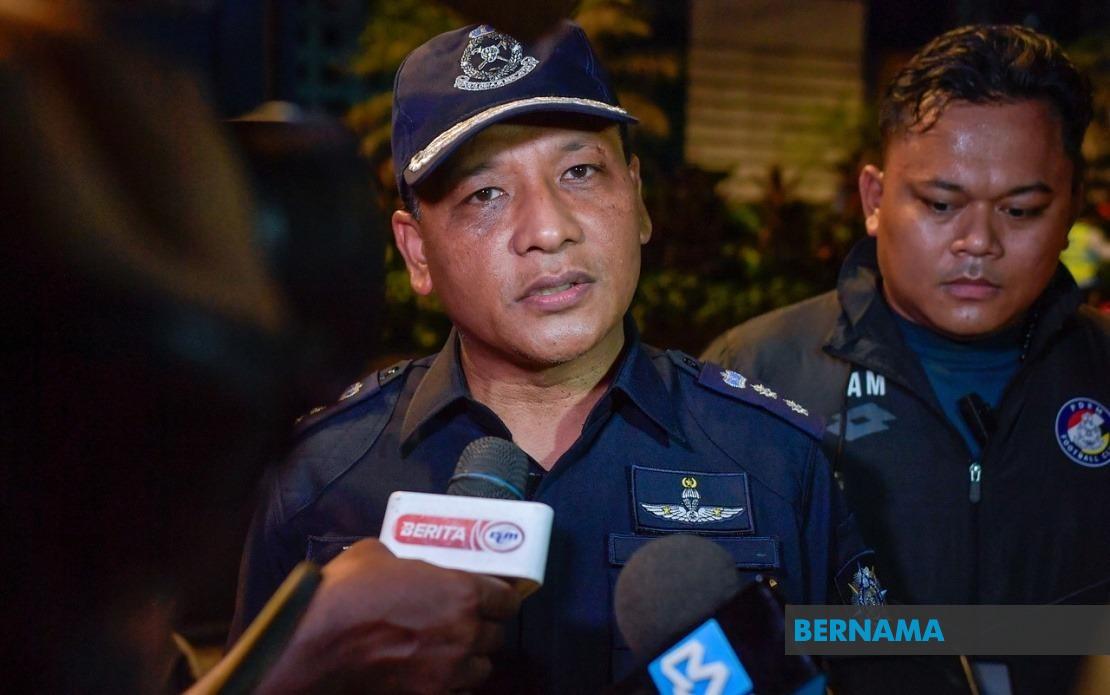
According to ACP Mohd Zamzuri Mohd Isa, chief of the Traffic Investigation and Enforcement Department, both drivers involved in the initial collision have been remanded for one day pending further investigation. The case is being pursued under Section 41(1) of the Road Transport Act 1987, which addresses rash or negligent driving causing death. The decision to submit the case to the Attorney General's Chambers follows consultation between traffic investigators and the Kuala Lumpur Prosecution Director, indicating that prosecutors believe sufficient evidence exists to warrant judicial review.
The pathway to the Attorney General's Chambers represents a critical juncture in the justice process. The Head of the General Crime and Public Order Division will receive the investigation file, accompanied by both the prosecution director and the investigating officer. Their role will be to examine the evidence and determine whether criminal charges should be formally preferred against the individuals held for questioning. This procedure underscores the seriousness with which the legal system treats fatal traffic incidents, particularly those involving government vehicles.
This tragedy inevitably raises broader questions about how Malaysian authorities manage emergency responses and the extent to which operational urgency justifies deviation from standard traffic regulations. The Immigration Department truck was operating with activated emergency signals, a factor that typically grants vehicles conditional right-of-way privileges. However, Malaysian traffic law establishes that even emergency vehicles must exercise caution and ensure that intersections are clear before proceeding through red lights. The interplay between these principles—operational necessity versus public safety—will likely form the crux of legal arguments as the case progresses.
For Malaysian motorists and the driving public, the incident serves as a sobering reminder of the unpredictability that can arise from encounters with emergency vehicles on busy urban roads. Jalan Sultan Ismail is one of Kuala Lumpur's major arterial routes, carrying substantial traffic during all hours. The collision occurred during early morning hours when traffic volume is typically lower, yet still resulted in multiple vehicles being struck. The circumstances suggest that visibility or reaction time may not have been significant contributing factors, placing greater focus on decisions made regarding the truck's passage through the signalised intersection.
The case also touches on the operational protocols of the Immigration Department and whether additional training or procedural safeguards might be warranted for drivers of such vehicles. The agency operates a substantial vehicle fleet engaged in enforcement activities across the nation's urban and rural areas. Any findings from this investigation could have implications for how the department structures its operations and risk management procedures. Similarly, the incident may prompt broader examination of emergency vehicle operations across multiple government agencies in Malaysia.
For the bereaved family and the injured survivor, the road ahead involves both physical recovery and navigating the Malaysian legal system in pursuit of accountability. The submission of the investigation file to the Attorney General's Chambers represents a necessary procedural step, though it does not guarantee that charges will be filed. The prosecutors must weigh the evidence and determine the appropriate charge, if any, against each individual remanded. This process typically requires careful legal analysis and will likely consume several weeks.
The incident also resonates within the broader Southeast Asian context, where traffic fatalities remain a persistent public health challenge. Malaysia, like its regional neighbours, has recorded substantial numbers of road deaths in recent years, with initiatives to improve driver behaviour and vehicle safety forming key elements of national transport policy. High-profile cases involving government vehicles tend to generate heightened public scrutiny and can catalyse policy discussions about enforcement priorities and institutional accountability.
As the investigation progresses through the judicial system, several aspects will warrant close examination. These include the truck's speed and braking capability, the visibility conditions at the intersection, the functionality of the traffic signals, the actions of both drivers in the moments preceding the collision, and the appropriateness of the truck's driving behaviour given the circumstances. Each element will contribute to the Attorney General's determination of culpability and appropriate legal response.
The referral of the investigation file represents a critical transition point from police investigation to prosecutorial review. In the Malaysian legal framework, this handover ensures that an independent authority with prosecutorial powers examines the evidence and determines whether criminal proceedings are justified. For the victims' family and the broader public, this submission signals that the formal judicial process is advancing toward resolution. The Attorney General's Chambers will ultimately decide whether this tragic incident results in criminal charges and, if so, against whom and under what provisions of Malaysian law.

