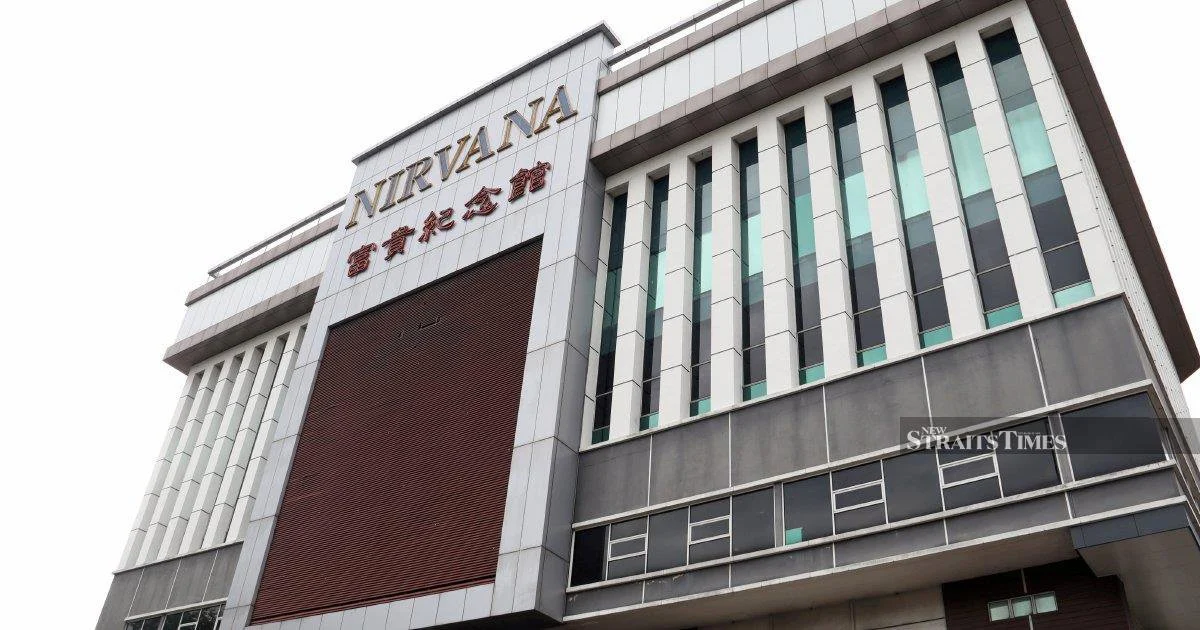
A family in Shah Alam has initiated court proceedings against Nirvana Memorial Park (Shah Alam) Sdn Bhd, alleging serious lapses in security and duty of care following the apparent disappearance of two urns holding the cremated remains of their deceased parents from the facility's columbarium vault in January.
The filing of this lawsuit represents a significant development in what appears to be a troubling breach of trust at one of the region's established memorial facilities. Families who entrust cremation services and subsequent urn storage to commercial operators do so with the expectation that their loved ones' remains will be preserved with dignity and protected through robust security measures. The alleged theft raises uncomfortable questions about whether such expectations are being met at facilities across Malaysia's funeral services sector.
The circumstances surrounding the disappearance remain unclear, but the family's decision to pursue legal action rather than accept the incident quietly speaks to the gravity of their concerns. Beyond the immediate emotional trauma of losing tangible connections to deceased family members, this incident underscores the vulnerability of valuables stored in columbarium facilities. Many Malaysian families, particularly those following Buddhist, Hindu, or Chinese traditional practices that involve cremation, depend on these repositories as permanent resting places for their relatives.
Negligence claims in such cases typically centre on the operator's failure to maintain adequate security infrastructure, implement proper inventory controls, or enforce adequate staff supervision protocols. The columbarium environment, by its nature, requires comprehensive access controls, surveillance systems, and documented audit trails to ensure the integrity of stored remains. When such systems fail or prove inadequate, operators can face substantial liability for damages encompassing both the emotional distress and financial losses incurred by grieving families.
The incident also highlights broader systemic issues within Malaysia's funeral and memorial services industry. Unlike some regulated professions in Malaysia, the funeral and cremation services sector operates with varying standards across different operators. There is no unified national framework mandating minimum security requirements for columbaria, leaving individual facilities to establish their own protocols. This patchwork approach creates inconsistency in the level of protection afforded to families' most precious holdings.
For the family involved, the legal route offers a mechanism to seek accountability and compensation, but the emotional restoration that a successful lawsuit provides is necessarily limited. Money cannot restore the peace of mind that comes from knowing a parent's remains are secure, nor can it fully compensate for the psychological distress of such a loss. The lawsuit therefore serves functions beyond financial recovery—it establishes a public record of the incident and creates precedent regarding operators' liability standards.
Industry observers note that high-profile incidents of this nature tend to catalyse broader discussions about regulatory reform. Malaysia's Ministry of Health, which oversees cremation facilities, and various religious councils and community organisations may feel compelled to review current guidelines and strengthen enforcement mechanisms. Some facilities have already begun implementing more sophisticated security measures, including individual locked compartments, biometric access systems, and continuous surveillance, but these remain optional enhancements rather than mandated requirements.
The situation also carries implications for consumer confidence across Malaysia's memorial services sector. Families considering where to entrust their parents' ashes in the years ahead will inevitably view this case as a cautionary reminder to carefully examine a facility's security credentials, insurance coverage, and track record before committing to their services. Operators who can demonstrate robust protective measures and transparent incident-response protocols will likely gain competitive advantage in an increasingly sceptical market.
For the bereaved family, several legal avenues may be available beyond the negligence claim. If insurance was maintained on the urns or the columbarium operator held appropriate coverage, additional compensation routes may be explored. However, the primary challenge remains proving negligence—establishing that the operator failed to exercise the standard of care reasonably expected in such circumstances, and that this failure directly caused the loss. Evidence of security system failures, inadequate staffing, or previously reported vulnerabilities would strengthen their position considerably.
The incident also raises practical questions about what recourse exists for families who experience similar losses. Many may be unaware that legal options exist, or may feel that pursuing action would be too costly or emotionally taxing. Consumer awareness campaigns about rights and protections when engaging memorial services could help future families navigate these decisions more confidently.
As this case progresses through the courts, it will likely attract attention from consumer advocates, religious organisations, and regulatory bodies concerned with ensuring that Malaysia's memorial services sector maintains the highest standards of security and dignity. The outcome could influence how facilities nationwide approach their responsibilities to grieving families, potentially establishing important precedent regarding operator liability and triggering broader industry reform conversations that are arguably overdue.

