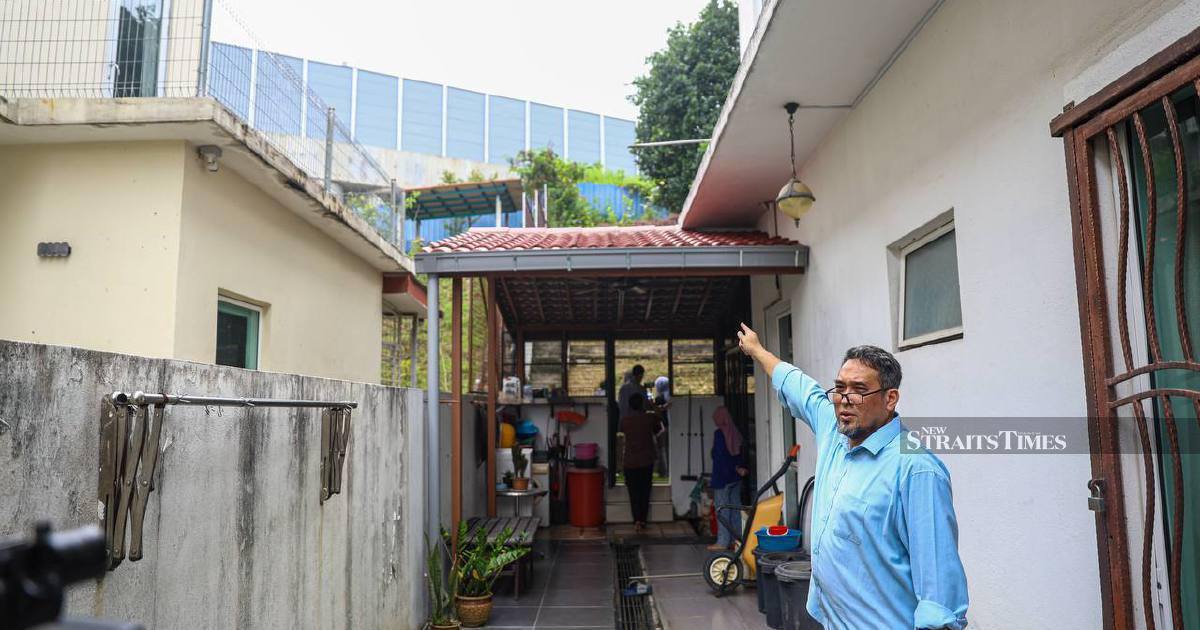
A family in Kuala Lumpur has escalated their concerns about the East Coast Rail Link project by filing a substantial RM1.33 million lawsuit against three parties allegedly responsible for construction-related damage to their home. The legal action underscores growing tensions between major infrastructure development and residential welfare, issues that resonate across Malaysia's urban communities where large-scale projects increasingly encroach on established neighbourhoods.
The lawsuit centres on claims that construction work associated with the ECRL has fundamentally undermined the safety and structural condition of the family's residence. Such allegations raise important questions about the adequacy of safeguards during Malaysia's ambitious infrastructure expansion and the mechanisms available to affected residents seeking compensation and remedies. The scale of the claimed damages—RM1.33 million—suggests the family believes the harm to their property and their ability to safely inhabit it is substantial.
The East Coast Rail Link, a signature transport connectivity project spanning the peninsula's eastern corridor, has transformed economic development prospects for participating states while simultaneously generating community concerns in affected areas. The project's scope and technical complexity inevitably bring construction activities into proximity with existing residential areas, creating potential friction points between public interest infrastructure and private property rights. This lawsuit represents a formal test of liability frameworks and accountability systems governing such major undertakings.
Constructions of this magnitude involve heavy machinery, excavation, vibrations, and ongoing transport movements that can produce structural effects on nearby buildings. Subsidence, foundation cracks, structural misalignment, and other integrity issues have been documented in proximity to major rail and transport projects elsewhere. The family's allegations that construction has compromised their home's structural condition warrant serious investigation into both the immediate safety implications and the underlying construction methodologies in operation.
The involvement of three distinct parties in the lawsuit indicates a complex institutional arrangement typical of major Malaysian infrastructure projects, which often involve government entities, contractors, and project management firms distributed across various roles and responsibilities. Establishing precise liability among multiple actors presents a significant legal challenge, as does demonstrating the causal connection between specific construction activities and alleged property damage. The family's legal strategy will need to convincingly link the defendants' actions to measurable structural harm.
From a broader Malaysian perspective, this lawsuit highlights tensions inherent in balancing national development ambitions with protecting existing residents' property and wellbeing. As the country pursues connectivity improvements and economic corridor development, similar disputes may emerge in other project-affected areas. The outcome of this case could establish important precedents regarding builder and project operator liability for collateral damage to surrounding properties, potentially influencing how future major projects manage community interfaces.
Resident protection frameworks vary significantly across Malaysian states and federal territories. The availability of remedies, standards for construction impact assessment, and dispute resolution mechanisms differ considerably depending on jurisdiction. This family's pursuit of RM1.33 million suggests they are pursuing civil damages through the courts rather than relying exclusively on regulatory complaints or administrative compensation schemes, indicating either dissatisfaction with available alternatives or the scale of their claimed losses justifying legal action.
The case also reflects broader anxieties about transparency and information sharing regarding major construction projects. Residents living near large-scale developments often report feeling uninformed about potential impacts, mitigation measures, and complaint procedures. Whether this family had advance notice of potential risks, whether construction standards were clearly communicated, and whether regular monitoring and safety inspections were conducted and disclosed represent factual questions that legal proceedings may illuminate.
Malaysia's commitment to infrastructure modernisation through projects like the ECRL has genuine economic merit, enhancing regional connectivity and supporting long-term development targets. Simultaneously, the country's system for managing externalities—negative effects on third parties—requires robust mechanisms for identifying harm, establishing accountability, and providing fair remedies. This lawsuit tests whether existing legal frameworks adequately protect resident interests while projects proceed.
The compensation claim of RM1.33 million, if pursued successfully, could establish financial accountability for construction impacts. Such outcomes might encourage stricter adherence to safety protocols, more rigorous pre-construction risk assessments, and enhanced monitoring systems to prevent similar damage claims. Alternatively, if the defendants contest the allegations effectively, the case may clarify the evidentiary standards required to establish causation between major construction activities and residential property damage.
Going forward, this case may prompt stakeholders—including the ECRL project authorities, contractors, state governments, and resident groups—to examine existing safeguards and communication protocols. The family's decision to pursue judicial remedies rather than remaining silent reflects their assessment that available alternatives were insufficient. Whether their legal claim succeeds or not, the case serves as a reminder that Malaysia's infrastructure ambitions must coexist with effective mechanisms for protecting residents whose proximity to these projects subjects them to construction-related risks. The outcome will likely influence how similar disputes are managed throughout the remainder of the ECRL project and subsequent major development initiatives across the country.

