Suwanna Saeteaw's world collapsed in an instant when she spotted her 25-year-old sister's mobile phone among the recovered belongings displayed on a television news broadcast. The discovery transformed her fragile hope into crushing dread. When she dialled the number, a rescue worker answered from the other end—confirmation that Jarawee Sermsiri had not escaped the inferno that engulfed the Rong Beer Na Lat Phrao bar and restaurant near midnight on July 12 in Bangkok. "I'm extremely worried about her and devastated by what has happened," Suwanna told The Straits Times on the evening of July 13, struggling to hold back tears as she recounted spending hours moving between hospitals and forensic centres, scanning survivor lists while fearing the worst.
The catastrophe claimed 28 lives with more than 70 people injured, marking Thailand's deadliest fire in nearly two decades. The tragedy echoes the Santika club blaze during New Year celebrations in 2009, which killed 67 people and injured over 200. This latest disaster represents a sobering reminder of recurring vulnerabilities in Thailand's entertainment venue infrastructure and enforcement of safety protocols. Across Bangkok, families engaged in frantic searches throughout July 13, reaching out to hospitals and checking lists of survivors while grappling with the agonising uncertainty of not knowing whether their loved ones had managed to escape or remained among the unidentified dead.
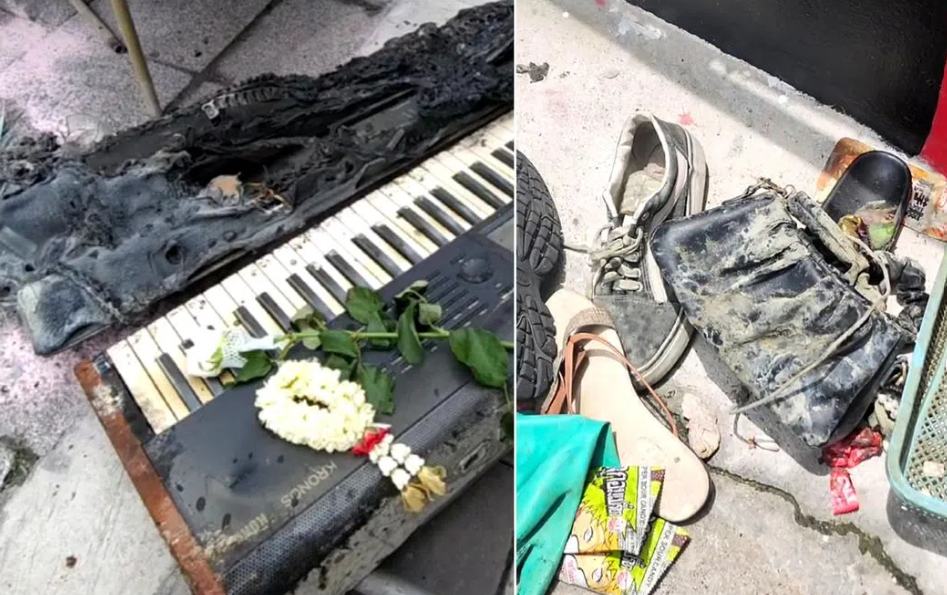
Authorities have begun DNA sampling to assist with victim identification, though results require approximately three days—an eternity for anxious families. Suwanna expressed the collective anguish of relatives caught between desperation and procedure. "For us, waiting three days feels far too long, so we're trying every possible way to find her in the meantime," she said. "I'm heartbroken right now, but I'm still hoping that my sister's alive and receiving treatment at one of the hospitals." The scene outside the charred venue itself told a story of panic and chaos: abandoned shoes, bags, and personal belongings still littered the ground where patrons had fled in terror as flames and thick black smoke consumed the single-storey concrete building.
Investigators have focused on multiple factors that may have transformed the fire into a catastrophic event. National Police Chief Kitrat Panphet revealed that most of the deceased were discovered in the toilets, suggesting patrons became disoriented and trapped during the evacuation. "When the fire broke out, they panicked. There were no lights," he told reporters. Police discovered that one emergency exit door was obstructed by a shelf, meaning occupants could only pass through one at a time—a critical bottleneck during mass evacuation. Bangkok Governor Chadchart Sittipunt told reporters that authorities are examining whether the ceiling materials were combustible and contributed to the rapid spread of flames and toxic smoke.
The bar, operating as a licensed restaurant in a structure that had been standing for 50 years, passed a safety inspection in April according to local media reports. Investigators estimate approximately 300 customers were present when the fire broke out, though the venue typically accommodates 600 to 700 patrons on a regular evening. The missing hours, the rapid spread of smoke, and the difficulty in locating emergency exits created a perfect storm of tragedy. Chadchart acknowledged that "the fire spread very quickly, reaching up to the ceiling. Smoke was likely the main cause of death." Police are now examining the electrical wiring of the aging building and investigating whether decorations may have accelerated the fire's progression.
Amorn Pimanmas, president of the Thailand Structural Engineers Association, inspected the charred remains on July 13 and identified a critical vulnerability. The bar's low ceiling combined with combustible polyurethane foam decorations enabled toxic smoke to accumulate rapidly, trapping patrons before escape became possible. "It's not like we don't have the law. It's the problem of how the law can be strictly enforced," he told The Straits Times, articulating a systemic challenge that has plagued Thailand's entertainment sector. The tragedy exposes a persistent gap between regulatory frameworks and their practical implementation across bars, nightclubs, and similar venues throughout Thailand.
Chaiyo Piwisol, a 30-year-old restaurant waiter who had visited the bar on three previous occasions, described the establishment as perpetually cramped and crowded with narrow doorways that made him uncomfortable. "The place had a lot of decorations, lights and other things hanging from the ceiling. I think there should have been stronger safety measures," he observed. His testimony reflects what many patrons likely experienced—a sense of unease about the venue's physical layout and safety provisions that went unheeded or unreported to authorities. Prime Minister Anutin Charnvirakul visited the scene and highlighted the presence of "blind spots" lacking visible fire escape routes, cautioning the public to await official findings while delivering a stern warning: "There will be no leniency if any laws have been broken."
National police are attempting to interview the bar's owner, currently hospitalised in intensive care following the fire. Investigation teams are systematically documenting evidence from the building's structure, electrical systems, and emergency exits to establish a complete timeline of how the fire developed and why evacuation proved so difficult. The focus on the owner reflects broader questions about management responsibility and whether adequate safety protocols existed and were enforced. The 50-year-old building itself presents engineering challenges; investigators must determine whether its age and construction materials contributed to the rapid spread of flames and smoke.
The disaster has intensified scrutiny of Thailand's fire safety standards and their enforcement, particularly within the entertainment sector where previous catastrophic fires have occurred. The recurring pattern of deadly venue fires suggests systemic weaknesses in either regulatory design or implementation capacity. Survivor Panathaporn Thongyord, 19 years old, managed to escape but lost a close friend she had known for 14 years. "My friend told me, 'Just get out. Don't come back to help me'," she recalled, her voice heavy with grief. "Everything happened so fast... We grew up together, slept over at each other's houses, ate together. I just want justice for my friend. I want to know why that back door couldn't be opened." Her question encapsulates the broader demand from victims' families and Thai society for answers about how such a preventable tragedy occurred.
The implications of this fire extend beyond Bangkok's borders, resonating across Southeast Asia where similar establishments operate under varying regulatory regimes. Entertainment venues throughout the region should reassess their safety provisions in light of Thailand's latest tragedy. The architectural and operational vulnerabilities identified at Rong Beer Na Lat Phrao—obstructed exits, combustible ceiling materials, poor lighting during emergencies, insufficient space for rapid evacuation—represent hazards that likely exist in comparable establishments across Thailand and neighbouring countries. Industry observers and safety advocates are calling for comprehensive reviews of fire safety standards and stricter enforcement mechanisms.
For families like Suwanna's, the official investigation cannot arrive quickly enough. The anguish of uncertainty, compounded by the slow pace of victim identification and the search for answers about how authorities approved an unsafe venue, creates a secondary trauma layered atop the immediate loss. Thailand's political and safety leadership faces mounting pressure to demonstrate that the nation takes fire safety seriously and will pursue accountability wherever negligence is identified. The tragedy transforms a evening at a popular bar into a stark reminder that regulatory frameworks mean nothing without rigorous enforcement and that lives depend on decisions made during inspections, licensing reviews, and the daily operations of entertainment venues throughout the country.

