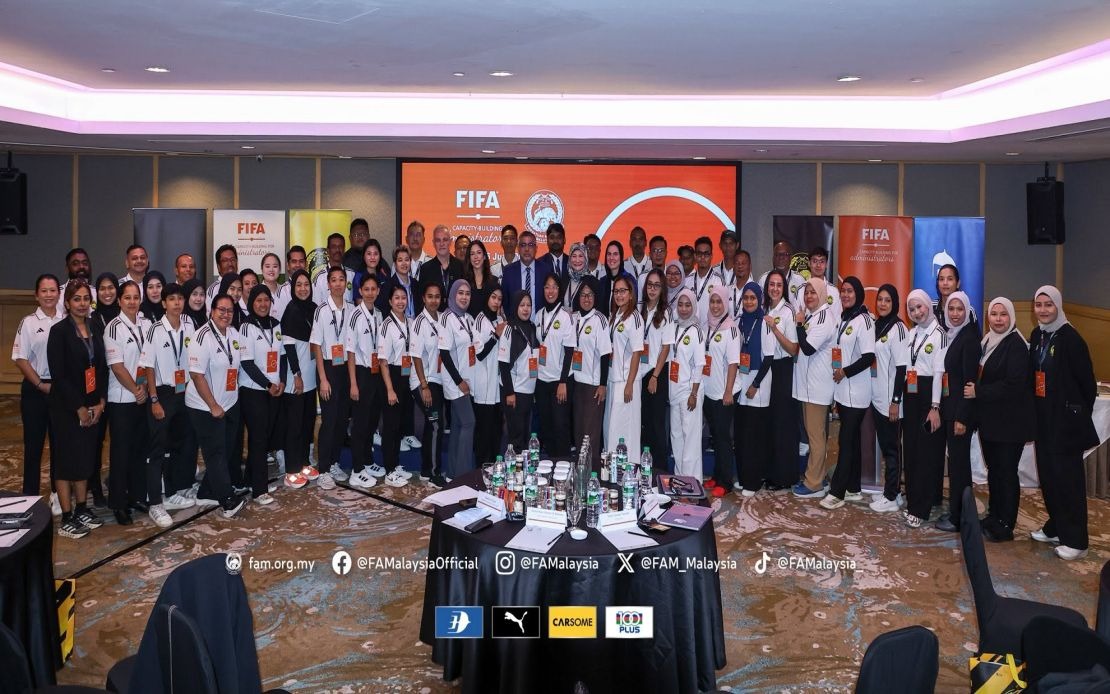
The Football Association of Malaysia (FAM) is taking a deliberate step to fortify the infrastructure underpinning the nation's women's football sector by introducing a comprehensive development programme focused on administration and team management. Launched on June 23, the FIFA Capacity-Building For Administrators 2026 initiative reflects FAM's commitment to addressing a critical gap in the sport—the professional administration layer that operates away from the pitch but fundamentally shapes competitive outcomes and athlete experience. Rather than concentrating solely on technical training for players and coaches, this initiative acknowledges that sustainable growth in women's football requires equally robust institutional foundations.
The four-day programme, delivered by two FIFA Women's Football Development Experts, Safia Abdeldayem and Pema Choden Tshering, brings international expertise directly into the Malaysian context. The curriculum spans multiple dimensions essential to modern football operations: Women's Leadership addresses the particular challenges women face in advancing through organisational hierarchies within football structures; Women's Competition modules examine tournament formats, scheduling, and competitive frameworks; Club and Players' Rights training ensures administrators understand contractual obligations, welfare provisions, and dispute resolution mechanisms; and Strategic Planning equips participants with frameworks for long-term institutional development. This multifaceted approach recognises that women's football in Malaysia, like across the region, faces distinct obstacles related to resource allocation, media coverage, commercial investment, and systemic support—issues that require trained administrators capable of navigating complex organisational environments.
The presence of senior FAM officials at the launch, including secretary-general Datuk Noor Azman Rahman and FAM Women's Football Technical Director Soleen Al-Zoubi, underscores the programme's institutional importance. Additionally, Datuk Suraya Yaacob, who holds positions on both FIFA's Women's National Team Competitions Committee and the AFC Women's Football Committee, brings regional and international perspective to the initiative. Her involvement signals that Malaysian women's football development aligns with broader Asian Football Confederation strategies and FIFA's global vision for expanding opportunities within the sport.
FAM's framing of this investment as essential to ecosystem sustainability reflects evolving understanding of women's football development across Southeast Asia. Malaysian football administrators have observed how neighbouring countries with stronger women's leagues—such as Thailand and Vietnam—have benefited from professionalising their administrative structures. Without adequate management capacity at club and federation levels, even technically talented players struggle to access opportunities commensurate with their ability, and competition structures fail to attract the sponsorship and broadcast interest necessary for financial viability. The capacity-building approach addresses this systemic weakness directly.
The programme's emphasis on women's leadership carries particular significance in a Malaysian sports context where female administrators remain underrepresented in decision-making positions. By providing structured training specifically designed to support women in advancing into management and leadership roles, FAM creates a pathway that might otherwise be unavailable. This approach acknowledges that women's football development cannot succeed when administrative structures remain predominantly male-dominated, as the disconnect between player demographics and organisational leadership creates misalignment in priorities and resource allocation.
FAM's stated ambition to expand the pool of skilled team managers, administrators, and women leaders across the football industry reflects a recognition that sustainable competitive improvement requires institutional depth. A single strong women's national team, while valuable for national pride, provides limited foundation for genuine ecosystem development. Instead, a thriving domestic league with professionally-run clubs, transparent governance structures, and clear pathways for player development creates the foundation for continuous improvement. Investment in administrator training creates the human capital necessary for this transformation.
The collaboration between FAM and FIFA demonstrates how international football's governing bodies are channelling resources toward development priorities beyond elite-level competition. Rather than concentrating solely on preparing national teams for major tournaments, FIFA's capacity-building initiatives embed professional practices and institutional knowledge within national federations. This approach recognises that Malaysia's long-term competitiveness in women's football depends on building robust domestic structures—something that requires more than talented individuals but rather a critical mass of trained professionals operating within coherent systems.
For Malaysian club football specifically, the implications extend beyond immediate competitive outcomes. Female administrators trained through this programme can lead clubs in negotiating commercial partnerships, managing budgets transparently, ensuring player welfare compliance, and developing youth pathways. These functions directly support the visibility and attractiveness of club competition, which in turn influences participation rates among young female athletes. The effect cascades through the entire pyramid of women's football in Malaysia.
The timing of this initiative, positioned within a broader strategic framework rather than as a one-off event, suggests FAM recognises that capacity-building requires sustained commitment. A single four-day programme, while valuable, represents merely a beginning. The designation as part of the 2026 initiative indicates intention to continue this work, potentially developing advanced modules or specialisation pathways for administrators who complete foundational training. This reflects international best practice in human development, where initial exposure leads to ongoing professional development and networking opportunities.
Regionally, Malaysia's investment in women's football administration aligns with AFC priorities to strengthen women's football across Asia. As the confederation develops increasingly competitive women's competitions, member nations must demonstrate administrative competence in areas including anti-corruption, player data management, anti-doping, and safeguarding. The capacity-building programme prepares Malaysian administrators to meet these standards, reducing compliance gaps that might otherwise disadvantage Malaysian clubs and national teams in regional and continental competitions.
The broader context includes growing media and commercial interest in women's football globally. Major broadcasters, sponsors, and investors increasingly recognise women's football as a growth opportunity rather than a niche market. For Malaysia to capture this emerging opportunity, the nation requires administrators capable of engaging with international partners on professional terms and managing the increased complexity that accompanies commercialisation. Training delivered through this FIFA programme directly supports Malaysia's competitive positioning in this emerging ecosystem.
Looking forward, the success of this initiative depends partly on participant selection and subsequent implementation in workplace contexts. Trainees must return to roles where they can apply their learning and advocate for administrative improvements within their organisations. FAM's implicit recognition that development hinges on sustained ecosystem change—rather than isolated skill-building—suggests the federation understands these implementation challenges. Whether the programme includes follow-up support, peer learning networks, or mentoring arrangements will substantially influence its practical impact on Malaysian women's football administration.