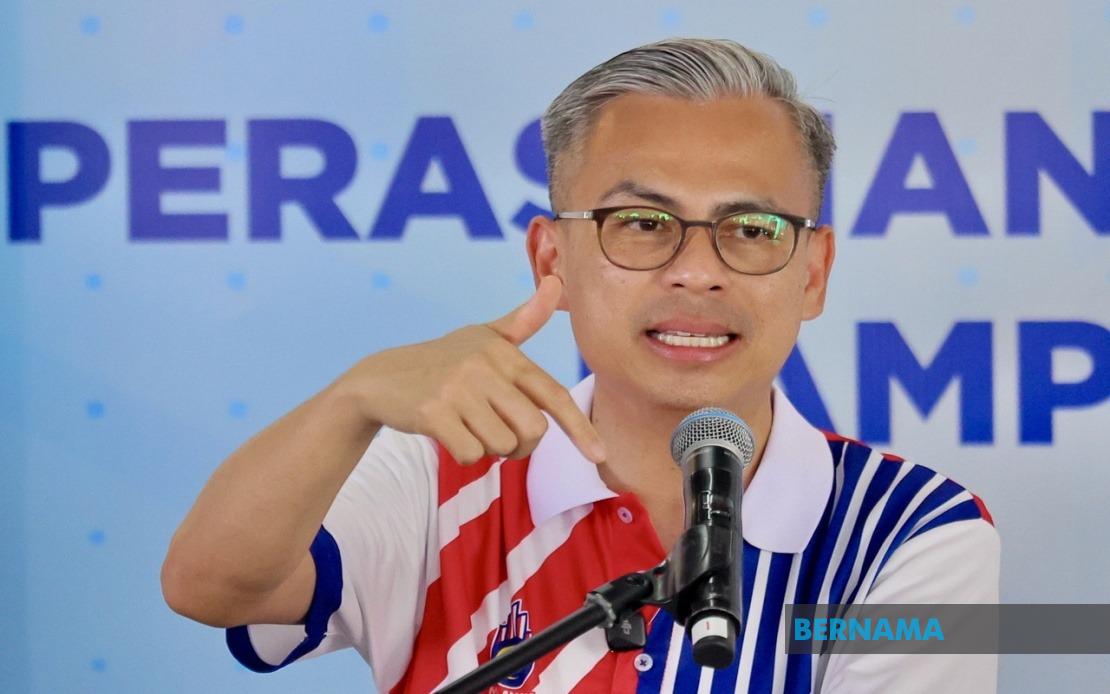
Communications Minister Datuk Fahmi Fadzil has firmly criticised those responsible for creating a fraudulent WhatsApp account that impersonates Pakatan Harapan candidate Saiful Nizam Samat, who is contesting the Endau state seat in the Johor election. Fahmi characterised the deception as reckless conduct emanating from individuals determined to deploy any tactic necessary to secure electoral victory. His sharp rebuke, posted as a comment beneath Saiful Nizam's official Facebook announcement, reflects growing alarm within political circles about the weaponisation of social media during campaigns.
Saiful Nizam swiftly moved to disassociate himself from the fraudulent account, issuing a formal denial that explicitly stated he does not own the WhatsApp number in question and that it bears no connection to him or his campaign apparatus, known as Team SS. The discovery underscores how digital platforms have become vulnerable conduits for impersonation tactics during electoral contests, particularly when fraudsters leverage candidates' names and photographic likenesses to establish false authenticity. The proliferation of such scams across Malaysia's political landscape raises serious questions about the adequacy of existing safeguards to protect voters from misinformation and identity theft.
What renders this incident particularly concerning is the apparent sophistication of the deception. The fake account not only replicated Saiful Nizam's profile photograph but also used a remarkably similar name variant—"Saiful Samad"—coupled with a claim to represent the candidate as the purported future Endau assemblyman. Such textual parallels suggest a deliberate attempt to create sufficient confusion among voters to render the impersonation credible to unsuspecting recipients. This methodical approach to fraud demonstrates that perpetrators invested thought in crafting a convincing facade rather than launching a hastily assembled scam.
Saiful Nizam's response included practical guidance for members of the public, advising citizens to maintain heightened vigilance when engaging with any accounts claiming to represent him or his campaign. He explicitly counselled against sharing personal information with unverified contacts and recommended that anyone receiving questionable messages should seek verification through Team SS's officially sanctioned communication channels rather than responding directly to suspicious accounts. By distributing screenshots of the fraudulent conversations, Saiful Nizam sought to arm voters with visual evidence that could assist them in identifying similar counterfeit accounts should they encounter them.
The incident arrives during an intensely competitive four-cornered contest for the Endau seat, with candidates representing Barisan Nasional, Pakatan Harapan, Perikatan Nasional, and Parti Orang Asli Malaysia all contending for voter support. This fragmented electoral landscape may incentivise certain actors to resort to underhanded tactics, as a divided opposition theoretically enhances opportunities for those willing to skew competition through deceptive means. The multiplicity of candidates competing in Endau reflects broader fractionalisation within Malaysian politics, where traditional bipolar contests have increasingly given way to multipolar competitions.
The timing of this revelation carries significance for the broader Johor electoral campaign. As voters prepare to make electoral decisions, their exposure to falsified campaign communications potentially distorts their perception of candidates' actual positions and intentions. Impersonation fraud does not merely affect individual candidates; it compromises the integrity of democratic processes by introducing noise into the information environment that voters rely upon to make informed choices. When citizens cannot confidently distinguish authentic candidate communications from fraudulent ones, their ability to evaluate candidates on substantive grounds becomes severely compromised.
Fahmi's ministerial intervention signals that federal-level political figures regard this category of electoral misbehaviour with sufficient gravity to warrant public condemnation. As Communications Minister, Fahmi occupies a portfolio that encompasses digital governance and media regulation, positioning him as a natural voice for addressing concerns about social media manipulation during elections. His willingness to weaponise his platform against impersonation fraud sends a message to other political actors that such tactics carry reputational costs and attract scrutiny from government officials.
The incident illustrates a persistent vulnerability in WhatsApp's ecosystem. Unlike certain competing platforms that provide blue verification checkmarks to confirm authentic accounts, WhatsApp has resisted implementing similarly robust authentication mechanisms. This architectural choice leaves the platform particularly susceptible to impersonation schemes, as anyone with a sufficient understanding of social engineering can convincingly mimic legitimate users through profile name manipulation and photographic replication. For candidates operating in Malaysia's digital political landscape, this gap represents a significant security challenge that existing platform protections do not adequately address.
Moving forward, this episode suggests that Malaysian political campaigns may benefit from adopting supplementary authentication protocols beyond reliance on social media platforms themselves. Forward-thinking candidates might publish comprehensive lists of verified contact information across multiple platforms, digitally sign communications with cryptographic credentials, or employ dedicated campaign websites with secure messaging capabilities. Such proactive measures would allow voters to independently verify candidate authenticity rather than depending on platform-provided assurances that frequently prove insufficient.
The broader pattern of impersonation scams during Malaysian elections underscores the necessity for voter education initiatives addressing digital security and information verification. Electoral authorities might consider launching public awareness campaigns that teach citizens how to identify fraudulent accounts, verify candidate authenticity through multiple independent sources, and report suspected impersonation to appropriate authorities. Educational interventions targeting digital literacy would address root causes of successful impersonation schemes rather than treating symptoms after fraud has already occurred.
Saiful Nizam's handling of this situation demonstrates that rapid and transparent responses to fraudulent accounts can partially mitigate the damage such schemes inflict. By immediately denying the account's legitimacy, providing visual evidence of the deception, and offering clear guidance for voter verification, he sought to contain the spread of misinformation. However, the reactive nature of this response highlights how impersonation perpetrators retain initial advantage in framing false narratives before victims can mount corrective campaigns.
As the Johor state election progresses, this incident will likely prompt increased scrutiny of social media campaign practices across competing parties. Political observers should monitor whether other candidates face similar impersonation attempts and whether such incidents cluster around particular campaigns or operate as diffuse phenomena. The pattern of such attacks could offer insights into whether impersonation represents opportunistic individual conduct or reflects organised strategies endorsed by competing campaign machinery.

