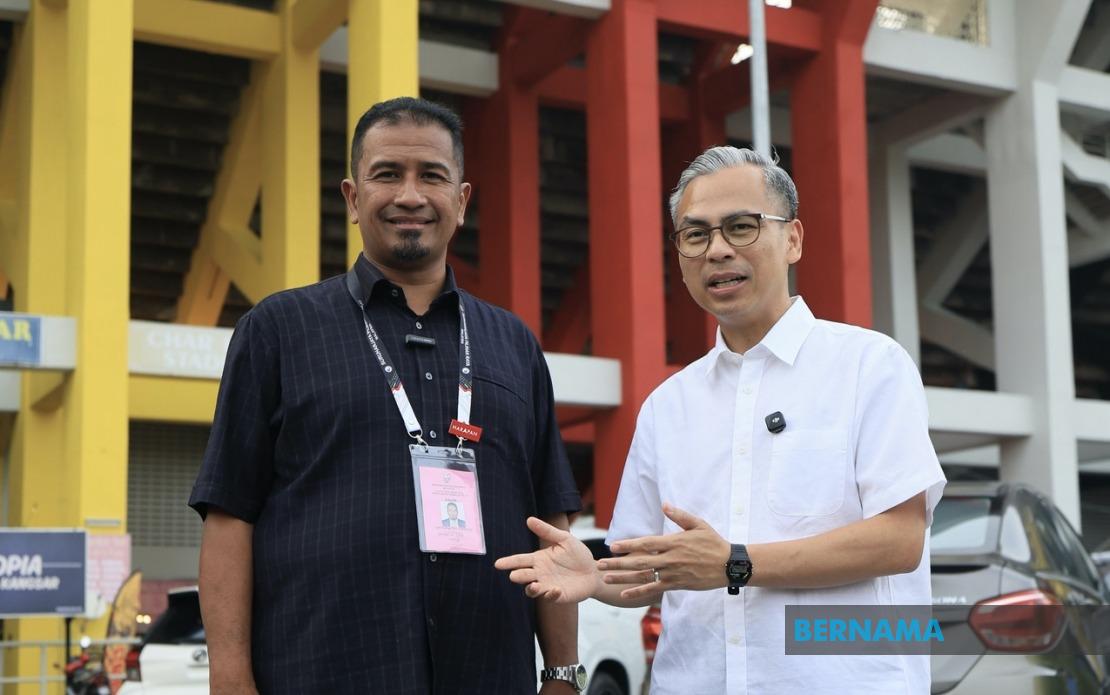
The Negeri Sembilan state election campaign has taken a contentious turn with reports of deliberate vandalism targeting Pakatan Harapan materials, prompting Communications Minister Datuk Seri Fahmi Fadzil to issue a pointed reminder about maintaining campaign standards. Speaking in Seremban on July 22, Fahmi emphasised that all contesting parties must anchor their electoral efforts on substantive policy debate and factual information rather than resorting to intimidation or destructive tactics.
The catalyst for Fahmi's remarks was a series of incidents affecting PH candidate Dr Azizul Hakim Mahdi, who is contesting the Rantau state seat. Multiple billboards displaying his campaign materials were targeted and defaced during the ongoing election period, with social media posts circulating that purportedly documented individuals engaged in the destruction. Fahmi stressed that such acts constitute criminal offences and are appropriately matters for law enforcement authorities to investigate and prosecute. Rather than allowing individual politicians to respond, he positioned the government as committed to ensuring the Electoral Commission and police conduct thorough enquiries.
Fahmi made these comments while accompanying another PH contender, Nur Azman Mohamad of Sikamat, during a grassroots campaign event at Paroi Stadium in Seremban City Council premises. His presence underscored the ruling coalition's commitment to projecting an image of ethical campaigning standards, even as incidents of property destruction reflect underlying tensions within the electoral contest. The minister's intervention signals concern within PH's leadership that negative campaign tactics could backfire politically and undermine the legitimacy of the election process itself.
The call for disciplined, substance-focused campaigning carries particular weight in Malaysian electoral politics, where state elections often serve as barometers of broader political sentiment. The Negeri Sembilan contest represents an important test for Pakatan Harapan's organisational capacity and public appeal following the 2023 general election. Any perception that campaign conduct has become uncivil or marked by vandalism and sabotage risks damaging the coalition's carefully cultivated image as a reformist alternative committed to institutional respect and democratic norms.
Fahmi's characterisation of the campaign's current trajectory provides insight into the governing coalition's strategic thinking. He noted satisfaction with the overall tenor of proceedings so far, yet anticipated an escalation in intensity as the election approached its final week. This measured assessment reflects confidence that PH remains ahead in voter preference but acknowledges that competing parties will intensify their efforts. His analogy of parties operating in "second gear" rather than "sixth gear" suggested sufficient runway remains for the campaign dynamics to shift, particularly if opposition forces successfully mobilise ground support in rural areas.
Prime Minister Datuk Seri Anwar Ibrahim's active participation in the campaign trail underscores the government's prioritisation of the Negeri Sembilan outcome. By conducting multiple campaign stops on the day Fahmi spoke, Anwar signalled that federal leadership views the state election as strategically consequential. The participation of senior figures from multiple coalition parties in the coming days would further demonstrate commitment to winning the contest while maintaining decorum and ethical standards.
The Election Commission has scheduled August 1 as polling day for the Negeri Sembilan state election, with early voting opportunities available on July 28. This timeline means that the billboards incident occurred roughly one week before voting commenced, during a phase when public attention may not yet have peaked. Fahmi's public statement essentially serves as an early attempt to frame the remaining campaign period around substantive issues rather than allow vandalism incidents to dominate media coverage and public discourse.
For Malaysian voters, particularly in Negeri Sembilan, the minister's exhortation to campaign ethically represents an implicit acknowledgment that tensions exist beneath the surface of electoral competition. The vandalisation of campaign materials, while not uncommon in contested elections, carries symbolic weight as a marker of political intensity and rival frustration. Fahmi's approach—neither dismissing the incidents nor amplifying them through inflammatory rhetoric—attempts to reset campaign expectations while leaving matters of enforcement to appropriate institutions.
The broader context matters for understanding why a federal minister felt compelled to intervene in state-level campaign dynamics. Negeri Sembilan's political complexion has shifted significantly in recent years, and the outcome of this election will provide data on whether PH can consolidate its federal victory at the sub-national level. Opposition parties perceive vulnerability and opportunity, potentially explaining the motivation behind various tactics, including the alleged billboard vandalism. Fahmi's public positioning protects PH's reformist credentials while implicitly warning that disruptive campaign behaviour carries legal consequences.
Looking ahead, the final week of campaigning will test whether political parties in Negeri Sembilan can maintain the standards of civility that Fahmi articulated. The presence of federal leadership on the campaign trail, combined with police and electoral watchdog attention to conduct violations, creates incentives for parties to focus on policy messaging rather than sabotage. However, the underlying electoral stakes—control of a state government—remain substantial enough that some rival organisations may calculate that aggressive tactics serve their strategic interests. How effectively authorities enforce campaign conduct rules will partly determine whether Fahmi's call for maturity translates into actual electoral behaviour.

