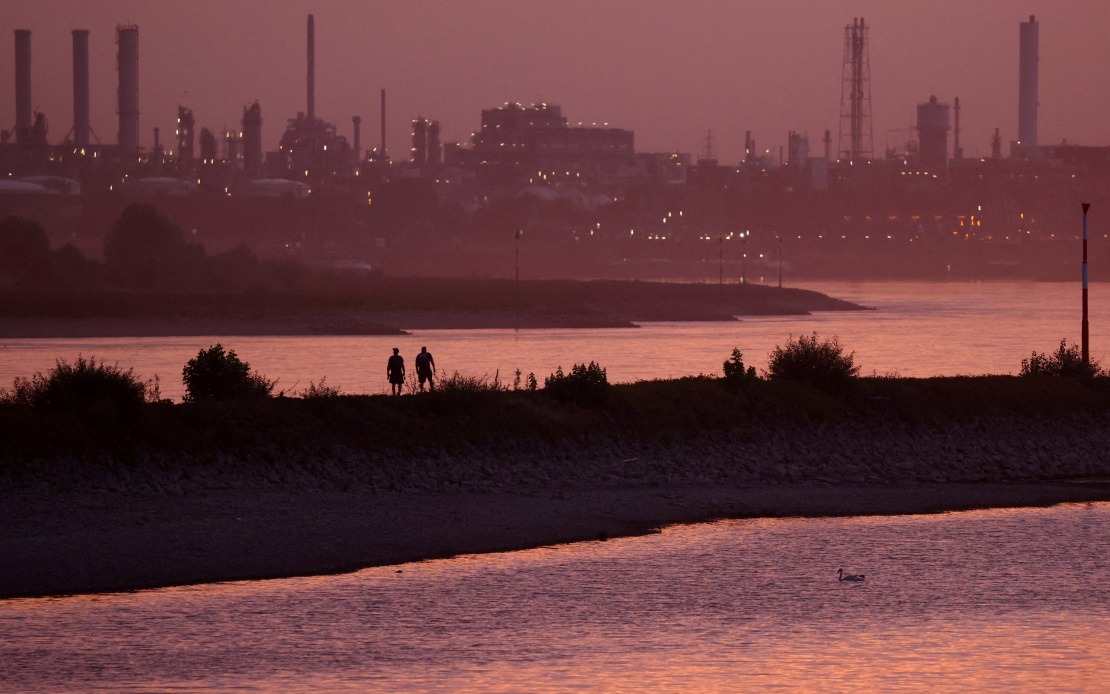
German explosives specialists were mobilised on Thursday to safely defuse a massive World War II-era aerial bomb discovered near Cologne as an extended period of severe heat and drought caused the Rhine river to reach historically unprecedented low levels. The 500-kilogramme American ordnance was spotted on Wednesday evening at Rheinpark in Cologne, one of countless military relics from the devastating 1939-1945 conflict that remain submerged beneath the riverbed. The incident underscores how climate-driven environmental changes are now reshaping Europe's relationship with its wartime past, as receding waters systematically expose dangers that have remained buried for nearly eighty years.
The defusing operation necessitated the evacuation of approximately 360 people residing or employed within a 400-metre safety perimeter surrounding the discovery site. Those forced to leave their homes and workplaces included residents of a retirement community and personnel at nearby RTL television studios, one of Germany's major broadcasting facilities. City authorities have not yet publicised the specific timing for the dangerous defusing work, suggesting that specialists required additional time to assess the bomb's condition and determine the safest approach to neutralisation.
The Rhine's water gauge at Cologne plummeted to just 67 centimetres on Thursday, matching a catastrophic low point recorded merely days before, with forecasts indicating a further descent to 66 centimetres within hours. This represents a genuine crisis for one of Europe's most critical commercial arteries, as the waterway normally sustains the continent's busiest inland shipping corridors. The sustained drought has transformed the river into a bottleneck for commerce and industry, forcing cargo vessels to operate at substantially reduced capacity to avoid running aground on exposed riverbed sections and sandbars.
Germany has experienced particularly acute water stress during the past several summers, a pattern many climate scientists attribute to broader shifts in regional precipitation patterns and warming temperatures. The Rhine basin's vulnerability to extended dry spells carries profound implications not merely for transportation and energy production, but also for the cascading discovery of World War II ordnance. Unexploded bombs and shells represent a persistent hazard across the entire region, where intensive aerial bombardment and ground combat left countless lethal remnants embedded in soil and waterways. As climate change intensifies droughts and forces water levels to decline, the systematic exposure of these buried weapons poses escalating public safety challenges.
The discovery near Cologne is far from isolated. Throughout the war, Allied and German aircraft dropped countless tonnes of ordnance on German cities and industrial targets. Many bombs failed to detonate upon impact, becoming dormant threats that have remained submerged or buried for generations. When construction projects, dredging operations, or natural phenomena like the current drought expose these objects, specialist teams must intervene swiftly to prevent catastrophic accidents. The logistical and financial burden of managing these discoveries falls primarily on German municipalities and federal authorities, a legacy cost of the conflict that persists into the twenty-first century.
The immediate water crisis confronting the Rhine has triggered broader economic and environmental concerns across Germany and neighbouring countries. Shipping companies have reduced cargo volumes, pushing transportation costs higher and disrupting supply chains that depend on timely barge deliveries. Power generation facilities relying on river water for cooling have curtailed output, contributing to energy supply anxieties across Europe. Agricultural regions dependent on the Rhine for irrigation face uncertain prospects if water levels fail to recover substantially within weeks.
Metereological forecasts offer little reassurance to authorities managing the crisis. Officials indicated that water levels would experience only marginal increases over the coming days, with no genuine recovery anticipated in the foreseeable future. This extended low-water scenario multiplies the likelihood that additional unexploded ordnance will surface, potentially triggering a succession of evacuations and defusing operations throughout the summer and autumn months. The convergence of climate stress and wartime hazards exemplifies how historical and environmental challenges can interact in unexpected and dangerous ways.
For Malaysia and broader Southeast Asia, the Rhine situation offers instructive parallels regarding climate vulnerability and infrastructure resilience. While the region's tropical rivers function differently from European waterways, the dependence of major trade corridors on reliable water flow carries universal significance. Rising temperatures and shifting precipitation patterns already affect Southeast Asian monsoon cycles, influencing agricultural productivity and hydroelectric generation. The Mekong, Irrawaddy, and Salween rivers sustain economies across multiple nations, and their vulnerability to climate-driven stress warrants serious policy attention and regional cooperation frameworks.
The Cologne bomb discovery also reflects the long shadow cast by twentieth-century conflicts across inhabited landscapes. Southeast Asia continues managing unexploded ordnance from the Vietnam War, particularly in Laos and Cambodia, where decades of intensive bombardment saturated vast territories with lethal debris. Communities in these regions face comparable hazards when construction, farming, or resource extraction inadvertently exposes shells and cluster munitions. Climate-driven environmental changes may similarly trigger the exposure of additional ordnance in Southeast Asia, potentially accelerating the discovery and clearance of dangerous materials but also creating acute public safety challenges.
The coordination required between German explosives experts, city authorities, and emergency services demonstrates the complexity of managing modern disasters with roots in distant history. Successful resolution of the Cologne situation will depend on meticulous technical work, effective communication with affected residents and businesses, and sustained investment in specialised expertise. These same principles apply across regions confronting equivalent challenges from buried ordnance and climate-driven environmental shifts. The incident serves as a reminder that historical responsibility and contemporary environmental stewardship increasingly intersect, demanding comprehensive policy responses that acknowledge both dimensions.

