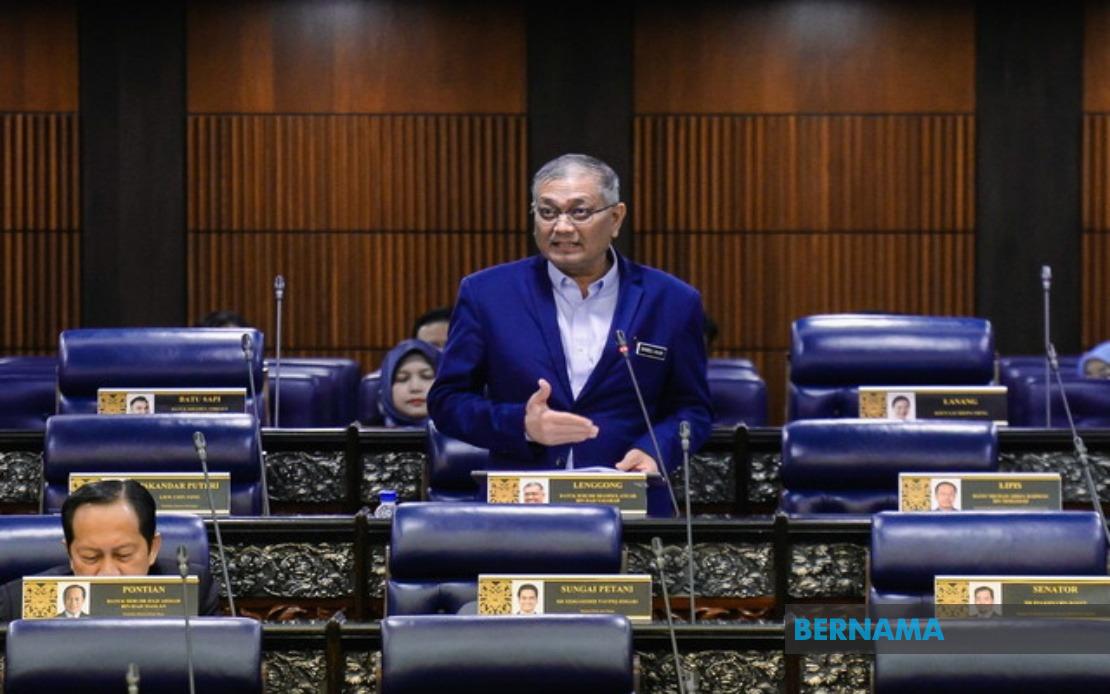
Malaysia's Home Ministry has moved to address growing scrutiny of police disciplinary practices by drawing a clear distinction between extra drills and physical punishment. Deputy Minister Datuk Seri Dr Shamsul Anuar Nasarah told parliament that field duties, when properly administered, serve as educational corrective measures rather than punitive harm. The clarification comes as a response to parliamentary questions raised about the death of a policeman in Sepang in May, an incident that has intensified public and political attention on how the Royal Malaysia Police (PDRM) handles officer discipline.
The Home Ministry grounded its defence in the existing regulatory framework governing police conduct. Extra drills fall under Paragraph 32 of the Inspector-General of Police's Standing Orders, which specifically addresses disciplinary action for minor offences within the force. According to Shamsul Anuar, these measures are intended to build character and encourage behavioural change among personnel who have committed infractions that do not warrant formal disciplinary procedures. The framework represents an intermediate step in the disciplinary hierarchy, positioned between informal warnings and more serious formal action that could affect an officer's career.
In response to the Sepang incident, the PDRM's Integrity and Standards Compliance Department (JIPS) introduced a new administrative directive on June 29 aimed at reinforcing safeguards. The directive mandates the use of health assessment forms as part of the implementation process, signalling an attempt to build medical oversight into the system. This move suggests the ministry recognises the need for additional protective mechanisms to ensure that those undergoing such discipline are physically capable of participating in field duties without risk to their wellbeing.
The ministry has also reaffirmed existing temporal and supervisory constraints on the practice. Current regulations establish that field duties cannot exceed four hours daily and cannot be imposed for more than five consecutive days. The supervising officer bears responsibility for ensuring that duties are conducted prudently and safely, with explicit consideration given to the personnel's physical condition, health status, the environmental setting, and any other factors that might compromise individual safety. These parameters suggest that the ministry views field duties as a controlled intervention rather than an open-ended punishment.
A significant aspect of the parliamentary exchange concerned allegations of discriminatory application of disciplinary measures. Roy Angau Gingkoi from Lubok Antu raised questions about whether extra drills were disproportionately applied to lower-ranking officers, and whether the ministry intended to standardise disciplinary procedures regardless of rank. Shamsul Anuar acknowledged that Paragraph 32 of the Standing Orders was specifically designed for junior police officers as an alternative to formal action, explaining that the provision exists within a differentiated disciplinary system based on rank and service category.
The ministry rejected suggestions that this rank-based distinction amounted to favouritism. Officials argued that senior police officers operate under different legal provisions applicable to their service classification, and therefore face different disciplinary pathways. This explanation highlights the complex hierarchical nature of police discipline in Malaysia, where rank determines not only the type of offence for which different standards apply, but also the procedural mechanisms available for addressing misconduct. The distinction between junior and senior officers' disciplinary processes is embedded in formal regulations rather than arbitrary executive decisions.
Concerns about bullying and ragging—practices that might masquerade as legitimate disciplinary measures—received direct attention during the parliamentary session. Datuk Awang Hashim raised the issue from a perspective of protecting officers from abusive practices disguised as discipline. The deputy minister responded by emphasising that every disciplinary measure operates within a strict procedural framework and cannot be applied unilaterally by superior officers according to personal discretion. This insistence on procedural constraints appears designed to reassure parliament and the public that safeguards exist to prevent the misuse of field duties as a cover for harassment or inappropriate conduct.
For Malaysian readers and broader Southeast Asian observers, this episode reflects ongoing tensions within police organisations regarding the balance between maintaining operational discipline and protecting personnel welfare. The Sepang death has evidently forced institutional reflection within PDRM about how discipline intersects with officer safety. The subsequent policy adjustments, including the health assessment requirement, suggest that the ministry recognises previous frameworks may have contained gaps or insufficient oversight mechanisms. The fact that such clarifications were necessary in parliament indicates that public and political trust in existing safeguards had eroded.
The Home Ministry's response also illustrates how labour and welfare issues within police forces increasingly attract parliamentary scrutiny in Malaysia. What might once have been considered internal administrative matters now receive public airing and demand explicit justification. This shift reflects broader expectations that government institutions operate with transparency and that personnel, even within hierarchical military-style organisations, enjoy basic protections against harm. The emphasis on health assessments and temporal limits suggests the ministry is attempting to modernise its approach to discipline while maintaining the institutional frameworks that have traditionally governed police conduct.
The structural distinction the ministry maintains between rank-based disciplinary pathways raises important questions about equity within the force. If junior officers are subject to field duties as a corrective mechanism while senior officers face different procedures, the question of whether this differential treatment genuinely reflects operational necessity or simply entrenches existing hierarchies remains open for scrutiny. The ministry's framing suggests that differentiation is justified by law and regulation, yet parliament's continued interest in standardising disciplinary measures across ranks suggests significant political constituencies view the current system as requiring greater uniformity.
Moving forward, the challenge for PDRM will be demonstrating that the new health assessment procedures meaningfully prevent incidents similar to the Sepang death. The June 29 directive represents a regulatory response to institutional failure, but its effectiveness depends on consistent implementation across all police units and genuine commitment to disqualifying officers from participation when assessments indicate risk. The ministry's parliamentary statements have set explicit expectations about procedural compliance, creating potential accountability if future incidents suggest directives are being circumvented or inadequately enforced.
The implications for Malaysia's broader institutional development should not be overlooked. Police forces across Southeast Asia typically operate with minimal external oversight regarding internal disciplinary practices, and public discourse about such matters remains relatively constrained in many regional jurisdictions. Malaysia's willingness to debate police discipline in parliament, to acknowledge institutional failings through policy revision, and to defend measures against allegations of abuse suggests an evolving political culture in which government accountability extends into previously insulated institutional domains. Whether these changes ultimately produce meaningful improvements in officer safety will depend on implementation fidelity and political will to enforce newly established safeguards consistently.

