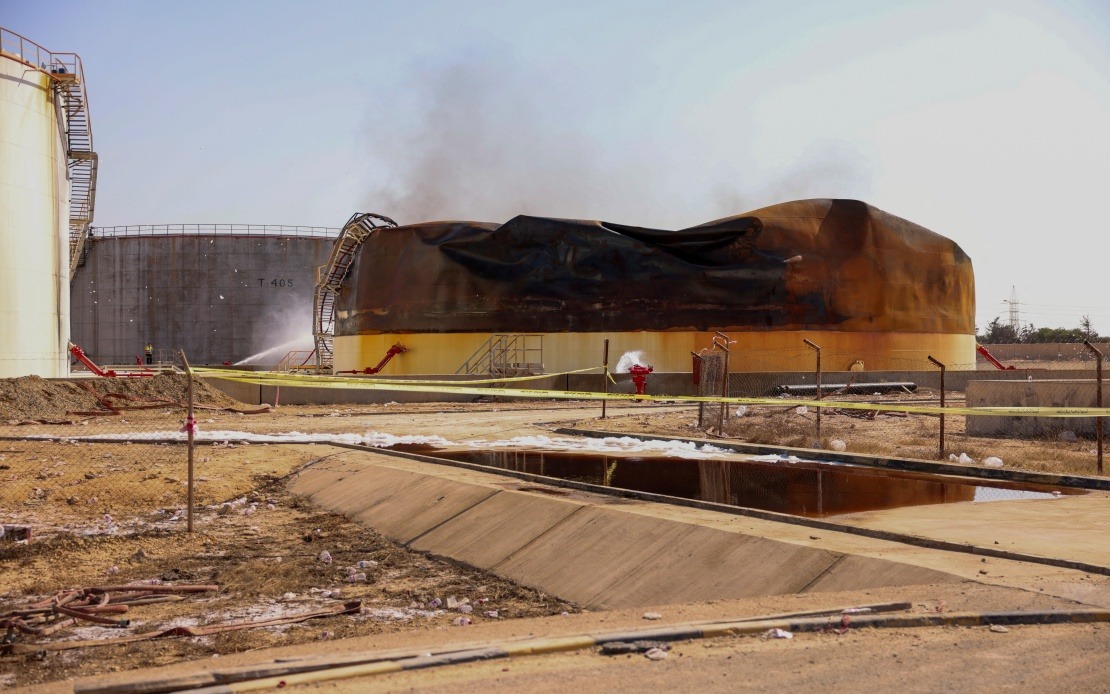
A blast occurring on Saturday near the Zawiya power plant in western Libya has forced the shutdown of several electricity generation units, according to the state-owned General Electricity Company of Libya (GECOL). The incident represents a significant blow to the country's already fragile power infrastructure, leaving technicians scrambling to restore services across the affected region. GECOL confirmed that teams had begun investigating the precise cause of the explosion, which occurred in proximity to the generating facility itself rather than at its core installations.
The timing of this incident carries particular significance for Libya's energy sector, which has endured mounting pressure from both technical failures and external threats in recent years. The loss of multiple generation units simultaneously threatens to deepen rolling blackouts across western Libya, where the Zawiya plant serves as a critical hub for electricity distribution. GECOL's immediate priority shifted toward stabilising the grid while preventing cascading failures that could affect connected infrastructure across the broader region.
Investigations into the technical circumstances surrounding the explosion remain ongoing, with GECOL offering limited detail on preliminary findings. The company has not yet ruled out any particular cause, though the proximity to the facility and the nature of the damage pattern suggest the blast may have originated from external sources rather than internal equipment failure. Engineers face the complex challenge of assessing structural integrity, evaluating damage to critical systems, and determining whether other installations nearby have sustained secondary damage that could complicate restoration efforts.
Restoration work has commenced on a gradual basis, with GECOL expressing cautious optimism that normal electricity service would resume within a reasonable timeframe. However, the extended timeline for bringing multiple generation units back online means Libyan citizens and businesses should anticipate continued power disruptions throughout the restoration period. The company issued a public apology for the inconvenience caused by the outages and power instability, pledging that technicians would work continuously until the electricity grid achieved full stabilisation.
This explosion arrives merely seven days after the Zawiya region endured a coordinated series of drone attacks targeting multiple critical infrastructure facilities. Those earlier strikes hit oil storage terminals, desalination plants responsible for freshwater production, and additional power generation equipment across the area. The twin incidents within one week have raised serious questions about the security posture protecting Libya's vital energy and resource facilities, and they highlight the vulnerability of the nation's aging infrastructure to both conventional attacks and emerging drone-based threats.
The sequence of attacks and the explosion suggest a pattern of deliberate targeting rather than random incidents, yet no group has claimed responsibility for either the drone strikes or the Saturday blast. Libyan authorities initiated investigations aimed at identifying the drone operators and determining who orchestrated the attacks, though progress remains unclear. The absence of claimed responsibility complicates response efforts and leaves open numerous possibilities regarding the perpetrators' identities and motivations, whether they stem from internal political factions, external state actors, or non-state militant groups operating in the region.
For regional observers, the incidents underscore Libya's ongoing struggle to maintain essential services amid security challenges that extend beyond traditional armed conflict. The Zawiya region specifically has experienced significant instability, with various armed groups vying for influence and control of resource-rich areas. Attacks on infrastructure serve multiple strategic purposes: they disrupt civilian life, strain government resources, potentially generate revenue through black market sales of fuel or resources, and demonstrate the attackers' capacity to strike at state assets with relative impunity.
The implications extend beyond Libya itself, affecting North African energy markets and international oil supplies. Libya remains an important petroleum producer, and disruptions to its power infrastructure can cascade through the entire economy, affecting refineries, transportation networks, and export capabilities. Regional neighbours, including Tunisia and other Maghreb states, maintain economic ties with Libya that face strain when instability increases and essential services falter.
For Malaysian observers and policymakers, the Libyan situation offers instructive lessons about infrastructure resilience and the importance of securing critical energy facilities against evolving threats. As drone technology becomes increasingly accessible globally and sophisticated attack methodologies proliferate, countries throughout Southeast Asia must reassess how they protect power plants, water treatment facilities, and other essential infrastructure from determined adversaries. The Zawiya incidents demonstrate that even partial grid failures can cause widespread societal disruption, suggesting the urgency of developing robust redundancy systems and rapid response protocols.
Looking forward, Libya's government faces mounting pressure to restore both the immediate power supply and broader security around critical infrastructure. GECOL's restoration efforts will prove decisive for public confidence, while security agencies must identify those responsible for the attacks and implement measures to prevent recurrence. Without progress on these fronts, confidence in the state's ability to provide essential services will continue eroding, further destabilising an already fragile nation.

