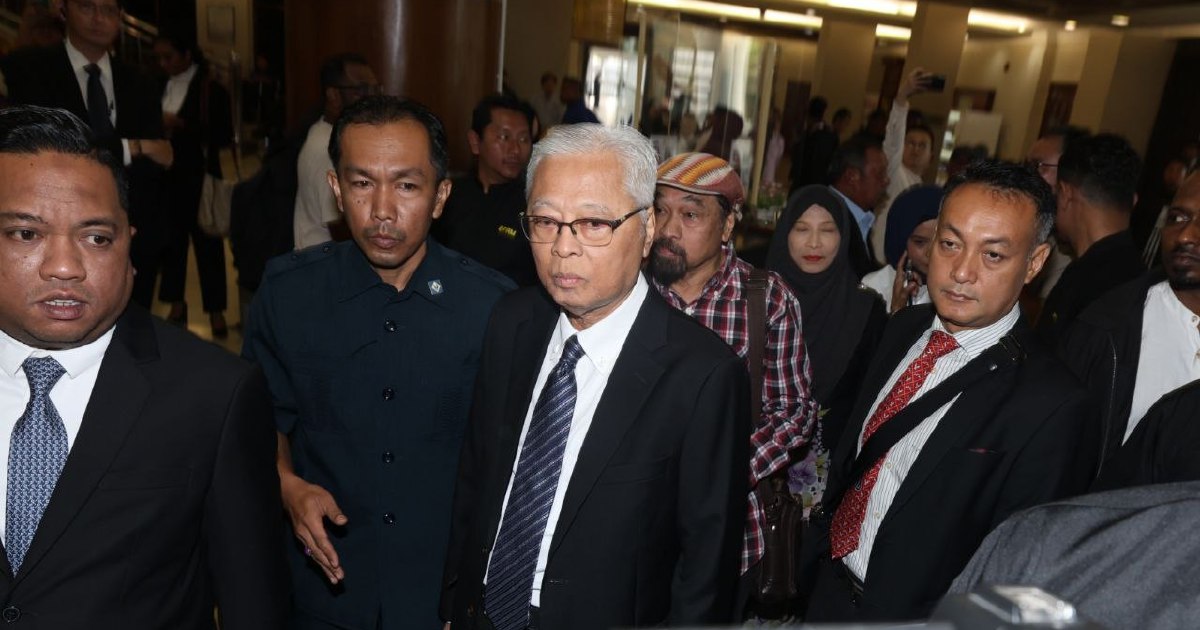
Former Prime Minister Datuk Seri Ismail Sabri Yaakob made an appearance at the Sessions Court in Kuala Lumpur on Tuesday, where he confronted legal proceedings relating to asset declaration obligations. The court hearing represents a substantial moment in Malaysia's post-pandemic political landscape, as high-profile figures face intensified scrutiny over financial transparency and statutory compliance.
The charge against Ismail Sabri centres on allegations that he failed to make proper declarations of his assets as required by law. Asset declaration requirements form a cornerstone of Malaysia's governance framework, designed to ensure transparency among public officials and prevent potential conflicts of interest. Such obligations apply particularly rigorously to individuals who have held the nation's highest offices, where accountability mechanisms are meant to reinforce public confidence in institutional integrity.
The specifics of which assets triggered the allegation and the precise timeline involved remain matters of legal contention that the court will examine. Malaysian law establishes clear expectations for elected representatives and former government officials regarding the disclosure of personal wealth, property holdings, and financial interests. Violations of these statutory duties can result in serious legal consequences, reflecting Parliament's determination to maintain standards across the political establishment.
Ismail Sabri served as Malaysia's Prime Minister from August 2021 until November 2022, a period marked by political turbulence and the complexity of governing during economic challenges. His tenure followed the collapse of the preceding administration and involved navigating fractious coalition dynamics within the Dewan Rakyat. The transition to his successor, Datuk Seri Anwar Ibrahim, occurred amid significant political realignment that continued to reshape Malaysia's parliamentary arithmetic and executive structures.
This development arrives within a broader context of Malaysia's evolving approach to political accountability. Over recent years, the nation has witnessed heightened legal action against senior political figures across party lines, prompting ongoing debate about whether such proceedings reflect genuine commitment to systemic reform or represent politically motivated instruments. The variety of cases involving former ministers, political appointees, and government-linked entities suggests a complex legal environment where allegations spanning corruption, abuse of power, and financial misconduct receive varied treatment through the courts.
The Sessions Court appearance carries implications beyond the individual defendant. For Malaysian voters and international observers monitoring the country's governance standards, such proceedings signal whether accountability mechanisms function effectively when applied to former heads of government. The outcome will contribute to public perception regarding the even-handedness of the legal system and whether accountability operates impartially regardless of political affiliation or prior position.
Asset declaration systems depend fundamentally on voluntary compliance and effective enforcement mechanisms. When former prime ministers face charges suggesting non-compliance, it raises questions about the adequacy of existing frameworks for ensuring transparency and whether oversight bodies possess sufficient resources and political support to investigate thoroughly. These systemic questions often prove as consequential as individual cases, shaping how future administrations approach their own disclosure obligations.
The trial's progression will likely attract significant media attention within Malaysia and across Southeast Asia, given Ismail Sabri's previous high-profile role. His defence team will presumably challenge the allegations through established legal procedures, potentially raising technical or procedural arguments alongside substantive rebuttals. Such cases frequently hinge on how courts interpret statutory language regarding asset declaration thresholds, timing requirements, and the scope of reportable interests.
For Malaysian governance architecture, this case represents another data point in the ongoing experiment with prosecuting political figures. The country has experienced cycles of intense accountability efforts followed by apparent enforcement lulls, patterns that observers attribute to shifting political coalitions and fluctuating political will. Whether Ismail Sabri's case becomes part of a sustained commitment to transparency or another episodic action remains uncertain.
The broader political landscape surrounding such prosecutions deserves consideration. Malaysia's coalition-dependent government formation means that political fortunes shift based on complex parliamentary mathematics rather than electoral outcomes alone. Critics argue this environment creates incentives for weaponising legal processes against rivals, while supporters contend that genuine wrongdoing requires prosecutorial attention regardless of political convenience. Distinguishing between these competing narratives requires examining patterns of enforcement, evidentiary standards, and consistency across cases.
Looking forward, the Sessions Court proceedings will test Malaysia's judicial independence and the robustness of its institutions. Public confidence in outcomes depends substantially on perceived fairness, transparent application of law, and freedom from external political influence. These factors remain critical for Malaysia's longer-term political stability and international standing as a functioning democratic system.

